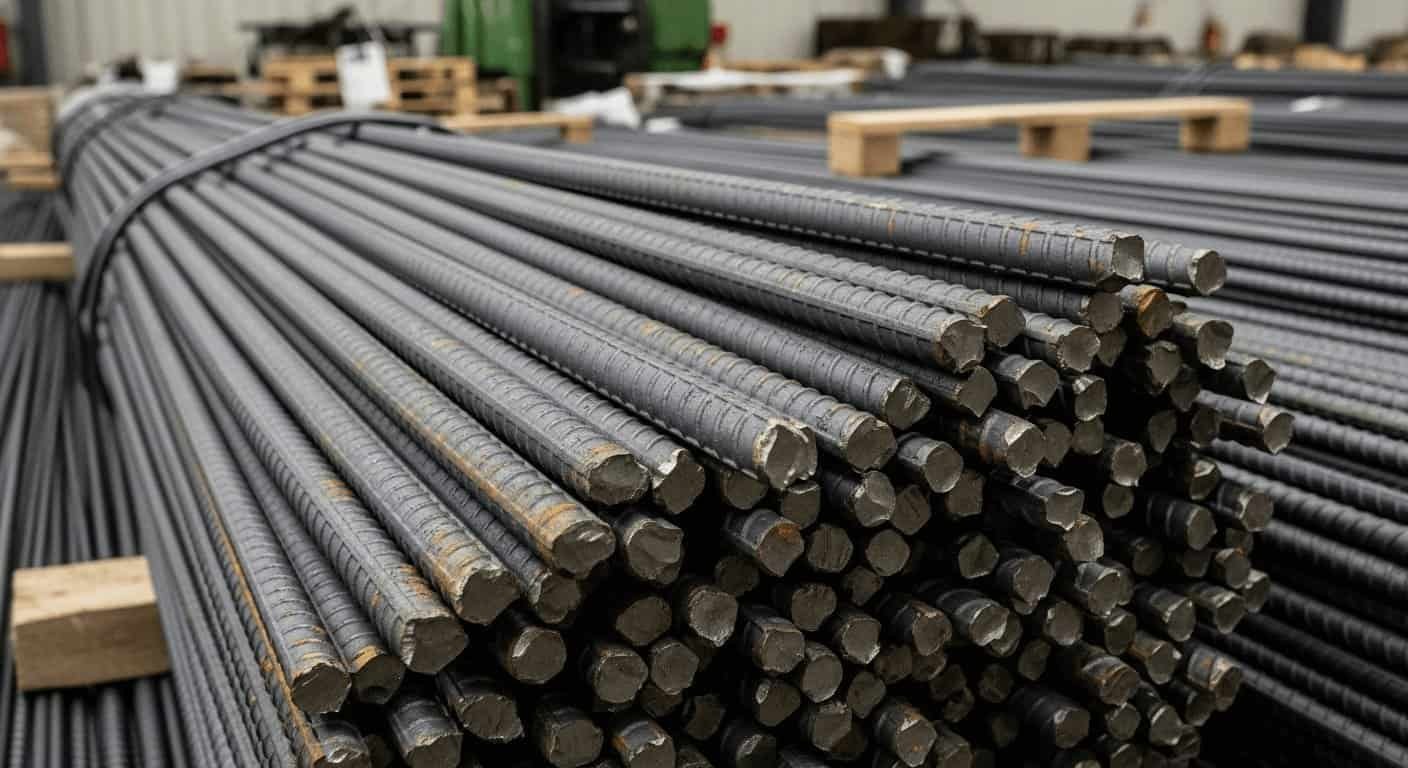
Wrong rebar estimates increase costs, waste materials, and disrupt schedules. Accurate weight calculations help buyers avoid expensive mistakes and improve project planning.
The most accurate way to calculate steel rebar weight is by using the standard formula based on diameter and length. Understanding the unit weight of rebar, checking a reliable rebar weight chart, and verifying actual shipment weights help contractors, distributor, and importers control costs, improve logistics planning, and ensure product quality.
Understanding rebar weight fundamentals makes purchasing, budgeting, and logistics management significantly easier.
What Is Steel Rebar Weight and Why Does It Matter?
Buyers need to be aware of how rebar weight impacts building project budgets, transportation expenses, structural calculations, and inventory management before making reinforcing material purchases.
The mass of reinforcing bars determined by their diameter, length, and material density is referred to as rebar baja bobot. Proper ordering, effective shipping, and adherence to technical specifications are all made possible by accurate weight calculations.
Knowing the weight of steel rebar is crucial for contractors, grosir, distributor, and importers alike. For strength and longevity, reinforcement bars are essential to every building project. Nanging, buying too little rebar might cause building schedules to be delayed, while buying too much raises expenses.
Weight estimates have an impact on shipping costs for foreign buyers that import from China. Accurate weight data is frequently necessary for customs paperwork, container loading schedules, and ocean freight fees.
Kajaba iku, while determining structural loads, engineers take into account the weight of reinforcement bars. Project planning and material estimation may be impacted by incorrect assumptions. Akibate, knowing rebar weight is crucial for both engineering and purchasing.
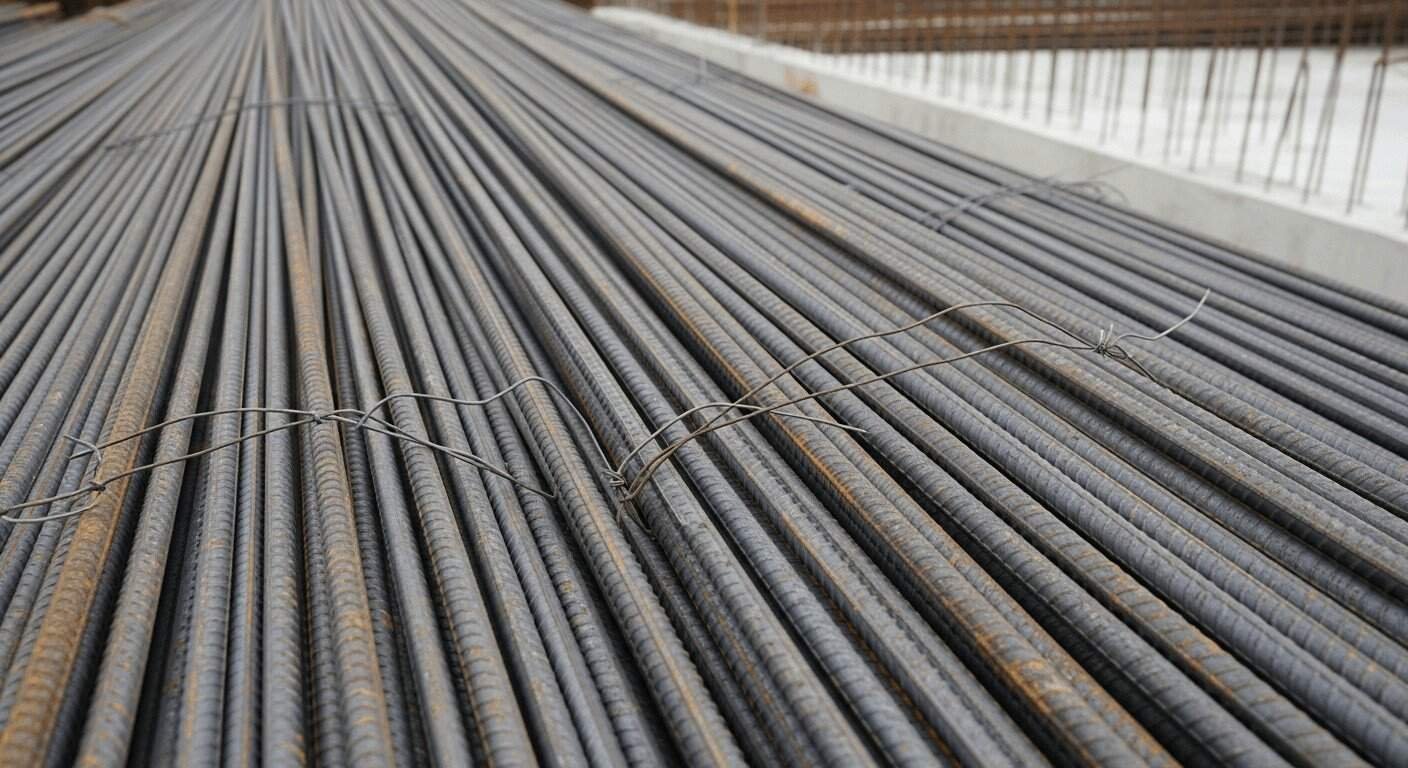
How Is Steel Rebar Weight Calculated?
Many consumers are curious about how engineers and manufacturers calculate the weight of rebar without actually weighing each bar prior to installation or shipment.
Diameter, length, and steel density are used to compute rebar weight. Before placing an order, pengiriman, or installing reinforcement bars, customers can precisely estimate weight using standard methods.
There is a simple method for calculating the weight of steel rebar. The diameter and length of the bar are the primary variables because steel density is largely constant.
The widely accepted formula is:
Bobot (kg) = D² × L ÷ 162
Where:
- D = Diameter in millimeters
- L = Length in meters
Contone:
A 12mm rebar with a length of 12 meter:
12² × 12 ÷ 162
= 144 × 12 ÷ 162
= 10.67 kg
Numerous online steel rebar weight calculators are based on this method, which is widely used throughout the world.
Buyers can more efficiently compare supplier quotations and determine shipping quantities by comprehending this calculation.
What Is the Standard Formula for Steel Rebar Weight?
When determining the quantity of bar tulangan, using a consistent formula guarantees uniformity among suppliers, kontraktor, engineers, and inspectors.
For one-meter bars, the typical formula for rebar weight is D² ÷ 162. The overall weight of the reinforcement bars is obtained by multiplying the result by the total length.
The formula:
Rebar Weight per Meter = D² ÷ 162
is widely accepted in the steel industry.
Examples include:
| Diameter | Weight per Meter |
| 8mm | 0.395 kg/m |
| 10mm | 0.617 kg/m |
| 12mm | 0.889 kg/m |
| 16mm | 1.58 kg/m |
| 20mm | 2.47 kg/m |
| 25mm | 3.85 kg/m |
| 32mm | 6.31 kg/m |
The majority of engineering calculations are based on this formula, which yields the theoretical rebar unit weight.
These figures are frequently included by manufacturers in technical datasheets, enabling customers to swiftly confirm numbers prior to placing sizable purchases.
How Much Does Rebar Weigh Per Meter?
Because diameter affects the weight per meter, it’s critical to choose the appropriate standard for every application.
As the diameter grows, so does the weight of steel rebar per meter. Bigger bars are stronger, but they also cost more to make and carry.
Because rebar weight kg per meter directly affects project expenditures, it is one of the most popular search terms.
Below is a practical steel rebar weight chart:
| Diameter | Bobot (kg/m) |
| 6mm | 0.222 |
| 8mm | 0.395 |
| 10mm | 0.617 |
| 12mm | 0.889 |
| 14mm | 1.21 |
| 16mm | 1.58 |
| 18mm | 2.00 |
| 20mm | 2.47 |
| 25mm | 3.85 |
| 32mm | 6.31 |
One of the most widely used reinforcement sizes in residential and commercial construction is the well-liked 12mm rebar, which weighs about 0.889 kg per meter.
Project planning and purchase decisions are made easier by using a trustworthy rebar weight table.
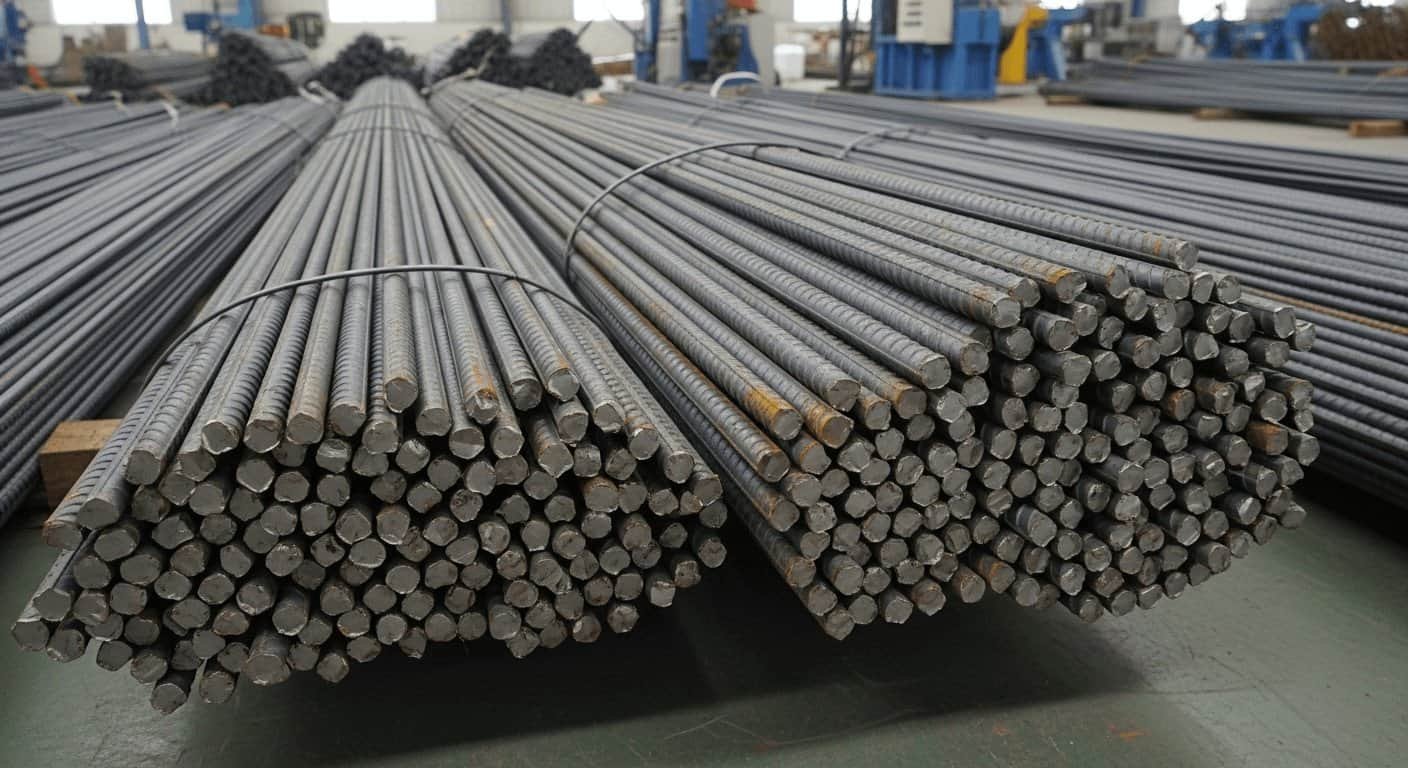
How Does Rebar Diameter Affect Steel Rebar Weight?
Because even slight increases can have a substantial impact on total material quantities, diameter is the most crucial factor influencing rebar weight.
Weight increases exponentially rather than linearly with rebar diameter. Larger diameters weigh a lot more because they contain a lot more steel.
A common misconception among consumers is that doubling the diameter also doubles the weight. Ing kasunyatan, weight rises in proportion to the diameter squared.
Contone:
- 10mm rebar = 0.617 kg/m
- 20mm rebar = 2.47 kg/m
The diameter doubles, while the weight increases by around four times.
Planning for logistics and procurement is significantly impacted by this relationship. Although selecting a little bigger diameter can greatly raise project costs, it may also improve structural performance.
Before choosing reinforcing specifications, buyers should always refer to engineering requirements. It is easier to avoid overordering and needless expenses when one is aware of the relationship between rebar’s diameter and unit weight.
Does Rebar Length Change the Total Weight?
The amount of reinforcement that can be effectively transported or stored depends on length, which also directly affects overall weight.
Because total weight is equal to weight per meter multiplied by total length, longer rebar bars weigh more. For procurement planning, precise length calculations are crucial.
Total length determines the total amount of steel purchased, whereas diameter determines the weight per meter.
Contone:
- A 16mm rebar weighs approximately 1.58 kg/m.
- A 12-meter bar weighs:
- 1.58 × 12 = 18.96 kg
- A 6-meter bar weighs:
- 1.58 × 6 = 9.48 kg
This principle applies regardless of diameter.
Importers often purchase rebar in standard lengths, kayata
- 6 meter
- 9 meter
- 12 meter
Buyers can anticipate shipping costs, warehouse capacity, and unloading requirements by accurately measuring the overall length.
These computations can be made easier, and estimating mistakes can be decreased by using a steel rebar weight calculator.
How Do You Convert Steel Rebar Weight Between Metric and Imperial Units?
In order to comply with local regulations, international steel commerce frequently necessitates translating measurements between metric and imperial systems.
Whereas imperial systems usually employ pounds per foot, metric rebar weight is measured in kilograms per meter. Consistent computations are ensured by conversion factors.
Different measurement systems are used by global steel markets to satisfy consumers.
Common conversions include:
- 1 kilogram = 2.20462 pounds
- 1 meter = 3.28084 sikil
Suppose a rebar weighs 1.58 kg/m.
Conversion:
1.58 × 2.20462 ÷ 3.28084
= 1.06 lb/ft
For exporters supplying North America, South America, and overseas building projects, accurate conversions are particularly crucial.
Costly misconceptions can be avoided by keeping engineering drawings, supplier requirements, and procurement documentation consistent.

What Are the Acceptable Weight Tolerances for Rebar?
Because of production standards and manufacturing tolerances, actual rebar weight may vary somewhat from theoretical figures.
Small differences between theoretical and real rebar weights are permitted by industry norms. National and international standards determine acceptable limits.
No manufacturing method yields products that are exactly alike. Akibate, allowable weight limitations are set by standards groups.
Common standards include:
- standar ASTM
- BS standards
- EN standards
- ISO-related specifications
Actual weight may vary slightly due to rolling processes and dimensional tolerances.
Quality-conscious buyers should request:
- Mill test certificates
- Material inspection reports
- Dimensional verification documents
An extra degree of quality control is provided by comparing actual shipping weights to theoretical steel rebar weight chart values.
Buyers can differentiate between typical manufacturing variances and possible quality problems by being aware of tolerance limits.
How Does Steel Rebar Weight Impact Shipping and Logistics Costs?
Particularly for shipments abroad, transportation costs frequently account for a sizable amount of the overall cost of purchasing steel.
Shipments of heavier rebar result in higher handling, loading, and freight expenses. Precise weight calculations enhance budget forecasts and logistics effectiveness.
Calculations of steel rebar weight are crucial to logistics planning for steel importers and exporters.
Weight affects:
- Container loading capacity
- Freight quotations
- Port handling fees
- Warehouse storage requirements
- Truck transportation costs
Contone, a standard 20-foot container may carry approximately 25–28 metric tons depending on local regulations.
If weight calculations are inaccurate, buyers may encounter:
- Unexpected freight costs
- Customs clearance delays
- Loading inefficiencies
- Shipment scheduling problems
Procurement teams can optimize container utilization while adhering to transportation requirements by using precise rebar unit weight estimations.
This is especially crucial for China’s steel exports to markets in Southeast Asia, the Middle East, Brazil, Argentina, Chile, Colombia, Peru, and Mexico.
How Can Buyers Use Steel Rebar Weight to Verify Product Quality?
Weight verification is a straightforward but efficient way for seasoned buyers to evaluate a product’s quality before accepting it.
Dimensional errors can be found, and specification compliance can be confirmed by comparing actual shipping weights to theoretical values.
One useful tool for quality control is weight verification.
The process typically includes:
- Confirming nominal diameter.
- Checking bar length.
- Calculating theoretical weight.
- Comparing actual measured weight.
- Significant deviations may indicate:
- Dimensional inconsistencies
- Manufacturing defects
- Non-compliance with specifications
- Potential quality concerns
When they arrive, professional purchasers often ask for mill credentials and conduct sporadic inspections.
When required, a reliable provider should facilitate third-party inspections and offer clear technical documentation.
Buyers can lower procurement risks and boost confidence in product quality by using a steel rebar weight calculator, comparing values to a steel rebar weight chart, and examining inspection reports.
This straightforward verification procedure helps distributors and construction firms make sure that the products they buy satisfy project specifications and industry norms.
Ringkesan
Precise steel rebar weight calculations enhance purchase efficiency, quality assurance, logistics planning, and budgeting, assisting construction workers in making smarter choices throughout each project.