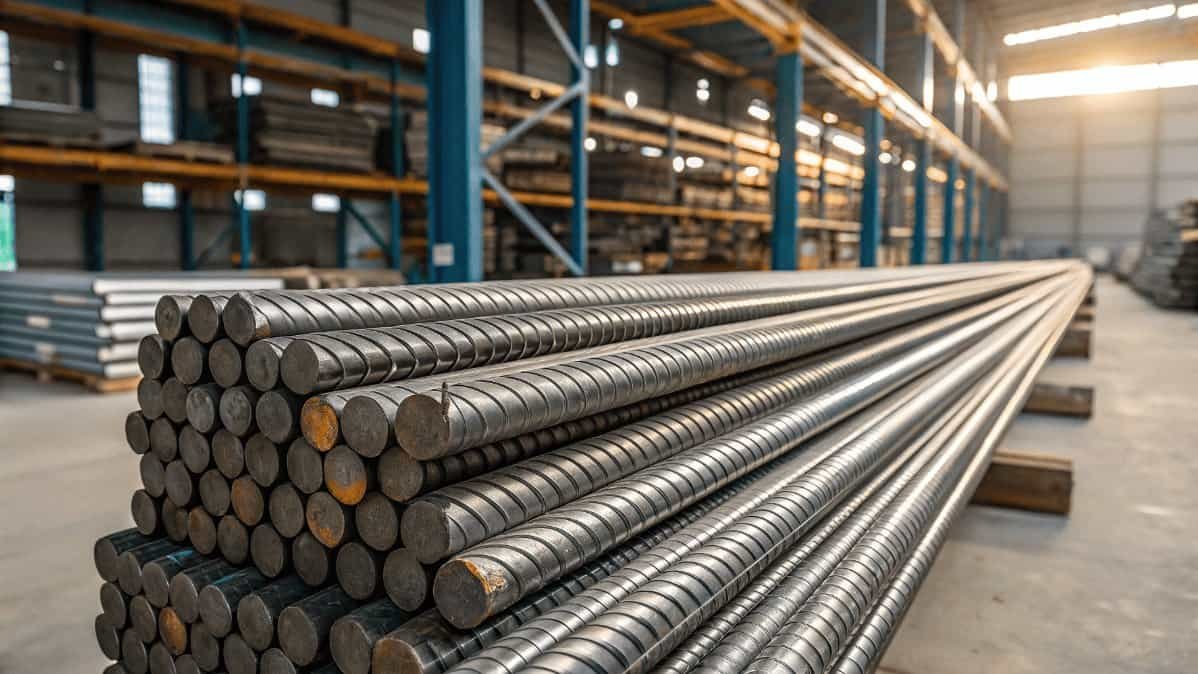
Concrete cracks easily under tension. Many builders rely on rebar without considering its drawbacks. Ignoring these issues can lead to costly repairs, sự chậm trễ, and reduced structural lifespan.
What are the downsides of Rebar? The main downsides of rebar include corrosion, rust-related concrete damage, heavy weight, installation complexity, maintenance requirements, transportation costs, and performance challenges in harsh environments. While rebar remains the most widely used reinforcement material, choosing the right type, lớp phủ, and supplier can significantly reduce these disadvantages and improve long-term structural durability.
Understanding these challenges helps builders make smarter material decisions.
Why Is Corrosion Considered the Biggest Downside of Rebar?
The purpose of rebar is to make concrete stronger and more resilient to tension. It’s crucial to realize that rebar is the term for steel reinforcing bars that are inserted into concrete structures. Steel is nevertheless susceptible to corrosion when moisture, oxygen, and strong chemicals get through the concrete cover, even if concrete offers some protection.
Since corrosion has a direct impact on structural performance, it is commonly considered one of the most significant drawbacks of rebar. Steel’s capacity to support loads is diminished when it starts to rust because its cross-sectional area steadily shrinks. Coastal regions, industrial zones, and sites where deicing salts are regularly used on highways and bridges are particularly prone to corrosion.
Corrosion can have serious cost repercussions. Each year, governments and private businesses invest billions of dollars in fixing deteriorating infrastructure. Increasing the thickness of the concrete cover, employing corrosion inhibitors, applying epoxy coatings, or choosing galvanized and stainless steel rebar are common ways that engineers fight corrosion. Although these preventive actions can greatly increase service life and lower future maintenance costs, they may raise the project’s initial price.
How Does Rust Affect Concrete Structures Over Time?
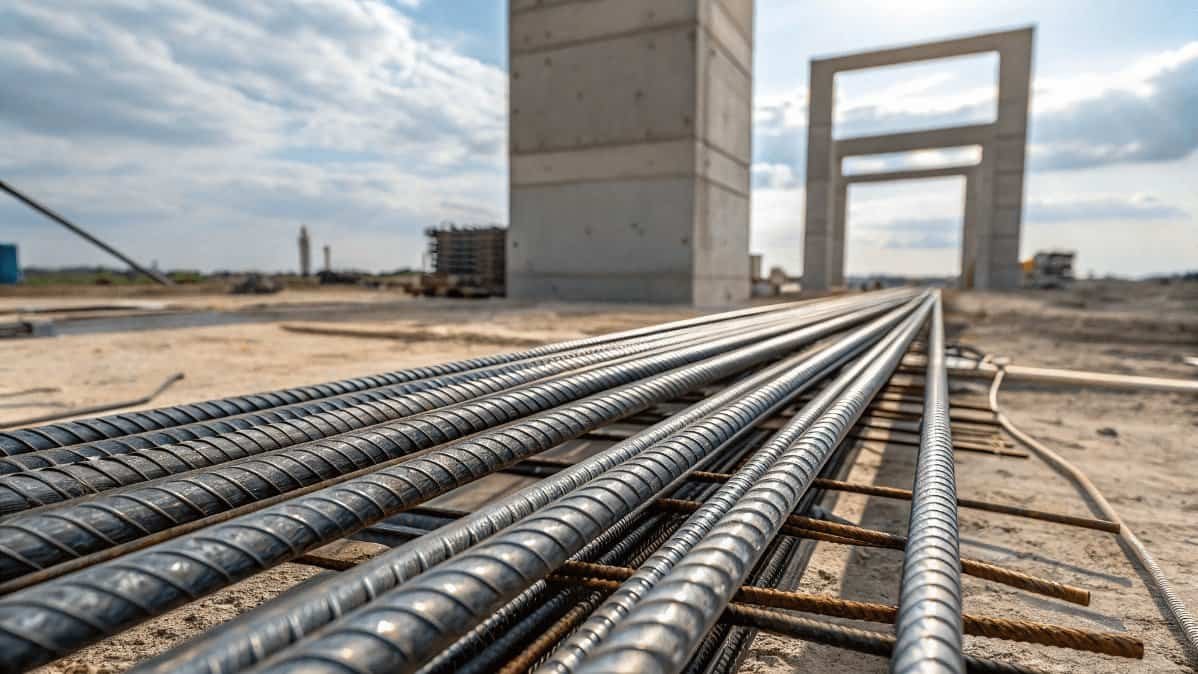
Many people believe that rust only harms steel, yet it has a far worse effect on structures made of reinforced concrete. Rust develops on the rebar’s surface and begins to spread once corrosion starts. The surrounding concrete experiences internal pressure as a result of this expansion.
The volume of rust can be many times that of the original steel. The corrosion products push outward on the concrete as they get bigger. Eventually, this pressure leads to breaches that let more oxygen and water into the reinforcement. After that, the corrosion cycle quickens, resulting in increasingly larger damage areas.
Spalling, in which concrete fragments separate from the structure, can result from these fissures over time. This issue can arise in high-rise structures, retaining walls, parking garages, cầu, and tunnels. Project owners can better understand the importance of corrosion protection by learning about rebar from the standpoint of structural engineering. Effective strategies to reduce rust-related degradation and maintain structural integrity include routine inspections, crack repairs, waterproof coatings, and appropriate drainage systems.
Is Rebar Too Heavy for Some Construction Projects?
Although steel is prized for its strength, its weight can provide practical difficulties when building. Rebar is much heavier than many contemporary reinforcement options, which complicates handling and transportation.
Every phase of a project is impacted by the weight of the rebar. Compared to lightweight materials, fewer tons can be transported per cargo, which raises transportation expenses. Careful planning is also necessary for on-site storage, particularly when substantial amounts of reinforcement are delivered before installation. To handle heavy loads safely, cranes, xe nâng, and specialized lifting equipment are frequently needed.
Managing big reinforcing cages can be time-consuming and labor-intensive for employees. Labor costs may rise if installation crews require more workers and equipment. For certain applications, this is one of the reasons why some engineers consider alternatives such as fiber-reinforced polymer bars. But knowing how rebar is manufactured helps to explain why steel is so strong in spite of its weight. Despite the logistical difficulties associated with this strength, the manufacturing process produces a dense material that can provide outstanding structural performance.
Why Can Rebar Increase Construction Costs?
The purchase price of rebar is the main consideration for many consumers; Tuy nhiên, the overall cost of ownership goes well beyond the original material expenditure. When assessing reinforcing options, construction professionals need to take into account a number of direct and indirect costs.
Global demand, the availability of raw materials, energy costs, and transportation costs all affect the price of steel. Project budgets can be greatly impacted by these market shifts, particularly for major infrastructure projects. Contractors are responsible for paying for cutting, uốn cong, tying, installation, điều tra, and storage in addition to purchasing the material.
The expense of long-term durability management is another element that adds to the drawbacks of rebar. Additional funding is needed for corrosion monitoring systems, protective coatings, and routine inspections. Costs can rise significantly when corrosion-related repairs are required. Vì điều này, seasoned consumers frequently place a higher value on quality than the best deal. By reducing the need for maintenance and repairs over the course of the structure’s lifetime, using certified items from reputable vendors often lowers long-term expenditures.
Does Rebar Require More Maintenance Than People Expect?
Many project owners anticipate that reinforced concrete buildings will require very little upkeep for many years. Rebar undoubtedly increases structural strength, but maintaining that performance frequently calls for much more care than people first realize.
Exposure to the environment has a significant impact on maintenance needs. Moisture penetration and corrosion are more likely to occur in buildings near seas, chemical plants, wastewater treatment plants, or areas with high rainfall. Hazardous materials can enter the reinforcement of concrete through even tiny gaps.
Frequent inspections are crucial for spotting issues before they worsen. Concrete cracking, rust staining, spalling, and water infiltration are frequently observed by engineers. Crack sealing, waterproofing treatments, protective coatings, and localized repairs are examples of preventive maintenance tasks. Asset owners can better understand why proactive maintenance can significantly increase service life by comprehending the meaning of rebars and the crucial role steel reinforcement plays inside concrete. Ignoring early warning indicators frequently leads to more expensive repairs and longer-term structural rehabilitation initiatives.
What Installation Challenges Are Associated with Rebar?
For reinforced concrete to function as planned, proper installation is crucial. Even the best Cải nên cannot make up for shoddy building work or improper placement.
Reinforcement must be properly positioned by installation personnel in accordance with technical specifications. It is essential to maintain appropriate concrete cover, overlap lengths, alignment, and spacing. The risk of corrosion increases dramatically when rebar is positioned too near the surface. Inadequate bar spacing may result in decreased structural capacity.
These specifications present a number of real-world difficulties. Employees require education, experience, and meticulousness. Accurately assembling and positioning large reinforcement cages can be challenging. Prior to the start of concrete placement, quality control examinations are required. Technically speaking, rebar entails much more than just inserting steel into concrete. Coordination between engineers, nhà thầu, inspectors, and suppliers is necessary for a successful installation to guarantee that the reinforcement system performs as intended for the duration of the structure’s service life.
How Does Rebar Perform in Aggressive Environmental Conditions?
The performance of rebar can be significantly impacted by environmental factors. Even though steel reinforcement works incredibly well in many applications, harsh environments hasten deterioration and raise long-term dangers.
One of the most difficult settings for reinforced concrete is the ocean. Chlorides found in saltwater can seep into concrete and cause corrosion. In a similar vein, industrial facilities may subject buildings to pollutants, acids, or chemicals that cause material deterioration. Corrosion processes can be accelerated by high humidity and frequent wet-dry cycles.
Engineers frequently design improved protective mechanisms to overcome these issues. Additional corrosion resistance is offered by stainless steel reinforcement, epoxy-coated rebar, and galvanized rebar. Knowing how rebar is manufactured makes it easier to understand how durability is affected by various coatings and alloy compositions. These high-end solutions may initially cost more, but they frequently result in significant savings by lowering maintenance needs and prolonging the structure’s usable life in challenging conditions.
Are There Stronger or More Corrosion-Resistant Alternatives to Rebar?
Although it is still the most used reinforcement material in the world, traditional carbon steel rebar is not the only choice. Materials science developments have brought about a number of substitutes intended to mitigate common rebar drawbacks.
In harsh situations, stainless steel rebar can significantly increase service life and provide outstanding corrosion resistance. Rebars that are galvanized and epoxy-coated offer intermediate levels of protection while adhering to standard installation procedures. Another option is fiber-reinforced polymer (FRP) bars, which are lighter and resistant to corrosion.
Every choice has benefits and drawbacks. Although stainless steel is more expensive initially, it has remarkable durability. Although FRP materials are resistant to corrosion, they could act differently under load than conventional steel. Before choosing a reinforcing system, engineers consider a number of aspects, including budget, tiếp xúc với môi trường, maintenance expectations, and structural requirements. Rather than using a one-size-fits-all strategy, the optimal option relies on the particular objectives and circumstances of each project.
Can Rebar Cause Delays in Construction Projects?
Timely delivery of materials and effective installation procedures are critical to construction deadlines. Rebar-related problems can occasionally cause expensive delays and interfere with these timetables.
In recent years, supply chain concerns have grown in significance. Material supply may be impacted by global market volatility, labor constraints, transportation bottlenecks, and steel production. Because reinforcement installation usually takes place before concrete placement, delayed deliveries can affect several stages of a project.
Understanding the production process of rebar aids in the explanation of these possible disturbances. Steel production, hot rolling, cooling, cắt, testing, and distribution are all part of manufacturing. Construction works downstream may be impacted by delays at any point. By placing early material orders, keeping in regular contact with nhà cung cấp, and creating backup plans, contractors frequently reduce these risks. Reliable sourcing partners are essential to maintaining project timeliness and preventing expensive delays.
How Can Builders Reduce the Downsides of Rebar?
Even though rebar has a number of drawbacks, many of these issues can be successfully resolved with careful preparation and material selection. Construction projects that are successful prioritize preventive over remedial measures.
One of the most crucial choices is selecting the right kind of reinforcement. Coated, mạ kẽm, or stainless steel rebar may offer substantial long-term advantages in corrosive conditions. Exposure to moisture and hazardous chemicals is further decreased by appropriate concrete mix design, sufficient cover thickness, and efficient drainage systems.
Explaining rebar from a practical standpoint entails being aware of both its advantages and disadvantages. Builders are better positioned to optimize structural performance if they collaborate with reliable suppliers, carry out comprehensive quality inspections, and put preventative maintenance plans in place. Even while some rebar drawbacks cannot be completely eradicated, their effects can be greatly diminished with careful engineering, ethical building techniques, and continuous asset management throughout the course of the structure’s life.
Bản tóm tắt
Although rebar is still necessary in contemporary building, builders can lower hazards, increase durability, manage costs, and improve long-term structural performance by being aware of its drawbacks.