Struggling to pick the right stainless steel plate for your project? The wrong stainless steel plate thickness can mean failure and wasted money. I am here to help you choose correctly.
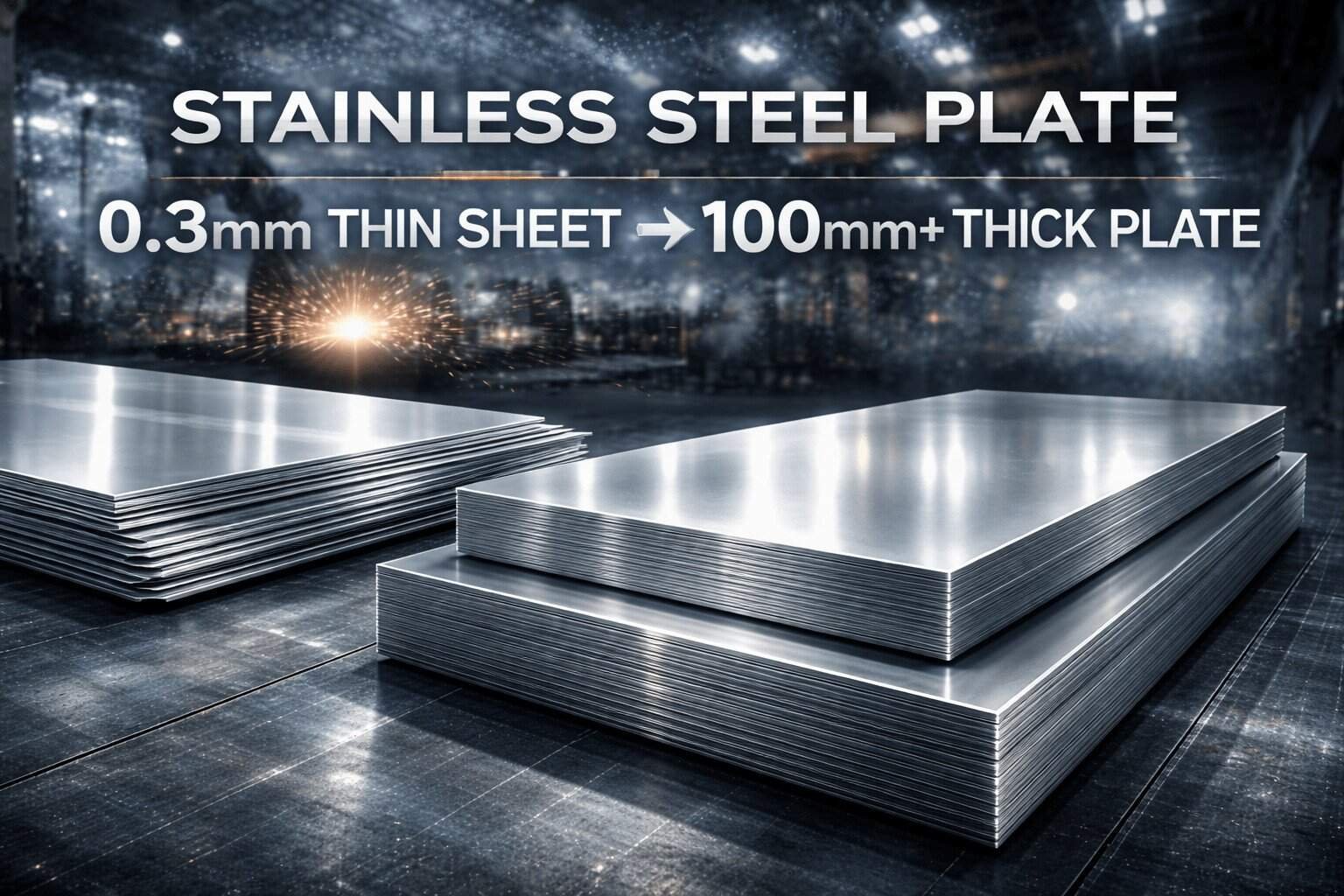
The thickness of a stainless steel plate can range from a very thin 0.3 mm sheet to a thick plate over 100 mm. The ideal thickness depends entirely on the application, from lightweight decorative panels to heavy-duty structural supports. Choosing the right one is critical for performance and safety.
I have been in the steel industry for 16 năm, and I have seen firsthand how this single detail—thickness—can make or break a project. It is not just a number on a spec sheet. It is the foundation of your project’s strength, longevity, and even its final cost. Understanding the differences is the first step to success. Let’s explore what these thicknesses mean for you.
What Are the Common Thickness Ranges for Stainless Steel Plates?
Confused by terms like “sheet” Và “plate”? This confusion can lead to costly ordering mistakes. Let us clarify the standard categories for you so you can order with confidence.
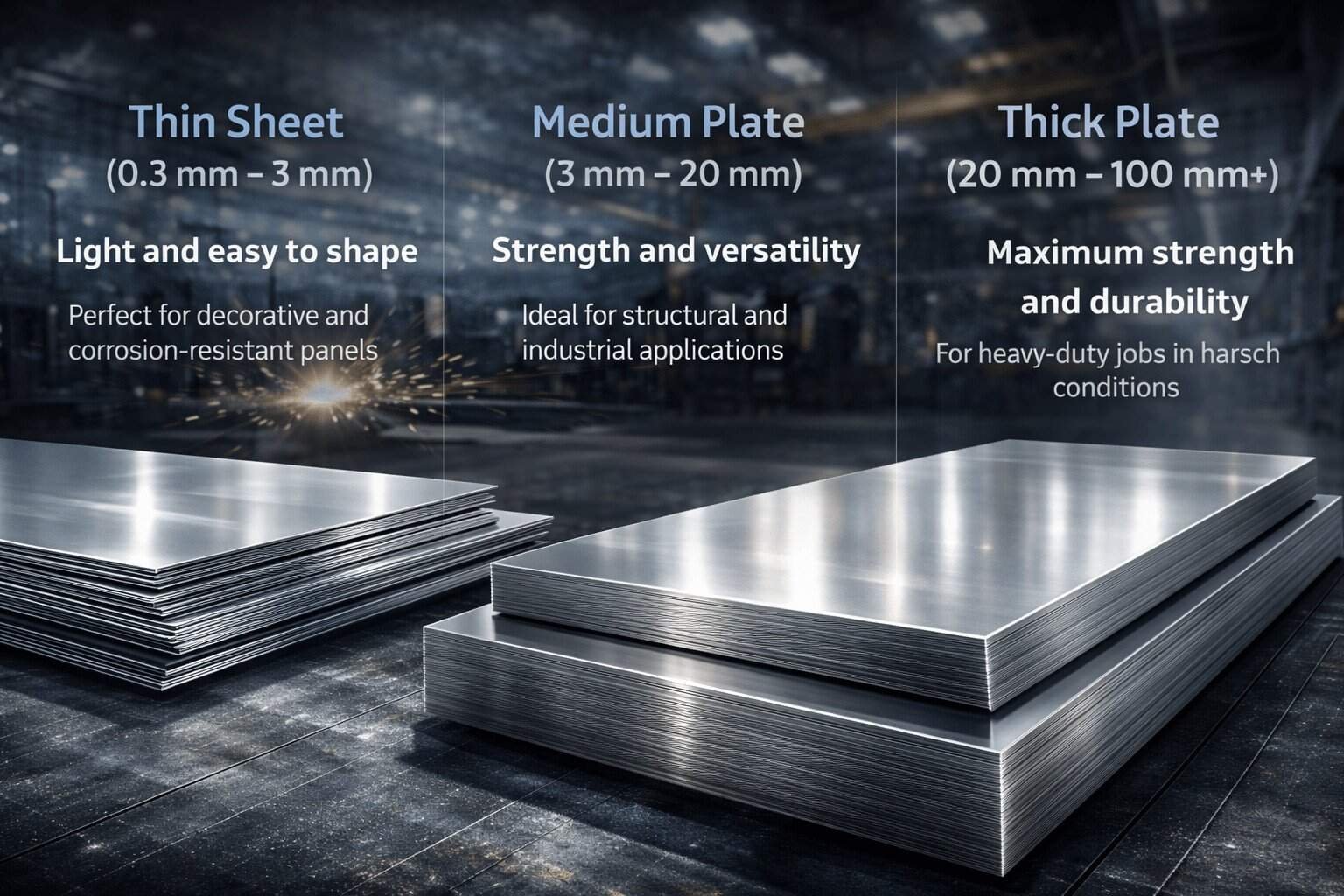
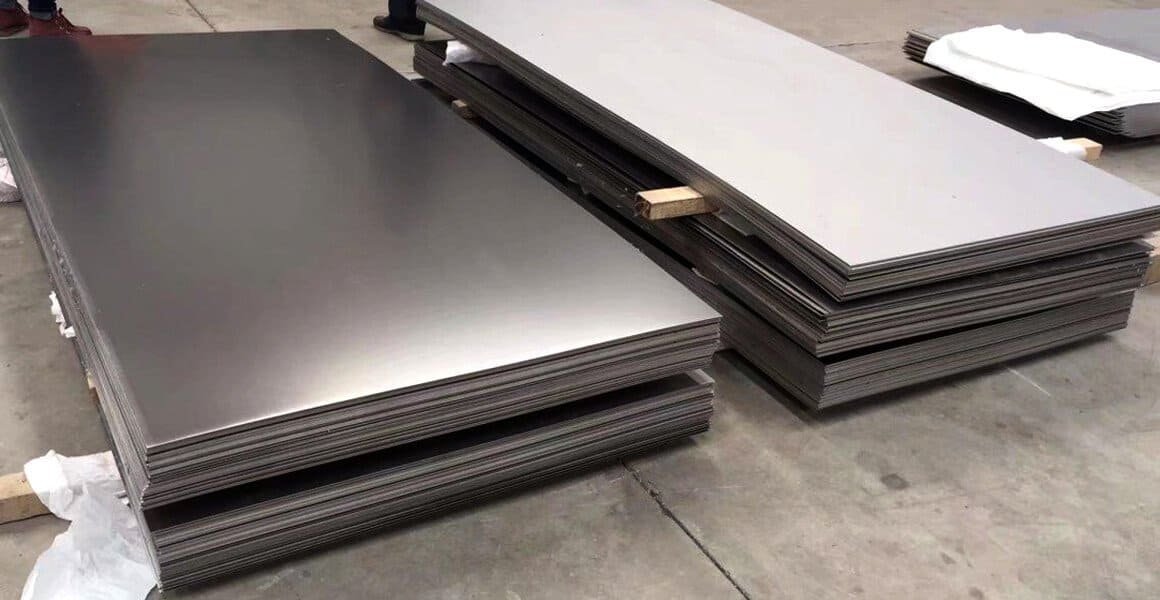
Stainless steel is typically categorized into three main thickness ranges. Thin sheets are 0.3mm to 3mm, medium plates are 3mm to 20mm, and thick plates are 20mm and up. Each range serves very different purposes in construction and manufacturing.
At my factory, Yuanchi, we handle requests for every type of stainless steel plate imaginable. The terminology is important because it tells us exactly what the customer needs. A client building kitchen equipment will ask for a thin stainless steel sheet, while a company constructing an industrial tank will need a much thicker stainless plate. Getting this right from the start saves everyone time and money. Here is a breakdown to help you understand what you are buying.
Thin Sheet (0.3 mm – 3 mm)
This is the most common category for applications where weight and formability are key. These Tấm thép không gỉ are light and easy to bend, cut, and shape. They are perfect for creating surfaces that need to be corrosion-resistant and look good, but do not need to support heavy loads. We often supply this for decorative stainless steel panels.
Medium Plate (3 mm – 20 mm)
This range is the workhorse for many structural and industrial applications. It offers a great balance between strength, weight, and cost. A medium stainless plate is strong enough for structural components and machinery parts but is still reasonably easy to fabricate and weld.
Thick Plate (20 mm – 100 mm+)
When you need maximum strength and durability, you need a thick plate. This category is for heavy-duty jobs where the material will face extreme stress, pressure, or harsh conditions. It is heavier and more difficult to work with, but its strength is unmatched.
| Category | Thickness Range | Common Applications |
|---|---|---|
| Sheet | 0.3 mm – 3 mm | Kitchen sinks, decorative panels, appliance casings, car bodies |
| Medium Plate | 3 mm – 20 mm | Structural parts, machinery components, storage tanks |
| Thick Plate | 20 mm – 100 mm+ | Bridge components, tàu tàu, Tàu áp lực |
Why Does Thickness Matter So Much for Stainless Steel?
Thinking any thickness will do? A thin plate used for a structural job will buckle under pressure. This simple mistake can compromise the safety of the entire project.
Thickness directly impacts a stainless steel plate’s strength, weight, trị giá, and suitability for a job. A thicker plate offers more structural integrity and durability but is heavier and more expensive. Matching thickness to the application is critical for performance, safety, and budget.
I remember a client who wanted to build a series of outdoor platforms. To save on initial costs, they considered using a thinner grade of 304 stainless steel plate than we recommended. I explained that while the material itself resists rust, the thinner plate would not have the structural strength to handle the expected foot traffic and equipment load, especially over time. They would risk bending and potential failure. By investing in the correct, slightly thicker plate, they ensured the platforms would be safe and last for decades. This is why we always discuss the application in detail.
Strength and Load-Bearing Capacity
This is the most obvious reason thickness matters. The thicker the ss sheet metal, the more weight and stress it can handle without bending or breaking. For a simple decorative panel, this is not a concern. For a support beam in a building or the base of a heavy machine, it is everything.
Durability and Corrosion
Tất cả thép không gỉ resists corrosion. Tuy nhiên, in very harsh environments like chemical plants or marine settings, corrosion can still happen over a long period. A thicker plate provides more material, meaning it will take much longer for corrosion to compromise its structural integrity. It is an extra layer of long-term security.
Workability and Cost
Thickness also affects how you work with the material. Thin stainless sheet metal is easy to cut, uốn cong, and weld. As the plate gets thicker, you need more powerful and specialized equipment to fabricate it. This increases labor and equipment costs. Thicker material also costs more per square meter simply because it contains more raw material. The goal is to find the sweet spot: thick enough for the job, but not so thick that it drives up costs unnecessarily.
How Do I Choose the Right Stainless Steel Plate Thickness?
Feeling overwhelmed by the choices? Ordering the wrong material wastes time and money. I can give you a simple framework for making the right decision every time.
To choose the right thickness, you must consider four key factors: the application’s structural load, the environmental conditions, your project budget, and the fabrication processes involved. Analyzing these will guide you to the perfect stainless steel sheet thickness.
As ss sheet suppliers with 16 năm kinh nghiệm xuất khẩu, we have developed a simple process to help our clients. We walk through these four points on every inquiry. It is not about just selling steel; it is about providing a solution that works. My job is to make sure the material you receive from Yuanchi is precisely what you need for a successful project. Let’s use this framework to break down your decision.
1. Assess the Application’s Load
Đầu tiên, what will the plate do? Will it support weight? If so, how much? A shelf holding light items needs a much thinner plate than a walkway that must support people and equipment. Will it face impact or vibration? These dynamic forces require extra strength, and therefore, extra thickness. Be realistic about the maximum stress the material will face.
2. Consider the Environment
Where will the stainless steel sheets be used? An indoor, dry environment is very different from an outdoor, coastal one with salt spray. Will it be exposed to chemicals, extreme temperatures, or high moisture? Harsher environments may require a thicker plate to provide a better long-term barrier against corrosion and wear.
3. Factor in the Budget
Cost is always a factor. Thicker stainless steel plates cost more, both in material and in fabrication. You need to find a balance. Do not sacrifice safety or longevity to save a small amount upfront. But also, do not over-specify and pay for thickness you do not need. Calculate the total cost, including shipping and fabrication, not just the material price.
4. Plan for Fabrication
Cuối cùng, how will you turn the plate into your final product? Do you have the equipment to cut, uốn cong, and weld the thickness you are considering? MỘT 2mm stainless steel sheet can be worked in almost any shop. A 30mm plate requires heavy-duty machinery. Make sure your fabrication capabilities match the material you choose.
What Are Some Real-World Examples for Different Thicknesses?
Do you see stainless steel everywhere but do not know the specs behind it? Understanding real-world examples helps you buy with confidence. Let’s look at some common uses.
Thin stainless sheets (under 3mm) are perfect for kitchen sinks and decorative panels. Medium plates (3-20mm) are used for industrial tanks and structural parts. Thick plates (over 20mm) are essential for heavy-duty applications like bridge construction.
Seeing is believing. When you can connect a thickness number to a physical object you know, it makes selection much easier. I have supplied stainless steel for all of these applications, and the specifications are always driven by the demands of the job. MỘT 304 stainless steel plate is a very common choice, but its thickness varies dramatically depending on the use case. Here is a table that breaks down some common examples you might see every day.
| Thickness Range | Specific Examples | Why this thickness is chosen |
|---|---|---|
| Thin Sheet (0.3 mm – 3 mm) | Kitchen Sinks, Appliance Casings, Elevator Panels, Automotive Trim | The focus here is on a clean, corrosion-resistant surface that is lightweight and easy to form into complex shapes. The structural load is minimal. We often supply this stainless sheet metal for architectural and decorative purposes. |
| Medium Plate (3 mm – 20 mm) | Food Processing Tanks, Catwalks, Machine Frames, General Structural Supports | This is the middle ground. It provides good structural strength for moderate loads without being excessively heavy or difficult to fabricate. It is a balance of performance and cost for many industrial projects. |
| Thick Plate (> 20 mm) | Bridge Supports, Ship Hulls, Pressure Vessels, Large-Scale Building Foundations | In these applications, failure is not an option. Maximum strength, impact resistance, and durability are required to handle extreme pressure, heavy loads, and harsh conditions. The ss sheet metal must be thick to ensure safety and longevity. |
Conclusion
Choosing the correct stainless steel plate thickness is vital. Consider the load, môi trường, and your budget to ensure your project’s success, safety, và độ bền. We are here to help.