Struggling with product design? Choosing the wrong aluminum thickness can ruin your project’s strength, cân nặng, và ngân sách. It’s a costly mistake I’ve seen people make many times.
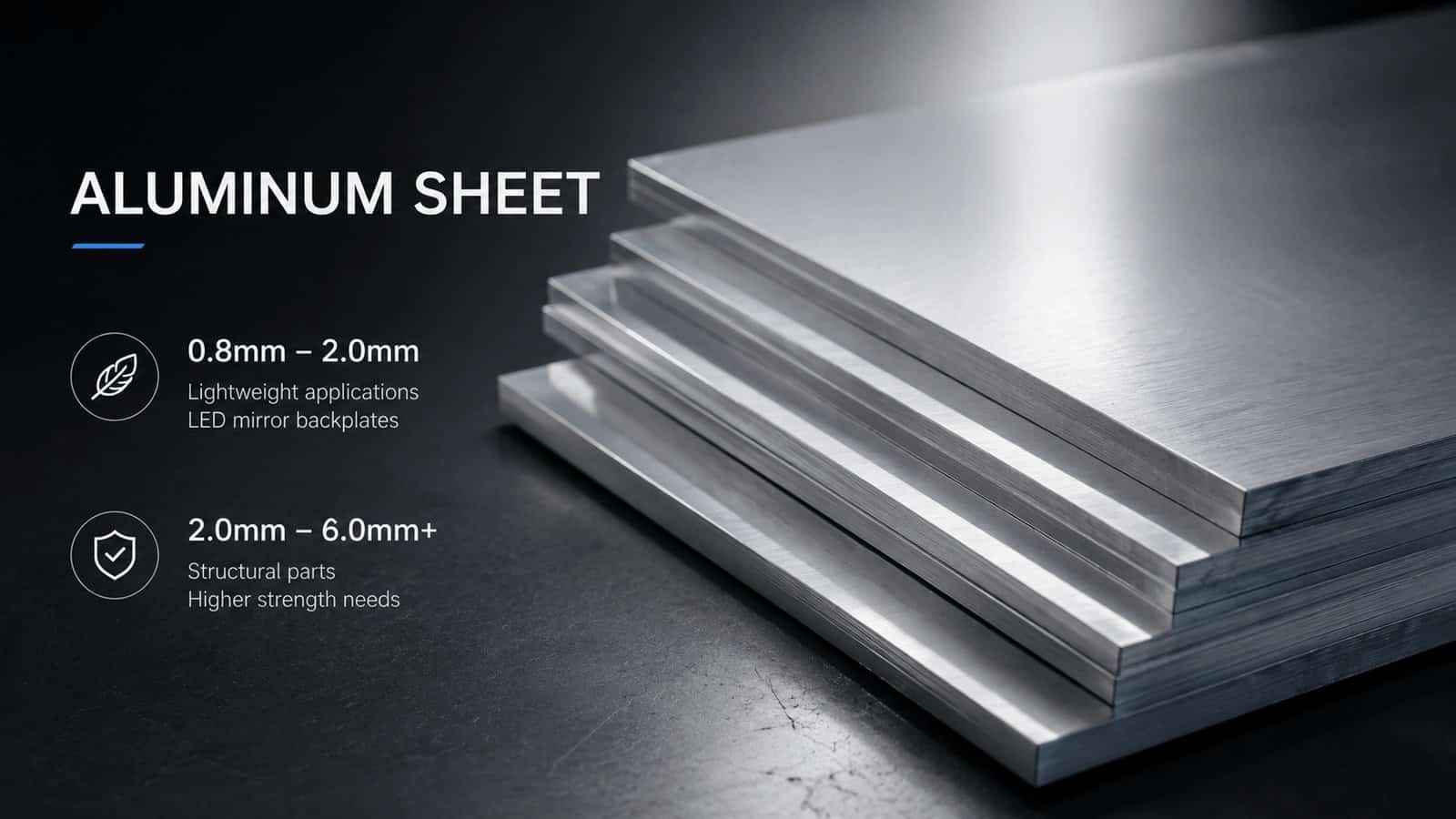
Choose the right tấm nhôm thickness by considering its final use. For lightweight items like LED mirror backplates, use 0.8mm to 2.0mm. For structural parts that need more strength, you might need 2.0mm to 6.0mm or thicker. The key is to balance strength, cân nặng, and cost for your specific project.
I’ve been in the manufacturing business for over 16 năm. In that time, I’ve seen how a simple choice, like the thickness of an aluminum sheet, can make or break a product. It seems like a small detail, but it affects everything from durability to the final price tag. It’s a lesson I learned the hard way early in my career. Let me walk you through what I’ve learned, so you can get it right the first time and avoid common pitfalls.
What Are the Different Types of Aluminum Sheet Thicknesses?
Feeling lost in technical specs? The terms “thin,” “medium,” Và “thick” aluminum sheets can be confusing. Choosing incorrectly can lead to overspending or, even worse, product failure.
Aluminum sheets are mainly classified by their thickness. Thin sheets (0.2-2.0mm) are for light applications. Medium sheets (2.0-6.0mm) are for general use. Thick plates (6mm+) are for heavy-duty structural needs, offering the highest strength.
When we talk about aluminum sheets in my factory, thickness is one of the first specifications we discuss. It’s a fundamental property that dictates what you can do with the material. Let’s break down the common categories to make it simpler.
Thin Sheets: For Lighter Applications
Thin sheets, generally between 0.2mm and 2.0mm, are all about being lightweight and flexible. Think about everyday items like beverage cans or electronic casings. In my business of making LED mirrors, we heavily rely on this range. A thin sheet is perfect as a backplate because it keeps the mirror light enough for easy wall mounting. It’s also easy to process, meaning we can cut and shape it for custom designs without a lot of extra cost.
Medium Sheets: The All-Rounder
This is the workhorse category, typically from 2.0mm to 6.0mm thick. It strikes a great balance between strength, cân nặng, và chi phí. You see it everywhere, from building facades to the body panels on cars and boats. It’s strong enough for many structural applications but not so heavy or expensive that it breaks the budget. It’s the safe, reliable choice when you need more rigidity than a thin sheet can offer.
Thick Plates: For Heavy-Duty Strength
Once you go above 6.0mm, you’re in the realm of thick plates. This is for serious, heavy-duty work. Think about machine frames, industrial molds, and major structural components in ships or aircraft. These plates provide maximum strength and load-bearing capacity. Tuy nhiên, they are also heavier, more expensive, and require specialized, powerful equipment to cut and shape. It’s not something you choose lightly; you use it when structural integrity is the absolute top priority.
| Thickness Category | Typical Range (mm) | Common Applications | Key Characteristics |
|---|---|---|---|
| Thin Sheet | 0.2mm – 2.0mm | LED mirror backplates, electronics casings, signs | Nhẹ, flexible, easy to process, lower cost |
| Medium Sheet | 2.0mm – 6.0mm | Building facades, industrial equipment, boat hulls | Good balance of strength, cân nặng, và chi phí |
| Thick Plate | 6.0mm+ | Molds, heavy machinery frames, structural components | High strength, excellent load-bearing, more costly |
How Do You Decide Which Aluminum Thickness to Use?
Worried about making the wrong choice? Picking an aluminum thickness feels like a gamble between performance and budget. A bad decision can be a very expensive lesson to learn.
Select the right thickness by evaluating four key factors. Consider the usage environment, the load it must bear, the manufacturing process it will undergo, and your overall project budget. A balanced approach ensures optimal performance and cost-effectiveness.
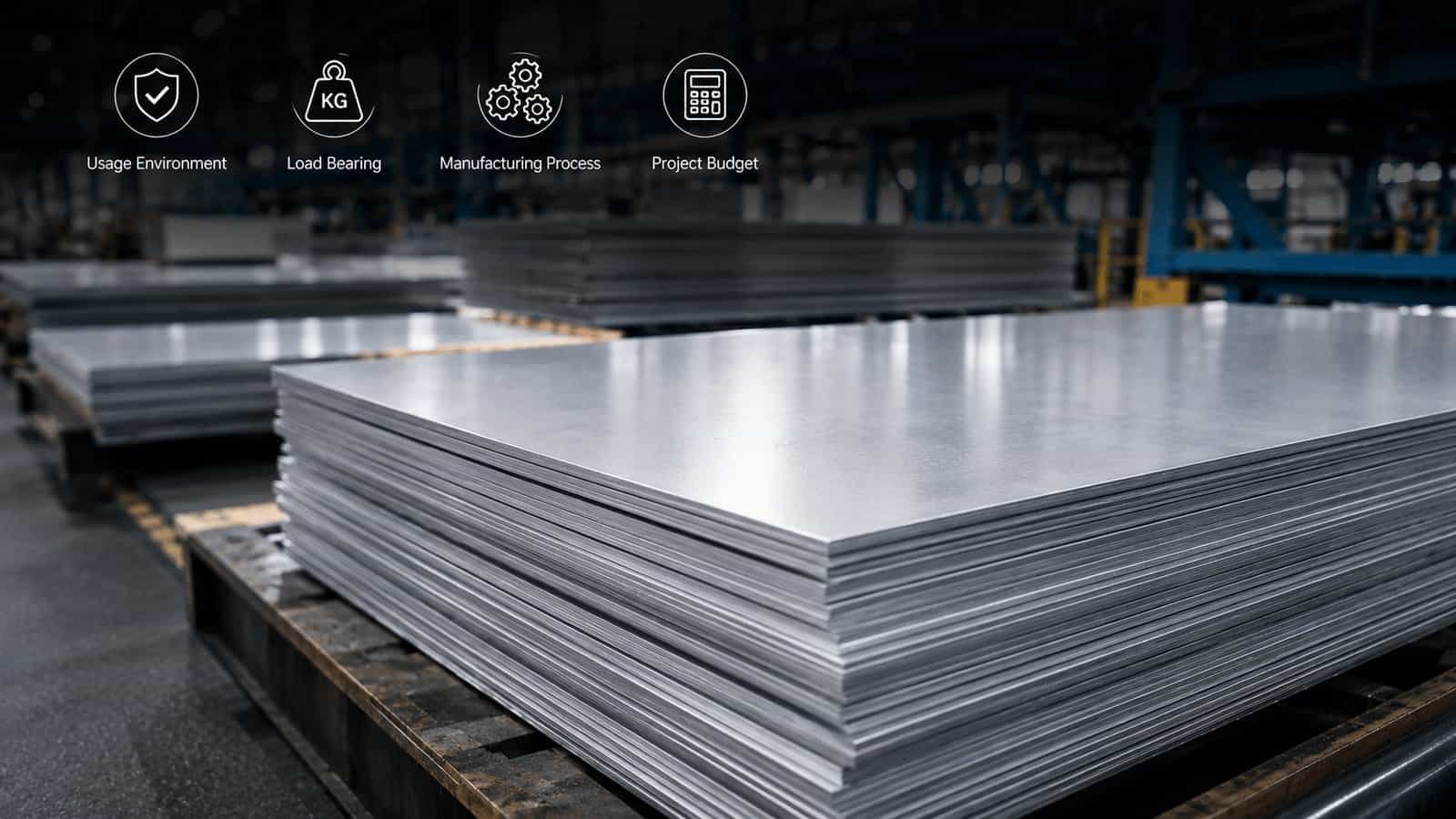
Over the years, I’ve developed a simple checklist to help my customers choose the right thickness. It’s not about finding the thickest or cheapest option; it’s about finding the smartest option for your specific need.
1. Consider the Environment
Where will the final product live? This is my first question. If you’re making something for a dry, indoor space, you have more flexibility. But if it’s for a humid or outdoor environment, you need to think differently. Ví dụ, for a hotel client who needed mirrors for steamy bathrooms, we recommended a slightly thicker aluminum backplate. The added rigidity helps prevent warping from moisture and temperature changes over time. A thicker material, especially with a good protective coating, simply lasts longer in harsh conditions.
2. Calculate the Load Requirements
What job does the aluminum need to do? If it’s just a decorative cover, you can use a thin sheet. If it needs to support weight, you need to go thicker. Think of it like a bookshelf. A thin shelf will sag under the weight of heavy books. A thick, sturdy shelf holds the weight without a problem. For LED mirrors, the backplate needs to support the mirror glass, the LED strips, and the power supply. It’s a structural job, so we can’t go too thin.
3. Factor in the Manufacturing Process
How will you shape the aluminum? If your design requires sharp, tight bends, a very thick sheet might crack or be impossible to form with standard tools. Mặt khác, a sheet that’s too thin might tear during stamping or punching. In my factory, we always run tests. Before a big production run, we take the client’s design and test it on different thicknesses to see which one gives the best result without failing.
4. Balance Performance with Cost
Cuối cùng, it all comes down to budget. It’s easy to say, “let’s use the thickest plate for maximum strength,” but that’s not a smart business decision. A thicker sheet doesn’t just cost more in raw material. It’s also heavier, which increases shipping costs. And it often takes more time and energy to machine, which increases manufacturing costs. The goal is to find the “sweet spot”—the thickness that meets all your performance needs without any unnecessary cost.
Where Are Different Aluminum Thicknesses Used in Real Life?
Can’t picture how thickness applies to real products? It’s hard to connect a number like “1.5mm” to a finished item. This makes choosing the right spec feel abstract and difficult.
In LED mirror factory, we typically use 0.8mm to 1.5mm aluminum for backplates. Ngược lại, the building industry often uses 1.5mm to 3.0mm for facades, while heavy machinery might require plates over 10mm thick for structural integrity.
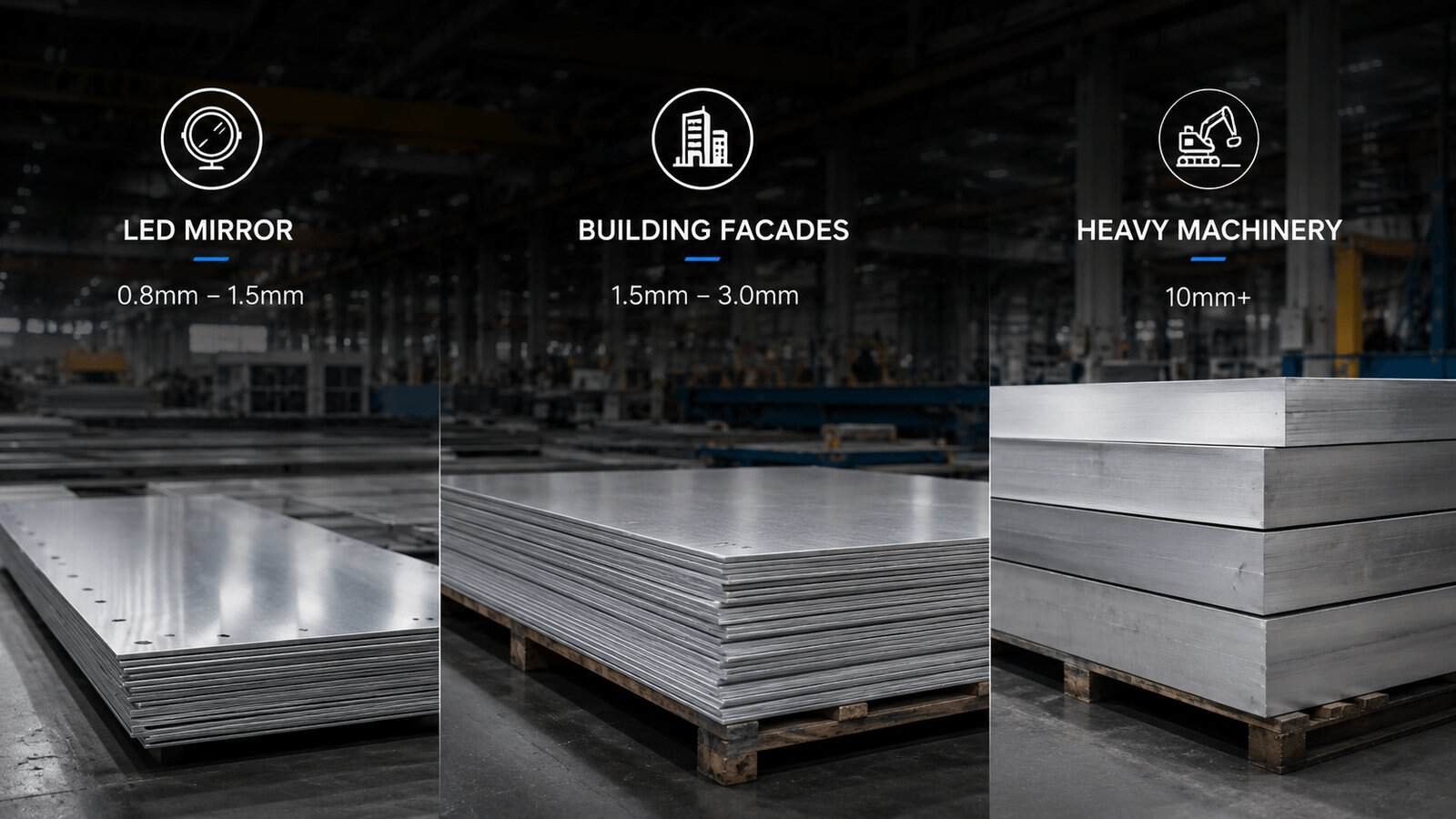
Seeing how thickness is applied in the real world makes it much easier to understand. Let’s look at a few industries, including my own, to see the principles in action.
In the LED Mirror Industry
At Ousheng Mirror, we’ve spent years perfecting our products. We’ve found the sweet spot for LED mirror backplates is between 0.8mm and 1.5mm. Why this specific range? If we go thinner, the backplate can feel flimsy and might not adequately protect the sensitive electronics inside. If we go thicker, we add unnecessary weight and cost. This makes the mirror harder to install and more expensive for our clients. This range gives us a product that is lightweight, rigid, bền bỉ, và hiệu quả chi phí. It’s a perfect balance.
In Building and Decoration
When you look at modern buildings with metal facades, you’re often seeing medium-thickness tấm nhôm, typically in the 1.5mm to 3.0mm range. This thickness is strong enough to withstand wind and weather without bending or vibrating. It also provides a smooth, flat surface that is ideal for architectural finishes. It’s a great choice for creating a sleek, bền bỉ, and relatively lightweight building skin.
In Heavy Manufacturing
Now let’s look at the other extreme. Think about the base of a huge CNC machine or the arm of a large industrial robot. These components must be incredibly rigid and strong to handle immense forces and vibrations. Đây, you’ll find thick aluminum plates, often 10mm, 20mm, or even thicker. The priority is pure strength and stability. The extra weight and cost are necessary trade-offs to ensure the machinery operates with precision and safety.
| Industry | Common Thickness Range (mm) | Example Use Case | Reason |
|---|---|---|---|
| LED Mirrors | 0.8mm – 1.5mm | Backplates and frames | Lightweight for wall mounting, rigid enough for support |
| Architecture | 1.5mm – 3.0mm | Facade panels, decorative cladding | Weather resistance, aesthetic finish, moderate strength |
| Machinery | 3.0mm – 10mm+ | Machine frames, structural parts | High strength and load-bearing capacity |
Conclusion
Choosing the right aluminum thickness is a key decision. You need to balance strength, cân nặng, processing needs, and budget to ensure your project’s long-term success.