Is féidir le roghnú an bhíoma cruach mícheart costais a mhéadú, reduce structural safety, agus moill ar thionscadail. Understanding the right beam helps you build stronger, níos sábháilte, and more efficiently.
The answer to when to use I-beam and H-beam depends on structural requirements. I-beams are ideal for lighter loads, shorter spans, and cost-sensitive projects, while H-beams provide greater strength, cobhsaíocht, and load-bearing capacity for heavy-duty construction, droichid, industrial buildings, and large-span structures.
Let’s compare both beam types from every important angle before making your next purchasing decision.
What Is the Difference Between an I-Beam and an H-Beam?
When sourcing steel, many buyers come across the terms “H-beam,” “I-beam,” is “H-beam,” but they’re not sure which is more appropriate for their projects. Making a trustworthy engineering and purchasing selection starts with understanding the H-beam and I-beam difference.
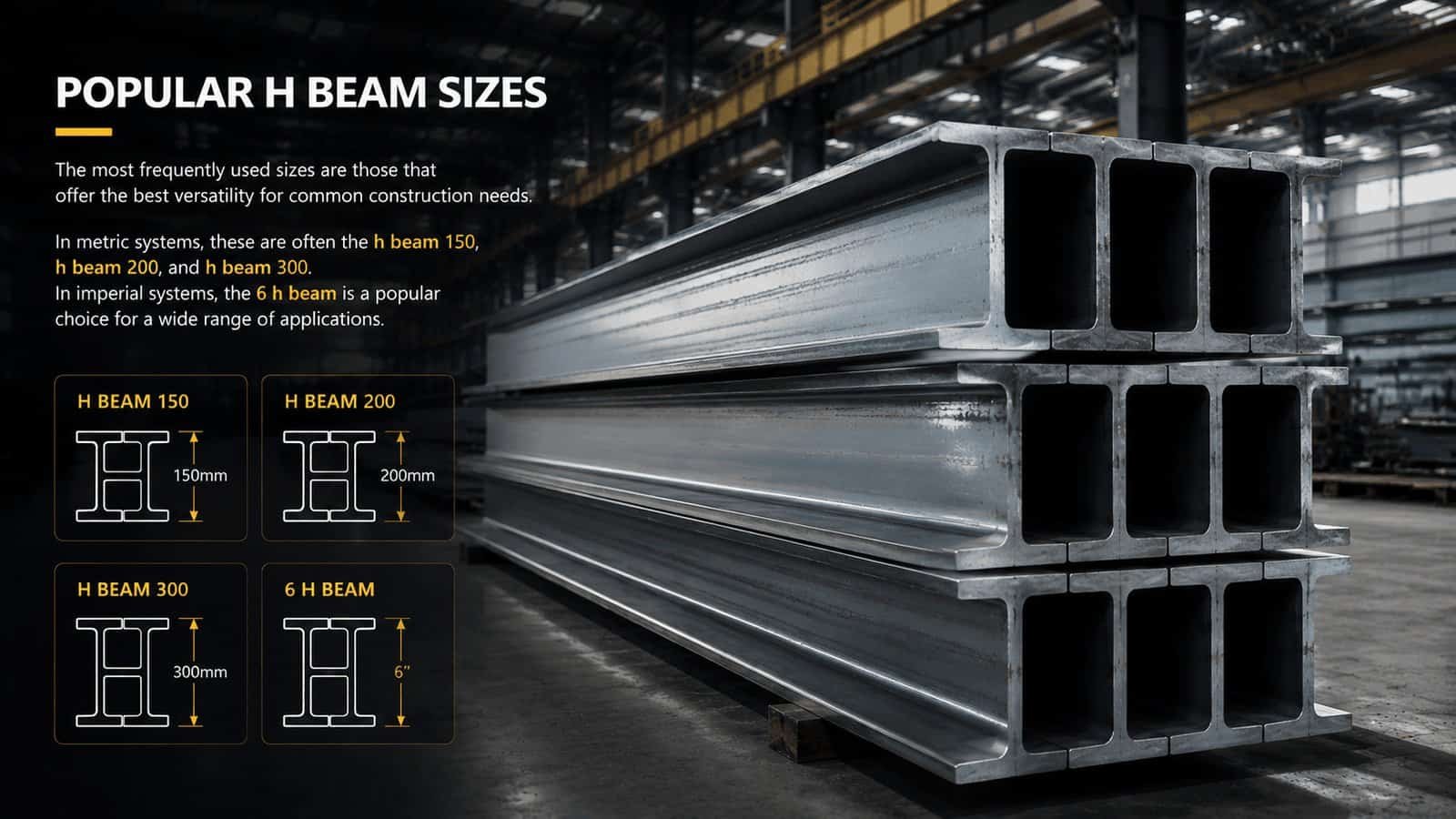
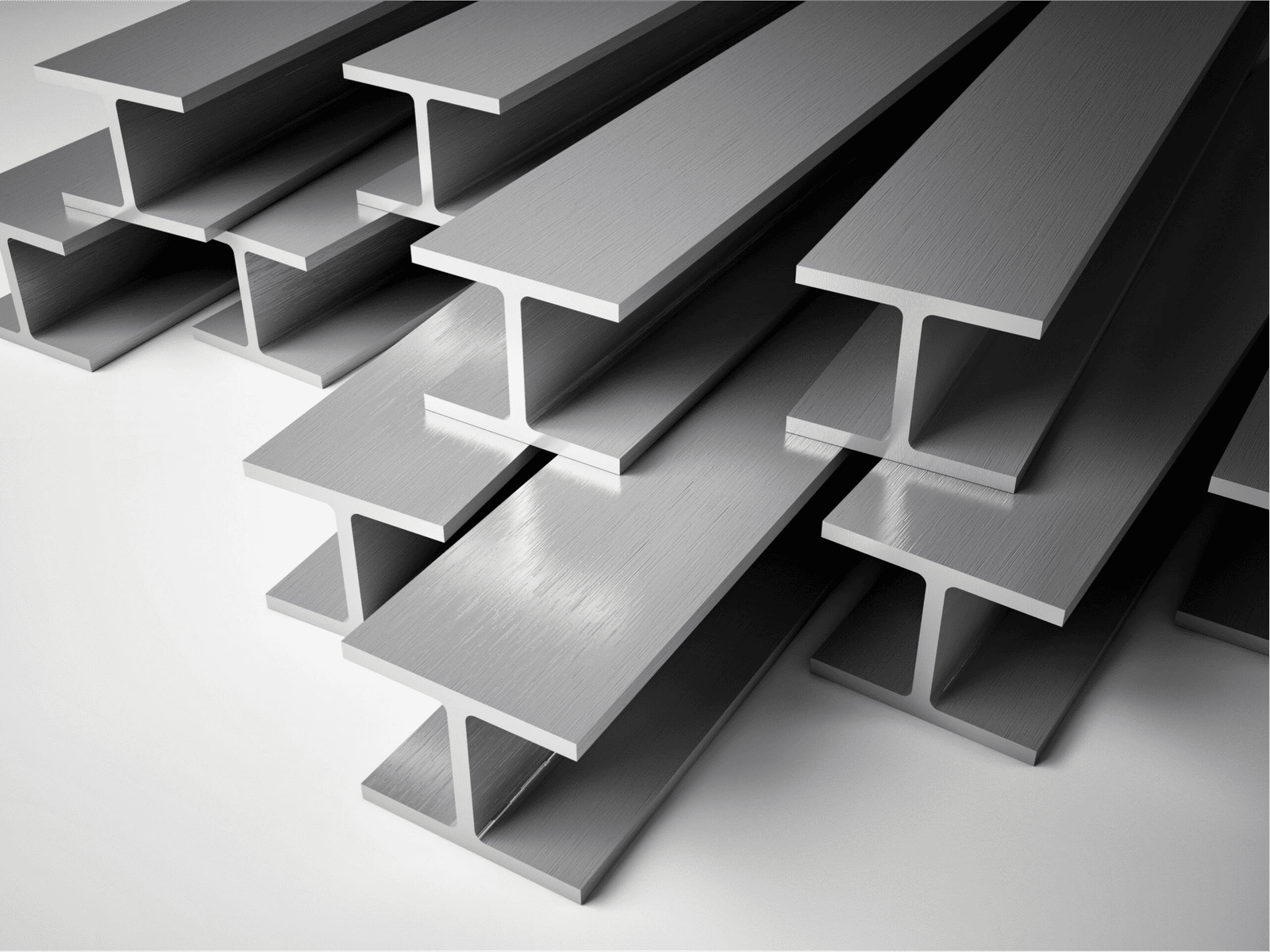
The most obvious h-beam and I-beam difference lies in their cross-sectional shape. Wider flanges and a thicker web provide an H-beam greater strength and stability under severe loads. An I-beam is appropriate for modest structural applications since it has narrower flanges and is typically lighter.
Despite being structural steel beams, the two items differ greatly in terms of manufacturing standards, size, and intended uses. I-beams often have tapered flanges, ach H-beams are frequently made with identical flange thicknesses. Bending resistance, torsional stability, and overall structural performance are all directly impacted by this differentiation. Engineers typically compare load capacity, fad réise, construction cost, and installation efficiency when determining what is the difference between an I-beam and an H-beam. Contractors, dáileoirí, and project owners can select the best structural member by being aware of these aspects.
When Should You Choose an I-Beam Instead of an H-Beam?
The maximal strength that H-beams offer is not needed for many projects. Understanding when to use I-beam and H-beam in certain circumstances can lower construction costs without compromising performance or safety.
When moderate loads and shorter spans are anticipated, an I-beam is usually advised for secondary structural frameworks, equipment platforms, warehouse floors, and residential buildings. Its decreased weight reduces material costs and makes installation and shipment easier.
The maximal strength that H-beams offer is not needed for many projects. Understanding whether to employ I-beam and H-beam in certain circumstances can lower construction costs without compromising performance or safety.When moderate loads and shorter spans are anticipated, an I-beam is usually advised for secondary structural frameworks, equipment platforms, warehouse floors, and residential buildings. Its decreased weight reduces material costs and makes installation and shipment easier.
When Is an H-Beam the Better Choice?
Extreme structural stability is necessary for major infrastructure projects. Because of their exceptional strength and stiffness, H-beams are the recommended option in certain situations.
H-beams are frequently utilized in large commercial facilities, offshore structures, major industrial plants, droichid, agus foirgnimh ard-ardú. They are far more resilient to bending and compression than typical I-beams because of their wide flanges, which distribute stresses more uniformly.
When customers compare H-beams or I-beams, H-beams usually outperform I-beams in demanding applications. They are appropriate for long columns and severely loaded beams because of their geometry, which offers exceptional resistance against buckling. Ina theannta sin, because H-beams come in bigger sizes, engineers can create structures with more open areas and fewer support columns. H-beams are still the preferred option for airports, stadiums, manufacturing facilities, and logistical hubs all over the world because of their architectural versatility.
Which Beam Has Higher Load-Bearing Capacity?
When choosing structural steel, load-bearing capability is frequently the deciding element. Engineers must assess the material grade, réise, loading conditions, and beam shape.
Because of their broader flanges and thicker web, H-beams often have a better load-bearing capability than i-beams. Their design lessens distortion under high loads by more effectively distributing stress.
Despite the apparent simplicity of the solution, actual structural performance is dependent on a number of engineering parameters. Beam capacity is influenced by a number of factors, including steel grade, welding quality, connection design, support spacing, and load direction. While an undersized H-beam may still fail under severe loading, a properly sized I-beam may safely support some buildings. Beam selection should therefore always be accompanied by structural calculations. Before making a final procurement choice, buyers should request mill certificates, material specifications, and engineering suggestions.
How Do I-Beams and H-Beams Compare in Weight and Cost?
Budgets for construction frequently need to strike a balance between material costs and structural performance. Mar thoradh air sin, weight and cost become important factors to consider while making a purchase.
I-beams are typically lighter than H-beams of the same height, which makes them simpler to handle, iompar, agus a shuiteáil. Due to their higher structural strength and higher steel content, H-beams are usually more expensive.
Buyers should consider more than just the initial cost of materials when assessing the project’s final budget. By reducing the number of support columns needed, a heavier H-beam might speed up construction and save labor costs. Ar an láimh eile, lighter I-beams might make onsite installation easier and lower transportation costs. Investment decisions are frequently improved by comparing lifecycle value rather than just purchase pricing. Ina theannta sin, skilled vendors can provide optimal beam specifications that reduce waste while preserving structural integrity.
Which Beam Is Better for Long-Span Structures?
Because structural elements must withstand greater bending moments and deflection over longer distances, long-span buildings present special engineering challenges.
H-beams perform better for the majority of long-span applications because of their greater cross-sectional area and improved stiffness. They sustain larger loads over longer spans without compromising structural integrity.
H-beams are commonly used in projects like airplane hangars, conference halls, stórais, shopping centers, and sports arenas to create open interior areas without the need for additional intermediate supports. To increase efficiency, sophisticated engineering methods occasionally integrate I-beams with composite systems or trusses. In the end, structural calculations—rather than just product preference—determine beam selection. For each project, cooperation between designers, fabricators, and steel suppliers guarantees the most cost-effective and technically sound solution.
What Industries Commonly Use I-Beams and H-Beams?
Because of their exceptional strength, endurance, and adaptability, structural steel beams are used in almost every major sector.
I-beams are frequently utilized in remodeling projects, machinery supports, small commercial structures, and residential construction. Droichid, industries, power plants, shipyards, airports, and major infrastructure projects all frequently use H-beams.
Different performance attributes are prioritized by different sectors. I-beams are appealing to residential builders because they are more affordable and simpler to install. Engineers are drawn to H-beams because heavy industrial projects need the highest level of structural dependability. Due to their rigorous operating circumstances, H-beams are often specified in government-funded building projects, mining operations, transportation infrastructure, and oil and gas installations. Buyers can choose products that meet project goals and technical standards by being aware of industry-specific needs.
What Steel Grades Are Available for I-Beams and H-Beams?
Structural performance is not solely determined by beam geometry. Neart, weldability, is friotaíocht creimeadh are all significantly impacted by material grade.
Numerous international standards, such as ASTM, IN, AO, GB, and AS/NZS specifications, are available for both types of beams. ASTM A36, ASTM A572 Grade 50, ASTM A992, S235, S275, and S355 are common steel grades.
Environmental factors, structural specifications, and relevant building rules all influence the choice of material. Additional corrosion protection by galvanizing or specialty coatings may be necessary for coastal projects. Higher-strength grades are frequently required for high-rise structures in order to save structural weight without sacrificing functionality. Prior to shipment, buyers should confirm mechanical characteristics, lamháltais tríthoiseach, chemical composition, and inspection reports. Collaborating with seasoned manufacturers guarantees adherence to global quality standards and project requirements.
What Should You Consider Before Purchasing I-Beams or H-Beams?
Comparing quotes is just one aspect of buying structural steel. Careful consideration of both technical and commercial aspects is necessary for dependable acquisition.
Examine beam dimensions, grád cruach, certificates, inspection protocols, packing, shipping times, and terms of payment before placing an order. Understanding I-beam and H-beam sizes is essential to ensure compatibility with engineering drawings.
Expert purchasers additionally look into the manufacturing capacity, export expertise, quality control methods, and post-purchase assistance of suppliers. Before shipment, independent third-party inspections aid in confirming mechanical characteristics and dimensional accuracy. Because delayed supplies can cause construction dates to be delayed and project prices to rise, logistics planning is equally crucial. Choosing suppliers who are familiar with the norms of the target country makes customs clearance easier for foreign purchasers and lowers procurement risks all the way through the supply chain.
How Can You Choose a Reliable I-Beam and H-Beam Supplier?
Just as crucial as choosing the appropriate beam is finding the correct source. Project success is directly impacted by consistent quality and reliable delivery.
Complete certificates, stringent quality control, adaptable production capabilities, praghsáil iomaíoch, and effective international logistics are all characteristics of a trustworthy supplier. Purchasing trust is further enhanced by effective communication and technical assistance.
When evaluating soláthraithe from other nations, consider their production equipment, export records, inspection procedures, and client testimonials. Skilled exporters are aware of destination rules, shipment plans, documentation needs, and packaging specifications. Ina theannta sin, they provide tailored solutions for special projects and promptly address technical inquiries. Working with a seasoned steel exporter greatly lowers procurement risks while guaranteeing consistent product quality and timely delivery, regardless of whether your business serves government contractors, dáileoirí, wholesalers, or construction companies.
Achoimre
The decision between I-beams and H-beams is influenced by application, buiséad, and structural requirements. Comprehending their distinctions enables you to make purchases with assurance and construct projects that are more robust, secure, and economical.