Wrong beam selection can increase structural risks, delay projects, and raise construction costs. Many buyers struggle to compare steel beam strength accurately.
What’s stronger, H-beam or I-beam? H-beams are generally stronger because they have wider flanges, thicker webs, and better load distribution. H-beams perform better in heavy construction and long-span structures, while I-beams are more economical for lighter projects requiring lower material costs and easier installation.
Below is a detailed comparison of strength, applications, fabrication, and purchasing considerations for both beam types.
What Is the Difference Between an H-beam and an I-beam?
Due to their similar appearance, many purchasers mistake these steel beams for one another, yet their structural capabilities and uses in building projects differ greatly.
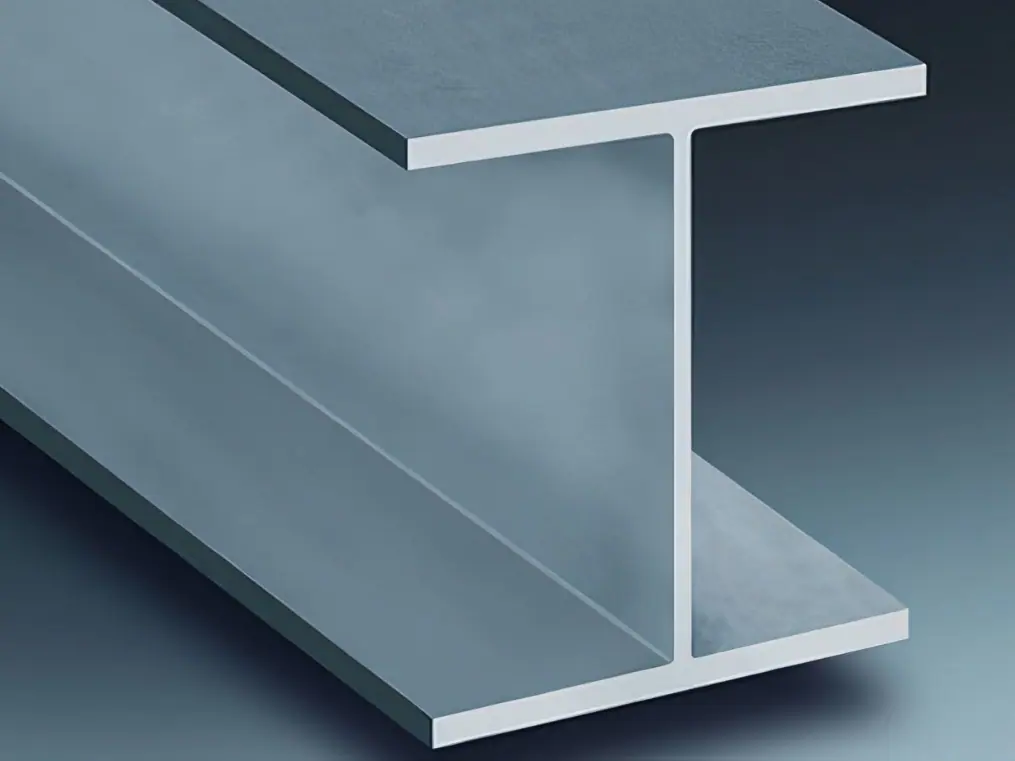
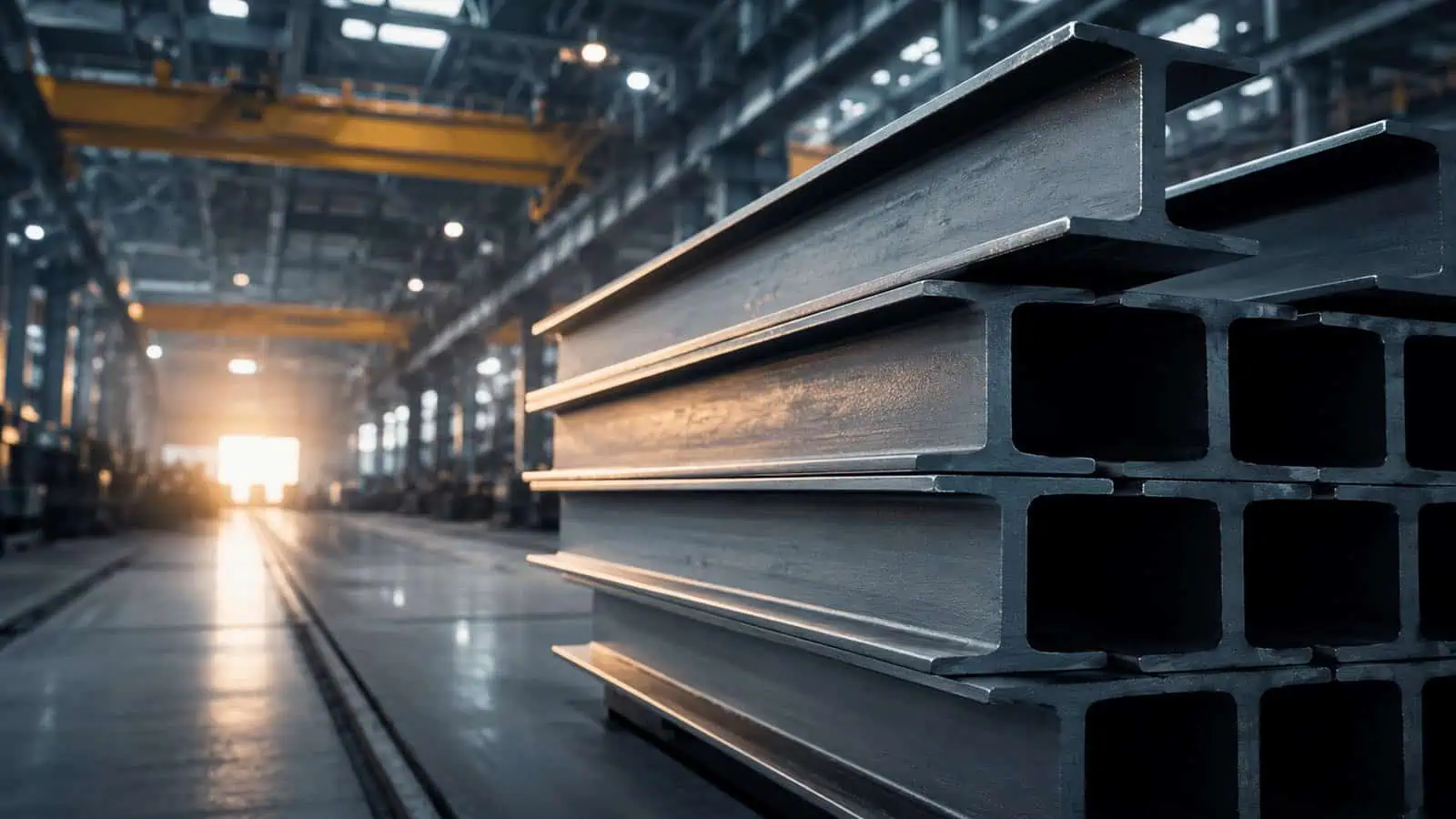
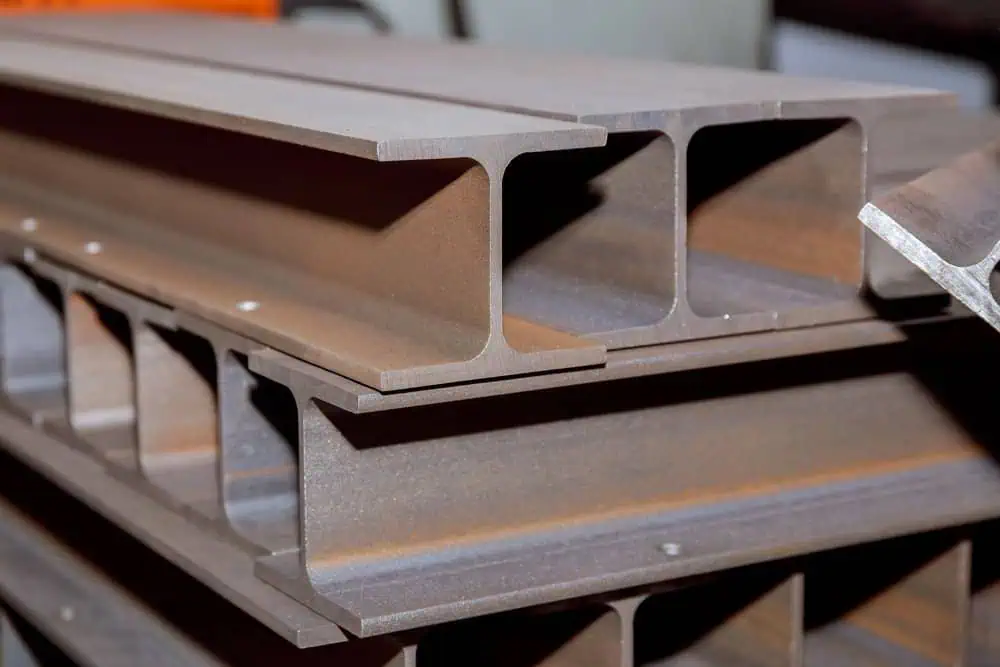
Their shape and load capacity are the primary differences between I and H beams. I-beams are smaller and lighter than H-beams, which feature thicker webs and larger flanges.
Engineers compare the cross-sectional design before examining the differences between i and h beams. Wider flanges on H-beams provide for more even weight distribution throughout the structure. In heavy-duty applications, this enhances stability and load-bearing capacity. In contrast, I-beams are appropriate for projects with moderate load requirements because of their lighter overall construction and thinner flanges.
Manufacturing is another significant distinction between I and H beams. Hot rolling is typically used to create H-beams, which result in a more robust and consistent construction. Although some lighter variants require additional manufacturing techniques, I-beams can also be hot rolled. Pricing, strength, and durability are all impacted by the production process.
Applications vary greatly as well. H-beams are frequently utilized in infrastructure projects, industrial plants, bridges, and tall buildings. I-beams are more frequently used in residential buildings, warehouses, and workshops where cost and weight reduction are more crucial than maximum strength.
Why Is an H-beam Considered Stronger than an I-beam?
In construction, strength is essential because inadequate structural support can lead to maintenance problems, safety hazards, and increased long-term expenses.
Because of their larger webs and broader flanges, which increase load-bearing capacity and resistance to bending and twisting, H-beams are thought to be stronger.
For heavy construction, H-beams typically offer a better response when customers inquire about which is stronger, I-beams or H-beams. Their greater flange area lessens the concentration of stress throughout the beam by more efficiently distributing loads. As a result, larger structures can be supported by H-beams with increased stability and safety.
Torsional resistance is another crucial component in determining the strength of an I-beam as opposed to an H-beam. Because of their balanced design, which increases structural rigidity, H-beams are more resistant to twisting. This is particularly crucial in places that are vulnerable to severe winds, earthquakes, or intense industrial vibrations.
The question of why I-beams remain powerful despite their lighter construction is another common one. Steel is positioned where stress is most likely to occur in order to efficiently engineer I-beams. I-beams are useful for moderate-load applications without using a lot of steel thanks to their design’s exceptional strength-to-weight performance.
Which Beam Is Better for Heavy Construction Projects?
Large-scale industrial and infrastructural projects need structural materials that can sustain incredibly heavy loads for many years.
Because they offer better strength, stability, and long-span performance under challenging conditions, H-beams are preferable for heavy construction.
High-strength steel beam products that can withstand significant structural pressure are frequently used in heavy-duty construction projects. Because of its remarkable load-bearing capacity, H-beams are frequently utilized in bridges, airports, power plants, shipyards, and industrial production facilities.
Engineers often request ASTM or EN-compliant steel beams for bridge building in infrastructure and bridge applications. H-beams assist structures in staying stable over extended operation times by performing well under both static and dynamic stresses.
In the debate over which is stronger, H-beams or I-beams, it is evident that H-beams predominate in heavy industrial settings. Their bigger cross-sectional structure improves efficiency and safety by allowing for wider spans with fewer support columns and reducing deformation under pressure.
Is an I-beam More Cost-effective for Smaller Buildings?
Maximum structural strength is not necessary for every project, and using too much steel can unnecessarily raise overall building costs.
Because they use less steel, save transportation costs, and make installation easier for smaller buildings, I-beams are frequently more economical.
Because they offer enough structural strength while lowering material costs, I-beams are frequently employed in residential and light commercial construction. Additionally, their decreased weight reduces transportation costs and facilitates handling during installation.
Efficiency is another benefit when comparing H and I beams. I-beams are typically less expensive than H-beams since they utilize less steel overall. They are therefore a useful option for workshops, garages, storage facilities, and smaller warehouses.
Because hot rolled steel beam products successfully balance performance and affordability, many builders utilize them in I-beam layouts. Both project safety and construction costs can be maximized by choosing the appropriate beam size and specification.
How Do H-beams and I-beams Perform Under Heavy Loads?
Because hot rolled steel beam products successfully balance performance and affordability, many builders utilize them in I-beam layouts. Both project safety and construction costs can be maximized by choosing the appropriate beam size and specification. Buildings’ ability to withstand years of operation and environmental stress is determined by their structural load performance.
Because H-beams are more resilient to bending and deformation than I-beams, they often function better under heavy loads.
Load distribution is a crucial component of I-beam vs. H-beam strength. By distributing structural pressure over a greater flange surface, H-beams lessen concentrated stress and provide long-term durability under high loads.
In applications with moderate loads, I-beams continue to function exceptionally well. This explains why, despite their diminutive size, I-beams are powerful. They can support a significant amount of weight while using the least amount of steel and total structural weight because of their effective design.
Because carbon steel H beam products are more resistant to bending, deformation, and structural fatigue over time, engineers frequently choose them for industrial projects involving heavy machinery or long-span structures.
Which Beam Has Better Weldability and Fabrication Flexibility?
Weldability and processing flexibility are crucial for project efficiency since modern construction often calls for customized steel fabrication.
Although both types of beams have good weldability, H-beams often give more fabrication options for big, bespoke structures.
To comply with engineering drawings, steel fabricators frequently drill, punch, weld, and cut structural beams. Wider flange surfaces from H-beams make welding easier and increase assembly stability during construction.
Numerous Chinese suppliers of steel beams provide specialized processing services based on client specifications and drawings. H-beams are particularly prevalent in large industrial steel constructions that need intricate assembly and precise manufacture.
Fabrication decisions are also influenced by environmental factors. Because galvanized coatings greatly increase corrosion resistance and prolong service life, many customers request galvanized steel beam products for coastal and humid areas.
Are H-beams More Resistant to Bending and Twisting?
Weight, vibration, wind pressure, and environmental factors all cause buildings to bend and twist on a regular basis.
Because of their broader flanges, which increase rigidity and structural balance, H-beams typically withstand bending and twisting better.
The increased torsional resistance of H-beams is one of its main advantages. They are perfect for bridges, industrial facilities, and high-rise structures subjected to powerful external forces because of their symmetrical design, which increases structural stability.
Stronger resistance to twisting becomes crucial in high-wind or earthquake-prone areas. H-beams enhance long-term safety in dynamic environments by reducing structural movement.
When comparing the strength of i and h beams for heavy-duty constructions, this distinction becomes particularly significant. Because H-beams offer more assurance regarding structural longevity and operational dependability, engineers frequently use them.
How Do Engineers Choose Between H-Beams and I-Beams?
Selecting the right beam necessitates striking a balance between long-term performance goals, project finances, environmental circumstances, and structural constraints.
Beam types are chosen by engineers based on environmental exposure circumstances, building budget, span length, and load requirements.
Engineers first determine the anticipated structural load before comparing I and H beams. Because of their exceptional load-bearing capabilities, H-beams are frequently used for large industrial and infrastructure projects.
Beam selection is also influenced by financial factors. I-beams are appropriate for smaller commercial and residential projects when exceptional strength is not required since they frequently lower overall material and transportation costs.
Environmental aspects are also important. To increase longevity in humid, coastal, or chemically aggressive settings, many projects call for corrosion-resistant steel beam products with stainless or galvanized treatments.
What Industries Commonly Use H-beams and I-beams?
Depending on operational loads, environmental factors, and project scale, different industries need different structural solutions.
I-beams are frequently utilized in residential and light commercial construction projects, but H-beams are frequently used in heavy industries.
Because of their remarkable strength and endurance, structural steel beam products in H-beam configurations are widely used in industries like shipbuilding, mining, transportation, and energy production.
I-beams are frequently seen in residential buildings, workplaces, warehouses, and minor retail complexes. They are suitable for structures with moderate load requirements due to their reduced weight and cost.
Before making a purchase, many foreign consumers who are investigating what an H-beam is thoroughly examine the parameters. Buyers can select the best beam type for their projects by having a thorough understanding of industry uses.
How Can Buyers Ensure Beam Quality When Importing from China?
For overseas buyers, poor supplier selection can lead to expensive project issues, variable quality, and shipment delays.
Before importing goods from China, buyers should confirm certifications, carefully evaluate materials, and work with knowledgeable steel exporters.
One of the biggest exporters of steel in the world, China offers a huge range of structural goods at affordable costs. However, thorough supplier evaluation and quality control are necessary for effective importation.
Before shipping ASTM and EN standard steel beam goods, professional customers demand mill test certificates and third-party inspection reports. These records aid in verifying material coherence and adherence to global norms.
Skilled importers also check manufacturing timelines, logistical plans, packaging quality, and available I and H beam sizes. Reducing risks and increasing long-term purchasing efficiency are two benefits of working with a reputable steel beam supplier.
Summary
I-beams are less expensive and lighter structures, whereas H-beams are stronger and more stable. The ideal option is determined by the engineering requirements, project loads, and budget.