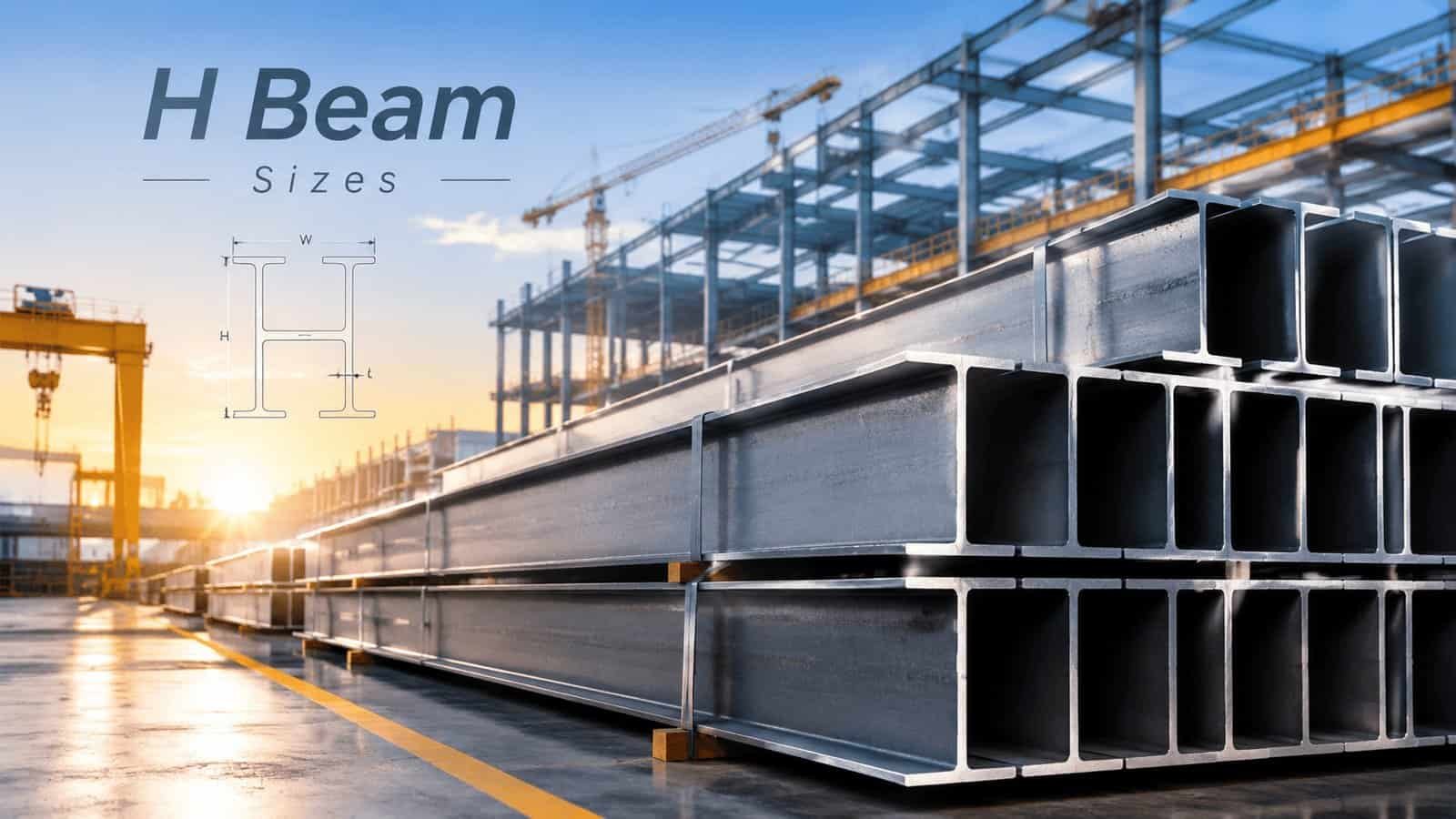
Choosing the wrong structural steel increases costs, delays projects, and creates safety risks. Understanding H-beam steel helps you make confident purchasing and engineering decisions.
What is H-beam steel and how do you choose the right one for your project? H-beam steel is a structural steel beam with wide, parallel flanges and an H-shaped cross-section that provides excellent strength, stabilità, and load-bearing capacity. It is widely used in buildings, ponti, magazzini, and industrial projects because it offers high durability, easy fabrication, excellent weldability, and long-term cost efficiency.
Now let’s explore every important aspect of H-beam steel before making your next purchasing decision.
What Is H-beam Steel and Why Is It Called an H-beam?
One of the most popular structural steel materials in contemporary building is H-beam steel. Whether you are buying steel for infrastructure projects, producing industrial equipment, or designing a commercial building, knowing H-beam steel: what is it? is the initial step in choosing the appropriate material. Its cross-sectional shape, which resembles the capital letter “H,” is the direct source of the name.
Wide, parallel flanges joined by a thick web make up H-beam steel, which produces a balanced structure that effectively distributes loads. Its shape offers more structural stability and bending resistance than many conventional structural sections. When large loads need to be supported securely across extended spans, engineers often select H-beams.
H-beam steel is frequently utilized in steel constructions, ponti, factories, magazzini, airports, high-rise buildings, and energy projects due to its superior mechanical qualities. Manufacturers create H-beams in accordance with international standards like ASTM, IN, JIS, and GB, enabling consumers all over the world to find goods that meet various engineering needs. Many consumers examine an H-beam size chart prior to making a purchase in order to evaluate various dimensions and choose the best specification.
What Are the Main Advantages of H-beam Steel?
Strong, long-lasting, and reasonably priced materials are required for every building job. Because H-beam steel meets these needs while lowering fabrication complexity, it has emerged as a favored structural component. Engineers can maximize structural performance without needless material waste thanks to its special design.
High load-bearing capacity, superior weldability, corrosion resistance following appropriate surface treatment, dimensional correctness, and exceptional structural stability are the main benefits of H-beam steel. Inoltre, it provides outstanding seismic performance, which makes it appropriate for structures situated in seismically active areas.
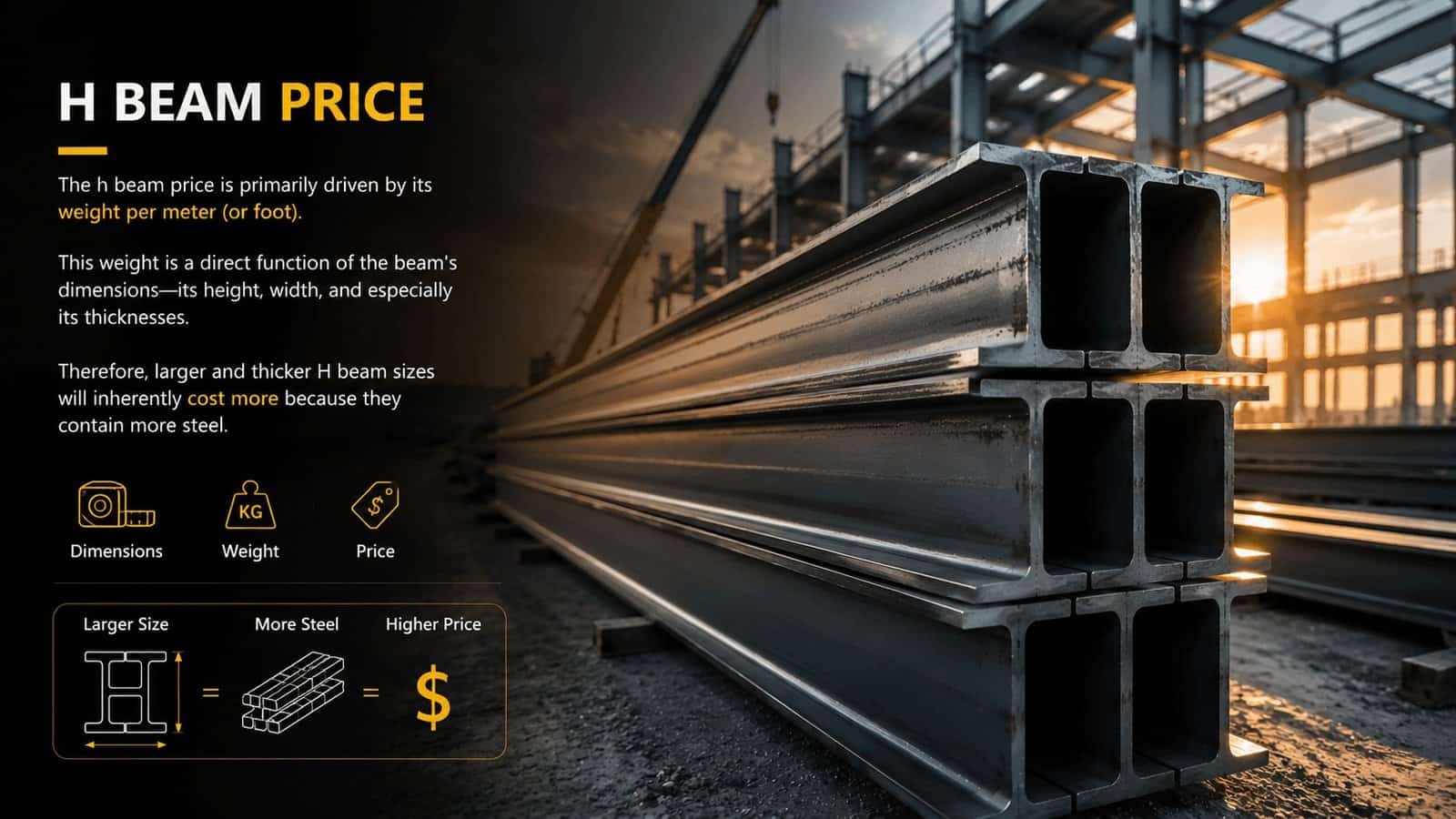
Its economic value over the course of the project is another significant benefit. H-beam steel lowers installation time and maintenance costs, despite the fact that initial purchase costs vary based on steel quality and dimensions. Steel promotes sustainable building since it is entirely recyclable. In order to combine project budgets with engineering requirements, buyers often compare H-beam sizes and pricing together. Cost and performance can be optimized by speaking with an experienced supplier.
What Is the Difference Between H-beam Steel and I-beam Steel?
H-beam steel and I-beam steel are frequently confused by consumers, particularly first-time buyers. Both items have structural functions, but they differ greatly in terms of their mechanical performance, usi, and designs. Engineers can select the best solution for each project by knowing the differences between H and I beams.
I-beams typically have narrower flanges that taper toward the edges, whereas H-beams have larger flanges with virtually similar thickness throughout. H-beams are perfect for bearing larger structural loads because of their higher resistance to bending and compression.
In real-world applications, H-beams are frequently chosen for columns, huge commercial buildings, ponti, and heavy industrial buildings. Al contrario, I-beams are frequently utilized in lighter structural applications and residential buildings, where load requirements are lower. Instead of relying solely on looks, the decision between these two items is based on span length, structural calculations, and project parameters.
What Materials Are Used to Manufacture H-beam Steel?
The grade of steel used in production has a significant impact on H-beam steel’s performance. Different combinations of strength, tenacità, saldabilità, and corrosion resistance are needed in different building conditions. In order to meet worldwide technical standards, producers provide a range of material grades.
ASTM A36, ASTM A572 Grade 50, ASTM A992, S235JR, S275JR, S355JR, SS400, Q235B, and Q355B are examples of common materials. For various structural purposes, each grade offers particular mechanical qualities. Large-span buildings and big industrial facilities usually choose higher-strength ratings.
Environmental factors, structural design, fabrication techniques, and project budget should all be taken into account when choosing materials. Additional corrosion protection, like as galvanizing or specialty coatings, may be necessary for coastal projects. In order to confirm chemical composition and mechanical qualities prior to shipment, reputable producers also offer mill test certifications and third-party inspection reports.
What Standard Sizes and Dimensions Are Available for H-beam Steel?
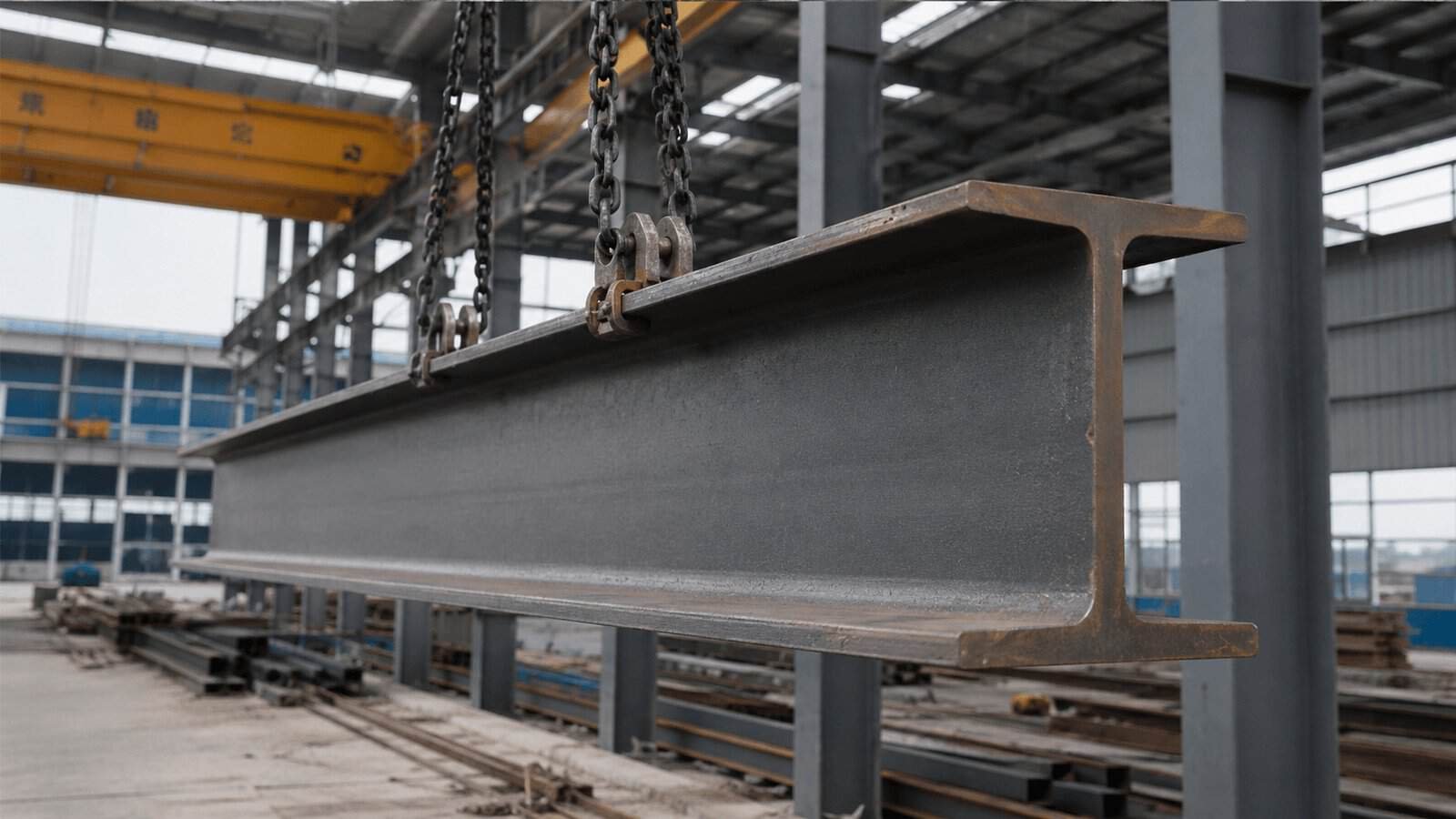
In order to guarantee structural safety and keep project costs under control, the proper beam dimensions must be chosen. To suit various engineering applications, manufacturers make H-beam steel in a broad range of dimensions. Comprehending the given specifications makes structural design and procurement easier.
Comprehensive H-beam standard sizes, including beam heights, flange widths, web thicknesses, flange thicknesses, and overall weights, are typically offered by foreign vendors. When deciding which section best meets project load requirements while reducing needless steel consumption, engineers typically refer to an H-beam size table.
Because beam weight affects installation design, costi di trasporto, and crane capacity, purchasers often examine an H-beam weight chart in addition to dimensional data. To assist clients in making well-informed purchase decisions, numerous suppliers also offer downloadable technical catalogs that include dimensional tables, mechanical characteristics, e tolleranze di fabbricazione.
Where Is H-beam Steel Commonly Used?
H-beam steel’s remarkable strength and adaptability have made it an essential structural element in many industries. As contemporary engineering projects become more complex, its applications continue to grow, ranging from energy infrastructure to commercial buildings.
High-rise structures, ponti, industrial facilities, magazzini, logistical hubs, shipyards, train stations, airports, power plants, stadiums, mining facilities, and agricultural buildings are among the most frequent uses. H-beam steel is also used by producers of heavy machinery to create equipment frames and support structures.
H-beam steel is commonly used in government infrastructure projects due to its extended service life, dependable structural performance, and comparatively cheap maintenance costs. Engineers value its consistent mechanical performance, ease of welding, and compliance with standardized fabrication procedures when designing office buildings or major manufacturing facilities.
How Do You Choose the Right H-beam Steel for Your Project?
It takes more than just picking the biggest piece available to choose the right H-beam steel. Every project has different structural needs that are impacted by budgetary constraints, construction techniques, esposizione ambientale, and load conditions. Costly errors during production and installation can be prevented with careful planning.
Using structural design software or an H-beam calculator, engineers usually determine the necessary beam size, taking into account span length, applied loads, support conditions, and permissible deflection. These computations guarantee that the chosen beams meet project performance criteria as well as safety norms.
Buyers should consider manufacturing quality, certificazione, production capacity, logistical capabilities, and supplier reputation in addition to engineering estimates. Successful procurement and long-term project reliability are facilitated by examining inspection reports, obtaining material certificates, and verifying adherence to ASTM, IN, JIS, or GB standards.
How Is H-beam Steel Manufactured and Inspected for Quality?
Carefully regulated manufacturing procedures are the first step in producing high-quality H-beam steel. To guarantee constant dimensions, mechanical characteristics, and surface quality throughout production, modern steel mills employ sophisticated rolling machinery and computerized quality control systems.
Steel billets are typically heated before being hot rolled through several rolling stands to create the distinctive H-shaped profile. Before being packaged for shipping, beams are subjected to mechanical testing, surface inspection, dimensional inspection, straightening, and cutting following controlled cooling.
Tensile testing, yield strength testing, chemical composition analysis, ultrasonic inspection when necessary, and dimensional verification are only a few of the many quality assurance techniques used by reputable manufacturers. International buyers who are worried about product consistency might feel more confident thanks to independent third-party inspections from companies like SGS, BV, or TÜV.
What Should International Buyers Consider When Importing H-beam Steel from China?
China now ranks among the top manufacturers and exporters of H-beam steel worldwide, serving clients in South America, Sud-est asiatico, il Medio Oriente, Africa, and Europe. Tuttavia, thorough procurement strategy and rigorous supplier evaluation are necessary for effective importation.
Before placing significant orders, foreign customers should confirm factory certificates, production capacity, export expertise, packing techniques, protocolli di ispezione, terms of payment, and logistics capabilities. Verifying adherence to destination-country regulations aids in avoiding project interruptions and customs delays.
Accurate documentation, timely shipping, and effective communication are all crucial. Commercial invoices, packing lists, certificates of origin, mill test certificates, rapporti di ispezione, and timely production updates are usually provided by seasoned exporters. Purchasing risks are greatly decreased and supply chain dependability is increased when vendors with proven export expertise are involved.
How Can You Find a Reliable H-beam Steel Supplier?
Comparing pricing is only one aspect of finding a reliable source. Qualità costante, reliable delivery schedules, prompt communication, and expert after-sales support are essential for long-term business success. Instead of just selling products, a trustworthy supplier develops into a strategic business partner.
Examine the supplier’s production facilities, quality management system, certificazioni, export history, manufacturing experience, and customer references first. Whenever feasible, ask for samples, rapporti di ispezione, and references from prior projects. Reputable businesses encourage third-party inspections and are open about their production procedures.
Infine, evaluate delivery capabilities, customization choices, technical support, and response in addition to quotes. Esportatori with years of experience in international business can frequently suggest appropriate specifications, maximize container loading, and offer effective logistics solutions that lower overall procurement costs while guaranteeing project completion on schedule.
Riepilogo
Knowing H-beam steel enables purchasers to work with reputable suppliers for long-term project success while selecting safer, more robust, and more affordable structural options.