
Incorrect rebar weight calculations can increase purchasing costs, raise freight expenses, and cause project delays. Many buyers lose money simply because they underestimate steel requirements.
The standard method for calculating reinforcement bar weight is to use the formula Weight (кг/м) = D² ÷ 162, where D represents the bar diameter in millimeters. This calculation helps contractors, importers, and distributors accurately estimate material quantities, транспортные расходы, and project budgets while improving procurement efficiency and inventory management.
Understanding the factors behind rebar weight helps buyers make better purchasing and logistics decisions.
What Is Reinforcement Bar Weight and Why Does It Matter?
Accurate material planning is crucial for construction projects in order to prevent needless expenses and delays. Understanding steel amounts is crucial for project execution and profitability, regardless of your role as a contractor, distributor, wholesaler, or importer.
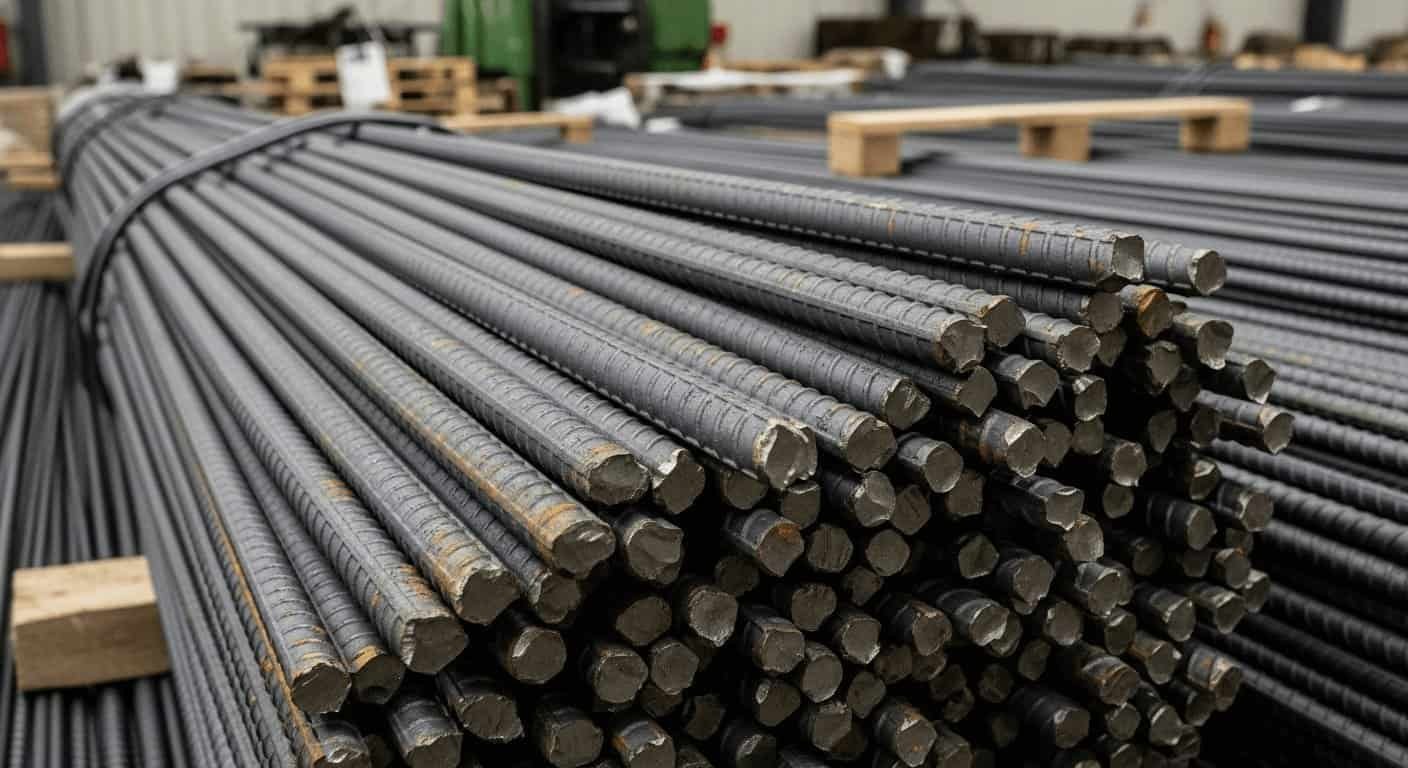
The mass of a reinforcing steel bar determined by its diameter and length is referred to as reinforcement bar weight. Budgeting, procurement planning, transportation arrangements, inventory management, and structural engineering needs are all supported by precise weight estimations.
There is much more to the significance of reinforcement bar weight than just estimation. Logistics departments use weight data to calculate freight costs and container loading schedules, while purchasing teams use it to establish order amounts. When examining structural specifications, engineers also take reinforcement steel bar weight into account. Businesses can cut waste, prevent shortages, and increase project efficiency by comprehending reinforcement weight.

How Do You Calculate Reinforcement Bar Weight Using the Standard Formula?
One of the most crucial abilities in steel procurement is the ability to calculate rebar weight accurately. Fortunately, the industry uses a straightforward and generally recognized formula that works for practically all reinforcing steel bars.
Масса (кг/м) = D² ÷ 162 is the conventional formula for determining the weight of reinforcement steel bars. Например, because 12² ÷ 162 equals 0.89, a 12mm rebar weighs about 0.89 кг на метр.
Customers may quickly and precisely determine the weight of reinforcing bars per meter using this calculation. Например, if a project calls for 500 pieces of 12mm rebar, each measuring 12 meters in length, the total weight can be computed by multiplying the weight per meter by the total length.Before making an order, contractors can use this procedure to develop transportation plans, evaluate supplier quotes, and estimate material costs.
What Is the Weight of Different Reinforcement Bar Sizes?
Depending on load needs and design criteria, different building projects call for different rebar sizes. The reinforcing bar’s overall weight grows dramatically as its diameter does.
8 мм, 10 мм, 12 мм, 16 мм, 20 мм, и 25 mm are typical diameters for reinforcing bars. The weight per meter of each size has an immediate impact on material planning, project costs, and transportation costs.
Engineers and procurement teams frequently utilize a common reinforcing bar weight chart. 8 mm bars typically weigh 0.395 кг/м, 10 mm bars weigh 0.617 кг/м, 12 mm bars weigh 0.889 кг/м, 16 mm bars weigh 1.58 кг/м, и 20 mm bars weigh 2.47 кг/м. Buyers can estimate project requirements more precisely and steer clear of expensive purchase errors by consulting a trustworthy reinforcing bar weight chart.
How Does Reinforcement Bar Diameter Affect Weight?
A reinforcing bar’s weight is significantly influenced by its diameter. Compared to smaller bars of the same length, larger diameters are substantially heavier because they contain more steel material.
Because the calculating formula squares the diameter value, the weight grows exponentially as the diameter of the reinforcing bar increases. The overall weight can rise significantly with even a slight increase in diameter.
A 20mm bar weighs roughly 2.47 кг на метр, whereas a 10mm bar weighs about 0.617 кг на метр. The weight increases by almost four times even if the diameter merely doubles. Because heavier bars have an impact on both material and transportation costs, this relationship is crucial when evaluating reinforcement weight for large-scale projects.Buyers can select appropriate specifications without going over project costs by being aware of this principle.

How Does Bar Length Influence Reinforcement Bar Weight?
In addition to diameter, length is another important component that affects how much reinforcing steel bars weigh overall. Because longer bars inherently contain more steel, they are heavier than shorter bars.
A reinforcing bar’s weight rises in direct proportion to its length. The overall weight increases as the bar length increases, but the weight per meter stays the same.
А 16 mm reinforcing bar, например, weighs about 1.58 kilograms per meter. The weight of a 6-meter bar is around 9.48 кг, but the weight of a 12-meter bar is approximately 18.96 кг. The overall reinforcing bar weight for each project may be easily calculated thanks to this straightforward connection. Length-based calculations are widely used by contractors to minimize material waste during construction, optimize cutting schedules, and estimate order amounts.
What Is the Reinforcement Bar Weight Per Meter?
In the steel business, weight per meter is one of the most widely used metrics. It offers a rapid and consistent method for assessing reinforcing steel products and estimating project needs.
The mass of one meter of rebar is represented by the reinforcement bar weight per meter. It is the basis for figuring out transportation loads, procurement budgets, and the overall amount of steel needed.
Reinforcement bar weight per meter is used by many buying managers because it makes computations easier and increases quotation accuracy. Weight-per-meter data is frequently included by suppliers in technical specifications and product catalogs. Buyers can more effectively estimate shipping prices, compare offers from various manufacturers, and confirm steel quantities by comprehending this measurement. Кроме того, it is a crucial resource for inventory planning and warehouse management.
How Can Reinforcement Bar Weight Affect Transportation Costs?
When importing or exporting steel products, transportation costs account for a sizable amount of the overall cost. For efficient logistics planning and cost management, precise weight estimations are crucial.
Because cargo weight and loading capacity play a major role in determining freight rates, heavier reinforcing bars typically translate into greater transportation expenses. Precise computations aid in maximizing container utilization and shipping budgets.
Knowing the weight of reinforcement steel bars is essential when shipping steel internationally. While axle load restrictions may be imposed by trucking rules, ocean freight companies sometimes base their prices on the whole weight of the consignment. Purchasers can optimize container capacity without going above legal limitations with the use of precise reinforcement weight calculations. This lowers transportation risks, increases logistics efficiency, and avoids unforeseen freight costs during delivery.
Why Is Accurate Reinforcement Bar Weight Important for Procurement?
Accurate information is essential for successful procurement. Purchasing errors, inventory issues, and higher project costs can result from even minor mistakes in steel weight estimations.
Precise estimations of reinforcing bar weight assist purchasers in determining the appropriate order quantity, accurately comparing supplier quotes, managing budgets, and preventing shortages or surplus inventory.
Customers frequently check bids from several providers when buying reinforcing steel. Knowing the weight of reinforcement steel bars enables them to assess quotes using real steel numbers rather than approximations. By guaranteeing that there are enough resources on hand when needed, accurate estimates help enhance inventory management. Accurate weight estimations help distributors and wholesalers with pricing strategies and improve supply chain profitability.
What Standards Are Used to Determine Reinforcement Bar Weight?
To guarantee product quality and uniformity, steel producers all around the world adhere to set criteria. For reinforcing steel products, these standards specify allowed weight fluctuations, размеры, and tolerances.
In order to provide standard reinforcing bar weight values and guarantee adherence to engineering standards, organizations like ASTM, БС, В, and ISO offer specifications.
Depending on local laws and business norms, different areas may adhere to different standards. While EN standards are generally used in Europe, ASTM standards are frequently employed in North America. Customers can use these parameters to confirm that declared and actual product weights match. Examining compliance documentation and mill test certificates is a useful method of verifying that provided goods satisfy project specifications and accepted international standards.
How Can Buyers Verify Reinforcement Bar Weight Before Shipment?
An essential part of quality control is confirming product specifications prior to distribution. By using this procedure, customers can make sure they receive the right amount and steer clear of expensive post-delivery arguments.
Through third-party inspections, random weighing techniques, сертификаты испытаний мельницы, and pre-shipment quality control checks carried out prior to loading, buyers can confirm the weight of reinforcement bars.
Supplier claims are rarely the only source of information used by professional procurement teams. Rather, they examine supporting paperwork and compare real measurements to a reliable reinforcing bar weight chart. Перед отправкой, dimensions and weights can be independently confirmed by third-party inspection organizations. These verification techniques guarantee that supplied goods fulfill contractual requirements, lower procurement risks, and increase supply chain transparency. Because it might be costly and time-consuming to fix inconsistencies after shipment, these safeguards are especially beneficial for international buyers.
Краткое содержание
Accurate reinforcement bar weight, reinforcement steel bar weight, and reinforcement bar weight per meter calculations help control costs, improve procurement decisions, and optimize logistics. Always use a reliable reinforcement bar weight chart and verify specifications before purchasing.