
Struggling to select the right material for your project can be frustrating, especially when a poor choice leads to costly failures and delays. How to choose aluminum coil is an important question when sourcing the right material, as the wide range of alloys, tempers, and finishes can make the selection process overwhelming. A mistake here doesn’t just waste money; it can compromise the quality, performance, and safety of your final product. This guide will help you understand the key specifications and choose the right aluminum coil for your specific application.
To choose the right アルミニウムコイル, you must evaluate four key areas: 1) the alloy and temper, which determine strength and formability; 2) the dimensions, including thickness and width, to match your machinery and application; 3) the surface finish or coating, for protection and aesthetics; そして 4) the supplier’s reliability, 認証, and manufacturing capabilities.
Now that you have the basic framework, understanding the details behind each of these points is crucial. Let’s explore each criterion so you can confidently specify exactly what you need and find a supplier who can deliver it.
What Alloy and Temper Should You Choose for Your Aluminum Coil?
Choosing an alloy that doesn’t match your application’s needs can lead to unexpected material failure. If it’s too soft, it won’t be strong enough; if it’s too hard, it may crack during forming. Getting this wrong can set your project back significantly.
For general-purpose applications like roofing and cladding, an alloy from the 3xxx series (例えば, 3003) is a reliable choice due to its excellent formability and corrosion resistance. For applications requiring higher strength, such as marine components, the 5xxx series (例えば, 5052) is superior. The temper, like H14 or H24, dictates the material’s hardness.

より深く潜る
The alloy and temper are the heart of your aluminum coil’s performance characteristics. They define its mechanical properties, including strength, ductility, and resistance to corrosion. 私のことを超えて 16 years in the metal export business, I’ve seen firsthand how a mismatch here can cause major production headaches for customers.
Common Aluminum Coil Alloy Series Explained
Different alloying elements give aluminum vastly different properties. Here are the most common series you’ll encounter when sourcing coil:
- 1xxx Series (Pure Aluminum): と 99% minimum aluminum content, this series offers the best corrosion resistance, workability, and electrical/thermal conductivity. It’s not very strong, so it’s best for applications like chemical storage tanks, electrical conductors, and reflective surfaces.
- 3xxx Series (Alloyed with Manganese): This is the workhorse of non-heat-treatable alloys. The addition of manganese increases the strength moderately without sacrificing much of its excellent formability and corrosion resistance. 合金 3003 is extremely popular for general sheet metal work, including roofing, 側溝, サイディング, and heat exchangers.
- 5xxx Series (Alloyed with Magnesium): This series offers the highest strength among the non-heat-treatable alloys. It also has outstanding corrosion resistance, especially in marine or saltwater environments. 合金 5052 is a common choice for boat hulls, pressure vessels, truck trailers, and street signs where strength and durability are paramount.
- 6xxx Series (Alloyed with Magnesium and Silicon): These alloys are heat-treatable, meaning their strength can be significantly increased through a heating and cooling process. 合金 6061 is a very common structural alloy used in applications where a higher strength-to-weight ratio is needed, such as architectural extrusions and automotive parts.
Understanding Temper Designations
Temper refers to the treatment the metal has undergone to achieve its final strength and hardness. For アルミニウムコイル, you will most often see the “H” temper designation.
- Strain-Hardened Only. The “×” represents the degree of hardening, with H18 being fully hard and H12 being quarter-hard.
- Strain-Hardened and Partially Annealed. This temper is slightly less strong but more ductile than its H1x equivalent.
- Strain-Hardened and Stabilized. This process involves a low-temperature heating that stabilizes the mechanical properties, which is particularly useful for alloys containing magnesium.
Here’s a simple comparison of common tempers for a 3003 アルミニウムコイル:
| Temper | 硬度 | 成形性 | Typical Use |
|---|---|---|---|
| o | Softest | 素晴らしい | Deep drawing, complex shapes |
| H14 | Half-Hard | Good | General sheet metal, 屋根ふき |
| H18 | Full-Hard | Limited | Flat applications requiring stiffness |
Always consult with a qualified engineer or your supplier to confirm the best alloy and temper for your specific manufacturing process and end-use environment.
How Do Dimensions and Tolerances Impact Your Aluminum Coil Project?
Receiving a coil with inconsistent thickness or width can bring your production line to a halt. This variability causes machinery jams, increases scrap rates, and ultimately drives up your costs. Precision is not a luxury; it’s a necessity for efficient manufacturing.
The most critical dimensions to specify for your aluminum coil are thickness, 幅, と内径 (ID). Equally important is defining the acceptable tolerance for each. 例えば, a standard thickness tolerance might be +/- 0.02mm, which is crucial for automated roll-forming equipment to function properly.
より深く潜る
Dimensional accuracy is a non-negotiable aspect of quality control. In automated manufacturing environments, even slight deviations can cause significant problems. Let’s break down the key dimensions you must specify and why their tolerances are so critical.
Key Dimensional Specifications
When you place an order for aluminum coil, you need to provide clear specifications for the following:
- 厚さ: This is perhaps the most critical dimension. It’s measured in millimeters (mm) or inches. Thin foils can be under 0.2mm, while thicker coils used for plate stock can be several millimeters thick. Thickness directly impacts the material’s strength, weight per square meter, and overall cost. For applications like deep drawing, a consistent thickness is essential to prevent tearing or wrinkling.
- 幅: Standard widths for アルミニウムコイル often include 1000mm, 1219mm (4 フィート), 1250mm, and 1500mm. しかし, most suppliers, 元池の私たちも含めて, can slit coils to custom widths based on your requirements. Specifying the correct width minimizes scrap (offcuts) in your production process, improving material yield and reducing costs.
- Coil ID (内径): The coil’s inner diameter must match the mandrel on your uncoiling equipment. Common IDs are 508mm and 610mm, but other sizes exist. Ordering a coil with the wrong ID means it simply won’t fit on your machine, causing major downtime.
- Coil Weight / の (外径): You can also specify the maximum coil weight or outer diameter. This is determined by the lifting capacity of your cranes and the physical limitations of your coil handling equipment. Larger coils mean fewer changeovers, leading to more efficient production runs.
Why Tolerances Matter
Tolerance is the permissible limit of variation in a physical dimension. Without agreed-upon tolerances, you have no guarantee of consistency.
- 厚さの許容差: For roofing panels made via roll forming, if the thickness varies too much, the final profile of the panel will be inconsistent. This can lead to problems with interlocking panels and water leakage. A typical industry standard is around +/- 3-5% of the nominal thickness.
- 幅の許容差: If you need to feed a 1200mm wide coil into a machine with tight guides, a coil that is even 2mm too wide may not fit. A standard width tolerance might be +/- 1mm.
- Camber Tolerance: Camber refers to the deviation of a side edge from a straight line. Excessive camber can cause the coil to “walk” or track improperly as it unspools, leading to processing errors.
Before finalizing any purchase order, ensure your dimensional requirements and tolerances are clearly stated and confirmed in writing by the supplier.
What Surface Finish or Coating Does Your Aluminum Coil Need?
Leaving an aluminum surface exposed in certain environments can lead to staining, scratching, and oxidation. This not only ruins the appearance but can also reduce the material’s lifespan. Choosing the right surface protection is key to ensuring long-term performance and aesthetics.
The finish you need depends entirely on the end use. Mill finish is the raw, untreated surface suitable for internal parts. For color and protection, a Polyester (PE) coating is a cost-effective choice for interiors, while a Polyvinylidene Fluoride (PVDF) coating offers superior durability and color retention for demanding exterior architectural applications.

より深く潜る
The surface of an aluminum coil can be treated in several ways to enhance its properties, from purely aesthetic to highly functional. This choice impacts the final product’s appearance, 耐久性, コスト.
A Breakdown of Common Finishes
- ミル仕上げ: This is the natural finish of the aluminum as it comes off the rolling mill. It has a semi-dull, metallic appearance and no protective layer other than the thin, transparent oxide film that naturally forms on aluminum. It is susceptible to scratches, water stains, and oxidation over time. It’s the most economical option and is perfect for applications where the coil will be further processed or where appearance is not a primary concern.
- Anodized Finish: Anodizing is an electrochemical process that creates a very hard, 耐久性, and corrosion-resistant oxide layer on the aluminum’s surface. This layer is an integral part of the metal and won’t peel or flake. It can be dyed to produce a range of colors, though color options are more limited than with painting. It’s often used for architectural trim and applications requiring high abrasion resistance.
- 塗装済み / Coated Finish: This is the most common method for adding color and robust protection to an アルミニウムコイル. The coil is passed through a continuous paint line where a liquid coating is applied and baked on. The two most common types of paint systems are:
- PE (Polyester) コーティング: A PE coating provides good hardness and a beautiful finish in a wide variety of colors. It’s an excellent, cost-effective solution for interior applications, signage, and general-purpose exterior uses where the environment is not overly harsh. Its UV resistance is good but not as high as PVDF.
- PVDF (Polyvinylidene Fluoride) コーティング: Often known by brand names like Kynar 500®, PVDF is the premium choice for exterior architectural products. It offers outstanding resistance to UV radiation, chalking, fading, 化学薬品, and abrasion. It’s the go-to coating for high-end roofing, curtain walls, and building panels that need to look great for decades.
Here is a comparison to help you choose:
| Feature | ミル仕上げ | PE Coating | PVDF Coating |
|---|---|---|---|
| 料金 | 低い | Medium | 高い |
| 耐久性 | 低い | Good | 素晴らしい |
| UV Resistance | Poor | Fair | 素晴らしい |
| Color Retention | N/A | Good | 素晴らしい |
| Best Use Case | Parts for further processing | Interior panels, signage | Architectural roofing & walls |
How Do You Evaluate an Aluminum Coil Supplier?
Choosing a supplier based on the lowest price alone is a risky strategy. An unreliable partner can cause immense disruption through poor quality products, missed delivery dates, and frustrating communication breakdowns. These issues can halt your operations and damage your reputation.
A trustworthy aluminum coil supplier should be evaluated on more than just price. Key factors include their manufacturing experience, verifiable quality certifications (のように ISO 9001), their ability to provide a Mill Test Certificate (MTC) for each batch, their export and logistics capabilities, and their responsiveness to your needs.

より深く潜る
Finding a reliable supplier is as important as specifying the right material. A great supplier acts as a partner, helping you optimize your procurement and avoid potential problems. Based on our experience exporting to clients worldwide, here are the criteria you should use to vet any potential supplier.
Key Supplier Vetting Criteria
- Experience and Reputation: How long has the company been manufacturing and exporting aluminum coil? A long track record, like our 16+ years at Yuanchi, often indicates a stable business with deep knowledge of product standards and global logistics. Ask for references or case studies relevant to your industry.
- Quality Management and Certifications: A serious manufacturer will have a robust quality management system. Ask for a copy of their ISO 9001 認証. While a certificate is a document, its presence suggests they have established and follow procedures for quality control. Always recommend verifying certifications independently.
- Technical Documentation: A critical document for every batch of metal is the Mill Test Certificate (MTC) or Mill Test Report (MTR). This document is the manufacturer’s guarantee of quality, detailing the precise chemical composition and mechanical properties (like tensile strength and elongation) of the coil you are buying. Do not partner with a supplier who cannot or will not provide an MTC for every shipment.
- Manufacturing and Customization Capabilities: Can the supplier produce the exact alloy, temper, dimensions, and coating you need? Do they have in-house slitting and cut-to-length lines to provide custom sizes? Understanding their capabilities ensures they are a one-stop-shop and not just a trading company. また, be sure to ask about their Minimum Order Quantity (MOQ) to ensure it aligns with your purchasing volume.
- Communication and Logistics: Especially for international buyers, clear and prompt communication is essential. Is the sales team knowledgeable and responsive? Can they clearly explain shipping terms (Incoterms), lead times, and payment procedures? A supplier with extensive export experience will be able to manage the complexities of international freight, customs documentation, and secure packaging to ensure your coil arrives safely and on time.
よくある質問
What is the difference between aluminum coil and aluminum sheet?
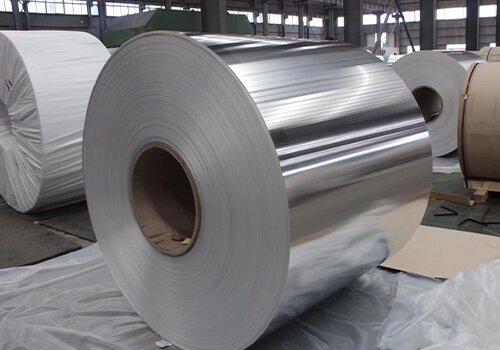
アン アルミニウムコイル is a long, continuous strip of aluminum that is wound into a roll. An aluminum sheet is a piece of aluminum that has been cut from a coil into a specific, flat length. Coils are used for automated, high-volume production, while sheets are used for smaller-scale fabrication.
How is the weight of an aluminum coil calculated?
You can estimate the weight of an aluminum coil using a formula. The approximate weight in kilograms is: 幅 (メートル) × 厚み (mm) × 長さ (メートル) × 2.72. The number 2.72 is based on the density of aluminum. Suppliers use more precise calculations based on the specific alloy density.
What is the most common aluminum coil for roofing?
Alloys 3003 そして 3105 are extremely common for roofing and gutter applications. They offer an excellent balance of moderate strength, 高い耐食性, and great formability, which allows them to be easily shaped into roofing panels and profiles without cracking.
Can you get aluminum coil in different colors?
はい. Color-coated aluminum coil is widely available. The color is applied using a continuous coil coating process with either PE (Polyester) or PVDF paint. This allows for a vast range of standard RAL colors and even custom colors to match specific project requirements.
結論
Choosing the right aluminum coil is a critical decision that directly impacts your project’s quality, efficiency, そして予算. By systematically working through the four key pillars—alloy and temper, dimensions and tolerances, surface finish, and supplier evaluation—you can move from uncertainty to confidence. Remember to select an alloy and temper that match your application’s strength and forming needs, specify precise dimensions to ensure compatibility with your equipment, choose a coating that provides the necessary protection, and partner with a reliable and experienced supplier.
If you are looking for a trustworthy partner with over 16 years of experience in manufacturing and exporting high-quality metal products, contact us at Yuanchi. We can help you navigate these choices and provide a competitive quote for your specific aluminum coil needs.