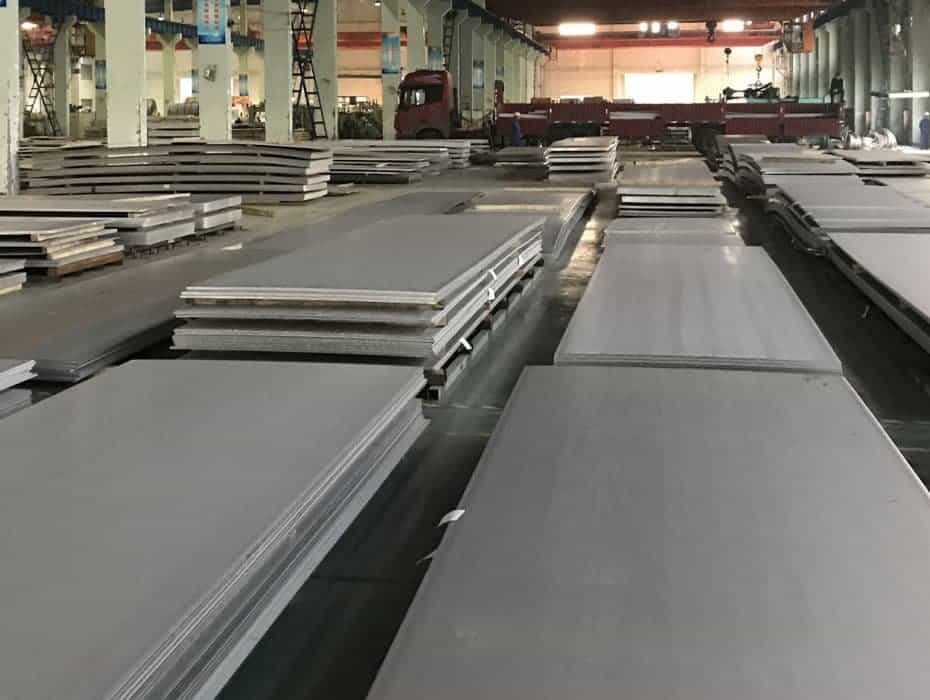
Choosing the wrong stainless steel thickness can increase costs, reduce performance, and even cause project delays. De nombreux acheteurs ont du mal à équilibrer la force, durabilité, and budget when selecting materials.
The right stainless steel thickness mm depends on the application, load requirements, fabrication process, and operating environment. Thin sheets are suitable for decorative and light-duty applications, while thicker plates offer greater strength, durabilité, and structural reliability. Choosing the correct thickness helps optimize performance, sécurité, and cost efficiency.
Before ordering stainless steel products, it is important to understand how thickness affects performance and value.
What Does Stainless Steel Thickness mm Mean?
Thickness is one of the most crucial factors to take into account when buying stainless steel products. Poids, force, fabrication, and total project cost are all strongly impacted by thickness, whether you are obtaining sheets, bobine, or plates.
A stainless steel product’s actual thickness, expressed in millimeters, is referred to as “stainless steel thickness mm.” Because it offers more accuracy and consistency than gauge-based systems, it is the most popular measurement system in international trade.
Terms like steel sheet gauge thickness, stainless steel gauge chart, et stainless sheet thickness chart are also frequently encountered by purchasers. The conversion of conventional gauge measurements into metric values is aided by these references. In order to prevent misunderstandings between suppliers and customers, experienced buyers frequently choose millimeter requirements because gauge systems can differ by material and region.
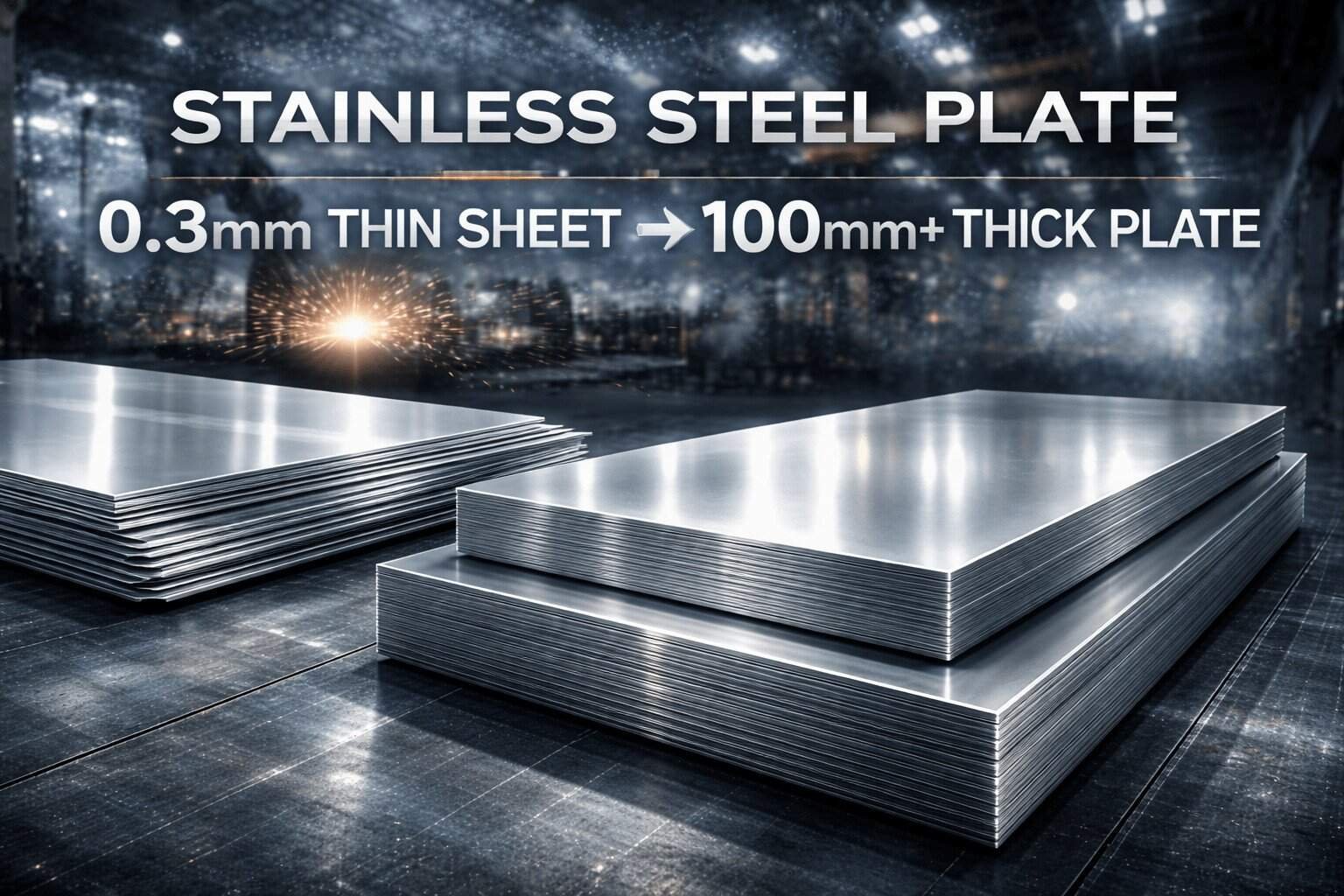
How Is Stainless Steel Thickness mm Measured Accurately?
Because even tiny differences can have an impact on fabrication quality, structural performance, and customer compliance, accurate thickness measurement is crucial. Strict quality control methods are used throughout production by dependable vendors.
Digital calipers, micromètres, et ultrasonic testing devices are frequently used to measure thickness. Before being sent, these instruments assist in confirming that the material satisfies industry requirements and tolerances.
Certain thickness tolerances are permitted by international standards because of manufacturing procedures. Whenever feasible, buyers should ask for inspection reports and thoroughly analyze the tolerance requirements. Particularly for big purchases, third-party inspections can offer extra assurance. When buying materials for construction, machines industrielles, or engineering projects where dimensional correctness directly affects performance, thickness verification is very crucial.
Which Stainless Steel Thickness mm Is Best for Construction Projects?
Depending on whether the material is used for roofing, architectural uses, decorative cladding, or structural support, different thickness ranges are needed for construction projects. Choosing the incorrect thickness can result in unneeded costs or safety issues.
Stainless steel thickness for building projects usually varies from 0.5 mm for ornamental panels to over 20 mm for structural uses. Building codes, facteurs environnementaux, and load requirements all influence the optimal thickness.
Wind loads, corrosion exposure, anticipated service life, and maintenance needs are among the variables that architects and engineers assess. While support structures frequently require bigger plates, decorative wall panels could simply require thin sheets. UN stainless steel plate thickness chart in millimeters is a tool that many experts use to assess choices and make sure project criteria are being followed. Selecting the right thickness can reduce material costs and increase durability.
How Does Stainless Steel Thickness mm Affect Strength and Durability?
When comparing vendors, a lot of buyers prioritize pricing. Cependant, the mechanical characteristics and long-term performance of stainless steel products are significantly influenced by thickness.
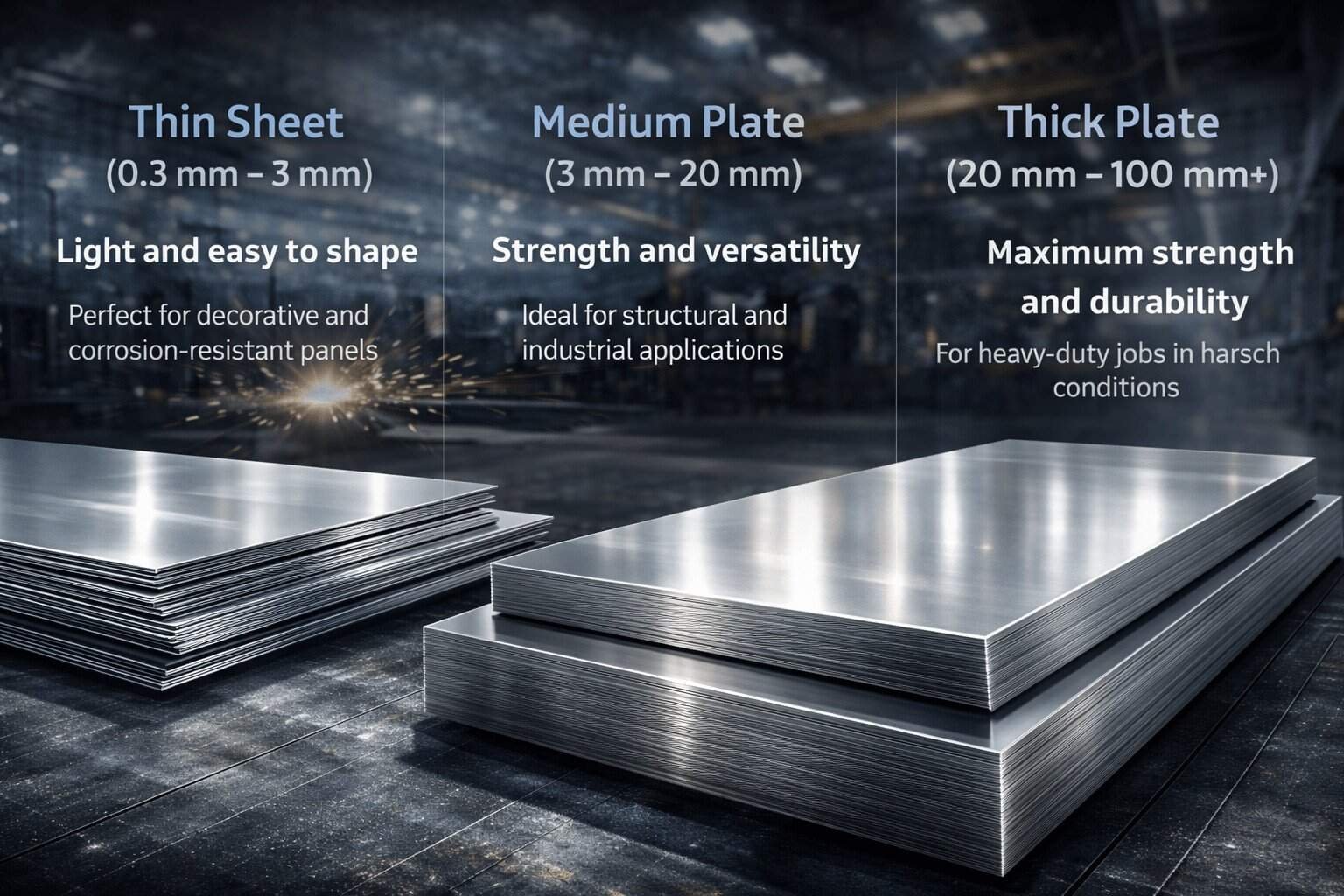
In general, thicker stainless steel offers longer service life, better impact resistance, increased strength, and a larger load-bearing capacity. Excessive thickness, cependant, might raise expenses and complicate manufacture.
The material’s resistance to bending, distortion, and physical damage improves with thickness. À cause de ça, thicker goods are appropriate for heavy-duty applications and harsh conditions. But choosing the thickest option isn’t always the most cost-effective choice. To acquire the best overall value, buyers should strike a balance between project budgets and performance requirements. A thorough assessment frequently avoids needless material costs while upholding acceptable performance standards.
What Is the Most Common stainless steel thickness mm for Industrial Applications?
Storage tanks, machinerie, processing equipment, pipelines, and production systems are just a few of the many uses for stainless steel in industrial settings. Different thickness requirements are needed for each application.
Stainless steel with thicknesses between 1 et 12 mm is used in the majority of industrial applications. Cependant, thicker materials can be needed for specialist equipment that operates in harsh environments or under tremendous pressure.
Par exemple, thin sheets between 1 et 3 mm may be used for machine coverings and enclosures, but thicknesses between 3 et 10 mm are frequently needed for storage tanks. Even thicker plates may be needed for big industrial buildings and pressure vessels. Operating conditions, safety regulations, and anticipated service life all influence the proper stainless steel sheet thickness in millimeters. Au fil du temps, choosing the right thickness can lower maintenance costs and increase reliability.
How Does Stainless Steel Thickness mm Influence Welding Performance?
Storage tanks, machinerie, processing equipment, pipelines, and production systems are just a few of the many uses for stainless steel in industrial settings. Different thickness requirements are needed for each application.
Stainless steel with thicknesses between 1 et 12 mm is used in the majority of industrial applications. Cependant, thicker materials can be needed for specialist equipment that operates in harsh environments or under tremendous pressure.
Par exemple, thin sheets between 1 et 3 mm may be used for machine coverings and enclosures, but thicknesses between 3 et 10 mm are frequently needed for storage tanks. Even thicker plates may be needed for big industrial buildings and pressure vessels. Operating conditions, safety regulations, and anticipated service life all influence the proper stainless steel sheet thickness in millimeters. Au fil du temps, choosing the right thickness can lower maintenance costs and increase reliability.
How Can Buyers Balance Cost and Stainless Steel Thickness mm?
Every buyer wants competitive pricing, but choosing materials only on the basis of price might lead to poor performance and higher long-term costs. Successful procurement depends on striking the correct balance.
Choosing the smallest thickness that safely satisfies the technical requirements of the application is the most economical approach. This strategy maximizes both budget and performance.
Total ownership costs are influenced by a number of elements, such as the cost of the materials, processing charges, transportation fees, installation costs, and maintenance needs. Buyers can evaluate options and find appropriate specs with the aid of tools like a steel sheet gauge thickness reference and a stainless steel gauge chart. A lifespan cost analysis frequently shows that making a little initial investment can save maintenance and replacement costs in the future, improving overall value.

What Standards Govern Stainless Steel Thickness mm Tolerances?
Small dimensional discrepancies are a natural byproduct of manufacturing processes. To guarantee uniformity and quality throughout the world’s stainless steel industry, thickness tolerances are thus set.
Acceptable thickness tolerances for stainless steel goods are defined by international standards like ASTM, DANS, ISO, and JIS. These guidelines aid in guaranteeing the compatibility and dependability of products.
Customers should be aware that, while still adhering to relevant requirements, the actual thickness may vary somewhat from the nominal specification. Compliance is demonstrated by quality paperwork, inspection reports, and mill test certifications. Before placing an order, reviewing standards can help avoid disagreements and guarantee that the products meet project specifications. When assessing fournisseurs and material possibilities, many engineers use a stainless steel plate thickness chart in millimeters along with industry norms.
Which Industries Require Specialized Stainless Steel Thickness mm Specifications?
Various industries function within distinct legislative and environmental frameworks. À cause de ça, thickness requirements frequently differ greatly between industries and applications.
Specialized thickness specifications based on performance and safety criteria are often needed in industries like food processing, maritime engineering, chemical manufacture, energy generation, and medical equipment.
While naval applications concentrate on durability in saltwater settings, food processing facilities place a higher priority on hygiene and corrosion resistance. Chemical factories frequently need materials that can withstand pressure and harsh ingredients. Excellent strength and temperature resistance may be required for energy projects. While increasing operational dependability and equipment lifespan, choosing the proper stainless steel thickness mm guarantees adherence to industry norms.
What Should Importers Check Before Ordering Stainless Steel Thickness mm Products?
There is more to importing stainless steel than just comparing costs. Before placing purchases, buyers must thoroughly assess suppliers, attestations, quality processes, and logistics capabilities.
Importers should confirm material certifications, thickness tolerances, inspection protocols, production capacity, packaging quality, and delivery dates prior to acquiring stainless steel items.
Reputable vendors should offer comprehensive product specifications, inspection reports, and mill test certificates. En plus, buyers should verify that the manufacturer can reliably create the necessary thickness of stainless steel sheets in millimeters. Because delayed shipments can create schedule disruptions and lower revenue, logistics effectiveness is equally crucial. Examining a stainless sheet thickness chart, asking for independent inspections, and evaluating supplier experience can all greatly lower sourcing risks and enhance procurement results.
Résumé
Choosing the appropriate stainless steel thickness in mm lowers procurement risks, manages costs, and enhances product performance. Buyers can make well-informed judgments and accomplish long-term project success by being aware of thickness requirements.