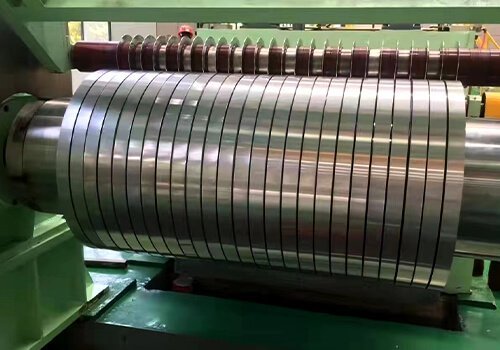

Sourcing the right material for your project can feel overwhelming, especially with the vast number of types of steel coil available. Choosing incorrectly can lead to budget overruns, performance failures, and significant project delays. Understanding the fundamental differences is the first step toward making a confident and cost-effective procurement decision.
The main types of steel coil are broadly categorized by their composition and processing. These include Carbon Steel Coils (like Hot-Rolled and Cold-Rolled), Coated Steel Coils (such as Galvanized, Galvalume, and Pre-Painted), and Alloy Steel Coils (most notably Stainless Steel). Each type offers distinct properties for specific applications.
Now that you have a high-level overview, you’re probably wondering what truly sets these coils apart. Let’s dive deeper into the manufacturing processes, propriétés, and ideal applications for each category to help you select the perfect material.
What Distinguishes Carbon-Based Types of Steel Coil?
Are you trying to decide between hot-rolled and cold-rolled steel? On the surface, they might appear similar, but their processing history creates significant differences in performance, finition, et coûter. Choosing the wrong one can compromise your final product’s quality and budget.
The defining difference is the temperature during processing. Hot-rolled steel coil is formed above the steel’s recrystallization temperature, resulting in a less refined product that is more cost-effective. Cold-rolled steel coil undergoes further processing at room temperature, yielding a superior surface finish and tighter dimensional tolerances.

Dive Deeper: Hot-Rolled vs. Cold-Rolled
The distinction between hot-rolled and cold-rolled steel is one of the most fundamental concepts in the steel industry. As a manufacturer with over 16 années d'expérience à l'exportation, I’ve seen firsthand how this choice impacts everything from structural integrity to final aesthetics.
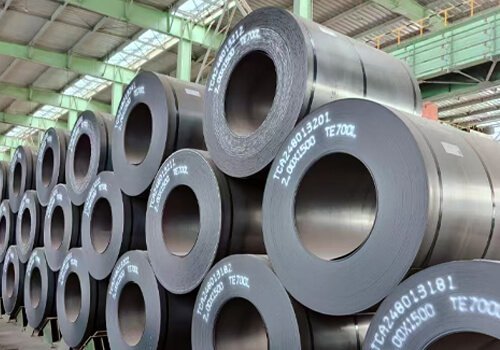
Hot-Rolled Steel Coil (HRSC): The Workhorse
Hot-rolled steel is the starting point for most steel products. The process involves rolling a steel slab at extremely high temperatures—typically over 930°C (1700°F). This is above the steel’s recrystallization temperature, which makes the steel highly malleable and easy to form into large shapes.
As the steel cools, it shrinks slightly, which makes it difficult to control the final dimensions with high precision. The surface also develops a layer of oxide scale, giving it a rough, bluish-grey finish. This scale can be removed through pickling if a cleaner surface is needed for further processing.
- Key Properties:
- Lower cost due to less processing.
- Looser dimensional tolerances.
- Slightly rounded edges and corners.
- A rough, scaled surface finish (unless pickled).
- Common Applications:
- Structural components (I-beams, C-channels).
- Pipes and tubing.
- Railroad tracks and railway car parts.
- Agricultural equipment.
HRSC is the go-to choice when dimensional precision and surface finish are less critical than strength and cost-effectiveness.
Cold-Rolled Steel Coil (CRSC): The Precision Choice
Cold-rolled steel begins as hot-rolled steel that has been pickled to remove the surface scale. It is then passed through rollers at room temperature. This “cold working” process requires more pressure but allows for much greater control over the final product.
The process hardens the steel, increasing its strength and hardness by up to 20%. More importantly, it produces a product with a smooth, oily surface finish and extremely tight dimensional tolerances. This makes it an ideal base material for products that require precision and a high-quality aesthetic.
- Key Properties:
- Higher cost due to additional processing.
- Tighter, more precise dimensional tolerances.
- Sharp, well-defined corners and edges.
- A smooth, often oily, état de surface.
- Increased strength and hardness.
- Common Applications:
- Automotive body parts.
- Home appliances (réfrigérateurs, machines à laver).
- Metal furniture.
- Electrical components.
Comparison Table: HRSC vs. CRSC
| Feature | Hot-Rolled Steel Coil (HRSC) | Cold-Rolled Steel Coil (CRSC) |
|---|---|---|
| Finition de surface | Rugueux, escaladé | Lisse, slightly oily |
| Dimensional Tolerance | Looser | Tighter, more precise |
| Force | Good | Excellent (jusqu'à 20% plus fort) |
| Coût | Inférieur | Plus haut |
| Primary Use Case | Structural applications, where finish is secondary | Aesthetic/Precision parts |
How Do Coatings Define Different Types of Steel Coil?
Do your projects require steel that can brave the elements without failing? Standard carbon steel is susceptible to rust, which can quickly degrade a project’s structural integrity and appearance. Protecting your steel investment against corrosion is absolutely essential for long-term performance.
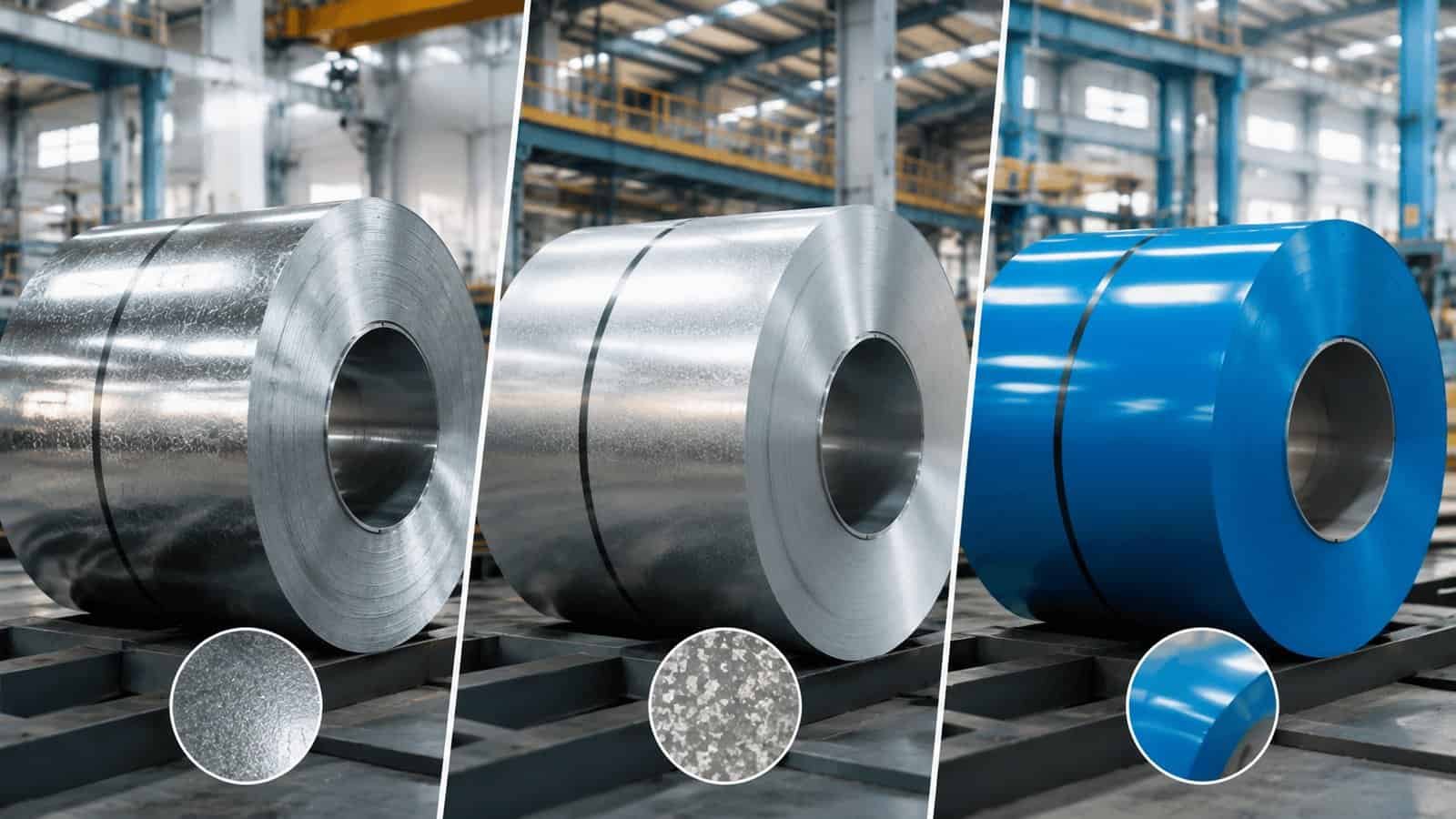
Coatings provide a vital protective barrier that shields the base steel from corrosive elements. The most common coated types of bobine en acier are Galvanized (zinc-coated), Galvalume (aluminum-zinc alloy coated), and Pre-Painted (a decorative and protective paint layer over a metallic coating).
Dive Deeper: The World of Coated Coils
At our Yuanchi facility, a significant portion of our production is dedicated to coated steel coils. These products are in high demand globally, especially in the construction industry, for their dual benefits of durability and aesthetics.
Bobine en acier galvanisé (GI): The Classic Protector
Galvanized steel is created through a process called hot-dip galvanizing, where a cold-rolled steel coil is passed through a bath of molten zinc. The zinc bonds metallurgically to the steel, creating a durable, multi-layered coating.
This zinc coating provides two forms of protection:
- Barrier Protection: It physically shields the steel from moisture and oxygen.
- Sacrificial Protection: Zinc is more reactive than iron. If the coating is scratched, the surrounding zinc will corrode first, “sacrificing” itself to protect the underlying steel. This is why galvanized steel is so effective at preventing rust, even at cut edges.
- Key Properties: Excellent corrosion resistance, characteristic “spangle” finition (can be minimized for a smoother look), and great value.
- Common Applications: Roofing and siding, HVAC ductwork, outdoor enclosures, agricultural buildings, et cadrage.
Galvalume/Aluzinc Steel Coil (GL): Superior Longevity
Galvalume (also known as Aluzinc) coil is coated with an alloy of approximately 55% aluminium, 43.4% zinc, et 1.6% silicium. This specific composition offers the best of both worlds. The aluminum provides outstanding long-term barrier protection against atmospheric corrosion, while the zinc provides galvanic protection at cut edges.
Based on industry testing, Galvalume can last two to four times longer than traditional galvanized steel in many environments. Cependant, its sacrificial protection at cut edges is not quite as robust as pure zinc.
- Key Properties: Exceptional long-term corrosion resistance, smooth and uniform surface finish, excellent heat reflectivity.
- Common Applications: High-performance metal roofing, architectural wall panels, industrial buildings in harsh environments, and appliance components.
Pre-Painted Steel Coil (PPGI/PPGL): Color and Protection
Pre-painted steel coil takes protection and aesthetics to the next level. The process starts with a galvanized (GI) or Galvalume (GL) bobine. This coil then goes through a continuous paint line where it is cleaned, chemically treated, primed, and top-coated with durable paint systems like Polyester (PE), PVDF, ou SMP.
The result is a product that combines the superior corrosion resistance of a metallic coating with a beautiful, consistent, and long-lasting color finish. This eliminates the need for post-painting on-site, saving time and labor.
- Key Properties: Wide range of colors and finishes, excellent UV resistance (with premium paints like PVDF), combines corrosion protection with aesthetics.
- Common Applications: Architectural roofing and facades, garage doors, insulated sandwich panels, appareils électroménagers, and interior partitions.
Why Choose Specialized Alloy Types of Steel Coil?
Are standard carbon and coated steels falling short of your project’s extreme demands for strength, hygiène, or corrosion resistance? Parfois, a general-purpose material won’t do, and you need a specialized solution engineered for ultimate performance.
Alloy steel coils, particularly stainless steel, are formulated with additional elements like chromium and nickel that fundamentally change their material properties. This creates materials with exceptional resistance to rust, produits chimiques, et de la chaleur, far beyond what other types of steel coil can offer.

Dive Deeper: The Premium Performance of Stainless Steel
While carbon steel forms the backbone of the industry, stainless steel is the premium choice for applications where failure is not an option. Its unique properties are derived from the addition of at least 10.5% chrome.
Bobines d'acier inoxydable: The Premium Standard
The magic of stainless steel lies in its passive layer. The chromium in the alloy reacts with oxygen in the air to form a thin, invisible, and incredibly durable layer of chromium oxide on the surface. This passive layer self-heals when scratched, providing continuous protection against corrosion and staining.
Different grades of stainless steel are created by adjusting the composition, primarily the levels of chromium and nickel, and by adding other elements like molybdenum.
- Common Grades and Their Uses:
- Grade 304: This is the most versatile and widely used stainless steel, often referred to as “18/8” for its 18% chrome et 8% teneur en nickel. It offers excellent corrosion resistance and formability. You’ll find it in everything from kitchen sinks and food processing equipment to architectural panels.
- Grade 316: Often called “marine grade,” Grade 316 includes molybdenum (typiquement 2-3%). This addition significantly increases its resistance to corrosion from chlorides, such as saltwater and de-icing salts. It’s essential for coastal applications, chemical processing equipment, and medical implants.
- Grade 430: This is a ferritic, lower-cost stainless steel that contains chromium but little to no nickel, making it magnetic. While its corrosion resistance is lower than the 300 series, it’s perfectly suitable for indoor applications like appliance trim, automotive interior accents, and decorative panels.
- Key Properties: Superior corrosion resistance, hygienic and easy-to-clean surface, high-end aesthetic appeal, excellent heat and fire resistance.
- Common Applications: Food and beverage industry, chemical tanks and piping, medical and surgical equipment, architectural cladding and trim, and high-end appliances.
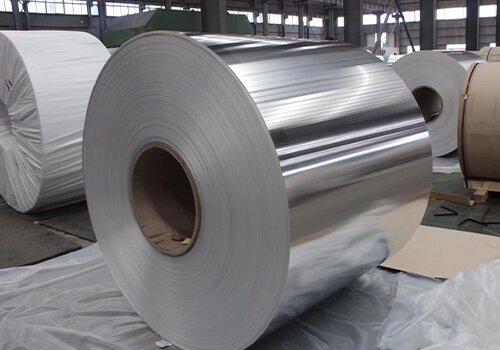
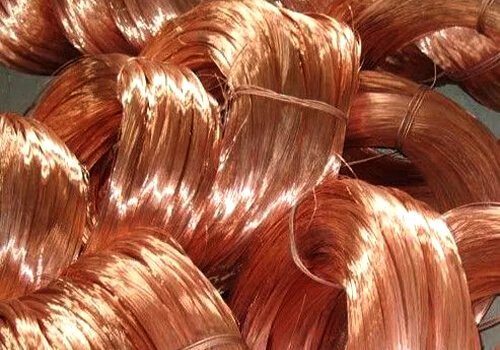
While we are a producer of various steel coils, it’s important to recognize that other metal coils like aluminum and copper also play crucial roles in manufacturing and construction. Aluminum coils are prized for being lightweight and corrosion-resistant, while copper coils are unmatched for electrical conductivity. Cependant, for applications demanding a combination of strength, versatilité, et la rentabilité, steel remains the dominant material.
Questions fréquemment posées
What is the difference between steel sheet and steel coil?
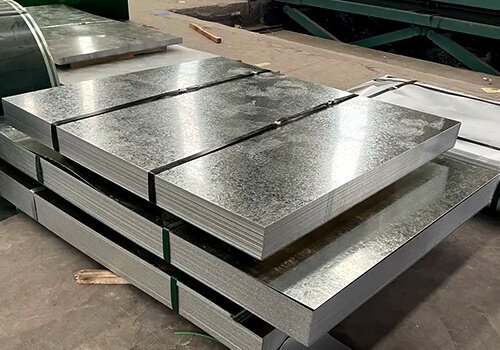
A steel coil is a long, continuous strip of steel that is wound into a roll for efficient transport and processing. A steel sheet is a piece of steel that has been cut from a coil to a specific length. Essentially, coils are the master product from which sheets are produced.
How do I choose the right steel coil thickness?
The required thickness (or gauge) depends entirely on the application’s structural and forming requirements. Thicker steel provides more strength and rigidity but is heavier and more expensive. You should always consult with an engineer or a qualified supplier to determine the appropriate specifications for your project’s load-bearing and performance needs.
What does MOQ mean for steel coils?
MOQ stands for Minimum Order Quantity. For a steel manufacturer like us, it’s the smallest amount of a specific type of coil we can produce efficiently in a single run. MOQs for custom orders are typically higher than for standard stock items. We always work with buyers to find a feasible solution.
Can steel coils be customized?
Oui, absolutely. Customization is a key service we offer. Beyond standard types, we can produce coils to specific widths, épaisseur, coating weights (for GI/GL), couleurs (for PPGI), and even steel grades with particular mechanical properties. This allows our clients to get the exact material they need for their manufacturing process.
Which certifications are important for steel coils?
Buyers should look for suppliers with recognized quality management certifications like ISO 9001. En plus, depending on the product and market, specific material testing reports (MTC) detailing the coil’s chemical composition and mechanical properties are crucial. Always request and verify these documents before purchase.
Conclusion
Navigating the world of steel can be complex, but understanding the core types of steel coil provides a solid foundation for any buyer. We’ve seen that the choice begins with carbon steel—cost-effective hot-rolled for structural uses and precise cold-rolled for finished goods. For durability, coated coils like Galvanized, Galvalume, and Pre-Painted offer layered protection against corrosion. Enfin, for the most demanding applications, alloy coils like stainless steel deliver unmatched performance. The right choice always balances performance, environnement, et budget.
If you are sourcing steel coils for your business, making an informed decision is crucial for success. Avec plus 16 years of experience exporting high-quality steel products globally, our team at Yuanchi is ready to assist. We help wholesalers, retailers, and agents find the perfect material at a competitive price. Contact us today to discuss your requirements and receive a comprehensive quote.