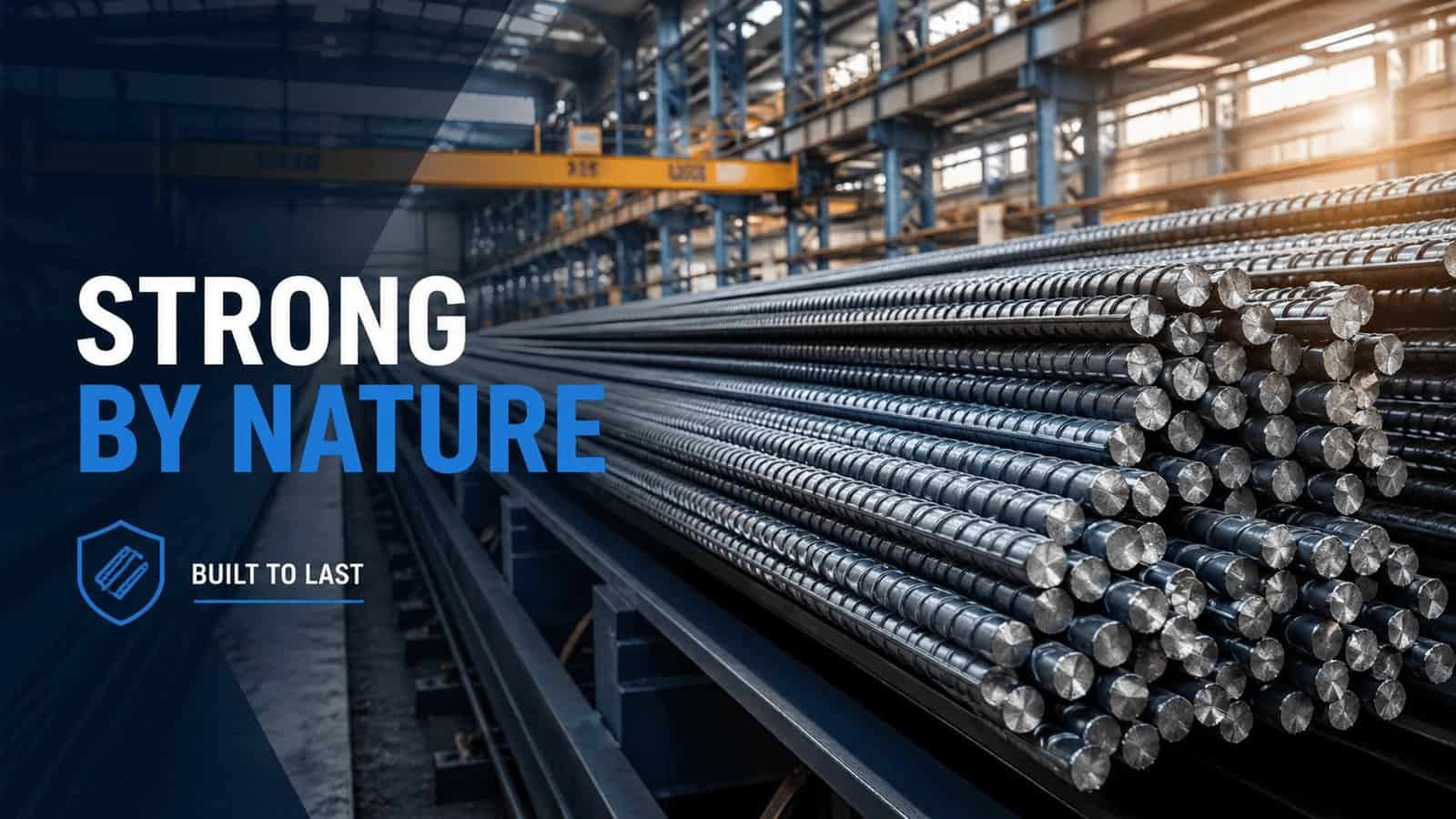
Choosing the wrong rebar can lead to corrosion, structural failures, and costly repairs. Understanding rebar options helps contractors avoid risks and build stronger, longer-lasting structures.
The main different types of rebars include mild steel rebar, verformter Bewehrungsstab, epoxidbeschichteter Bewehrungsstab, verzinkter Bewehrungsstab, stainless steel rebar, GFRP rebar, Bewehrungsstahl aus Kohlenstoffstahl, European rebar, welded wire reinforcement, and high-strength rebar. The best choice depends on project requirements, environmental conditions, strength needs, und Budget.
Let’s explore each rebar type and discover where it performs best.
What Are the Main Different Types of Rebars Used in Construction?
Before choosing reinforcement materials, builders should be aware of the main varieties of rebar that are now offered in the building sector and how each one fulfills particular structural needs.
Mild steel rebar, verformter Bewehrungsstab, epoxidbeschichteter Bewehrungsstab, verzinkter Bewehrungsstab, stainless steel rebar, GFRP rebar, Bewehrungsstahl aus Kohlenstoffstahl, European rebar, welded wire reinforcement, and high-strength rebar are the most popular types of steel reinforcement. Each provides varying degrees of corrosion resistance, Stärke, and longevity.
Rebars are crucial parts of structures made of reinforced concrete. What are rebars used for? is a question that many people have. The explanation is straightforward: rebar increases the tensile strength of concrete. Concrete can fracture under stress, yet it works well under compression. Rebars aid in preventing these malfunctions.
There are many different varieties of rebar available on the market today that are intended for various construction uses. Carefully chosen reinforcement materials are needed for bridges, Tunnel, residential structures, Industrieanlagen, highways, ports, and airports. Project managers can maximize both structural performance and project costs by being aware of the various varieties of rebar that are available.
What Is the Difference Between Mild Steel Rebar and Deformed Rebar?
Despite being two of the most used reinforcement materials, mild steel and deformed rebars have diverse functions in structural design.
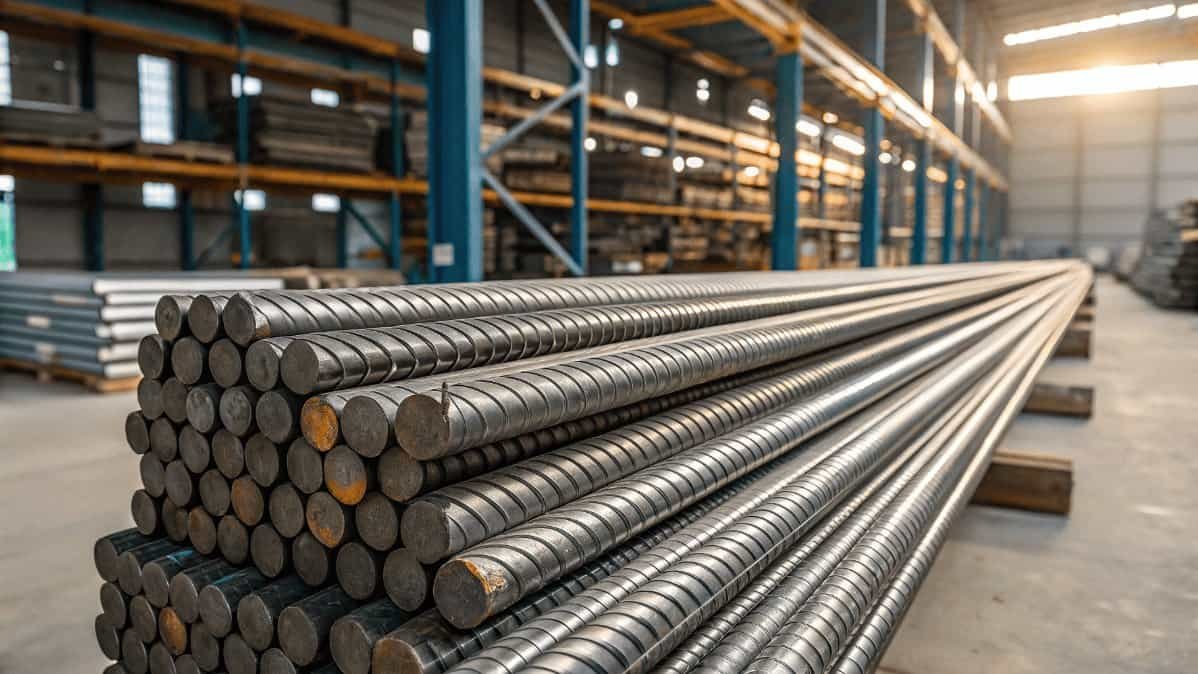
While deformed rebar includes ribs or lugs that enhance bonding with concrete, mild steel rebar has a smooth surface and great flexibility. For contemporary construction projects, deformed rebar is typically chosen because it offers better reinforcement.
Because of its ductility and ease of bending, mild steel rebar was frequently utilized in earlier construction projects. Its flat surface, Jedoch, reduces friction with concrete, which may lower the effectiveness of load transfer.
Umgekehrt, deformed rebar has unique surface patterns that greatly increase concrete adhesion. This design reduces slippage and aids in more efficient load distribution.
When reviewing a rebar grade chart, contractors often find deformed rebars available in a wide range of strength levels. Infolge, deformed rebar has become the standard type of rebar steel used in modern commercial and residential construction.
Why Is Deformed Rebar the Most Common Choice for Reinforced Concrete?
Because deformed rebar can produce strong mechanical linkages within concrete structures, it dominates the global construction sector.
Because of its ribbed surface, which improves concrete grip, increases load capacity, lowers the risk of cracking, and improves overall structural stability, deformed rebar is the most widely used reinforcement alternative.
The performance of deformed rebar is closely related to its popularity. The protruding ribs mechanically link with the surrounding concrete, in contrast to smooth bars.
Under dynamic loads like earthquakes, heavy traffic, and wind pressure, this improved bond strengthens the structure. For retaining walls, Brücken, Balken, Spalten, and foundations, engineers frequently demand deformed rebar.
Zusätzlich, deformed bars are available in various steel rebar sizes and strength classifications. Contractors can use a rebar size chart to select the proper diameter based on structural calculations.
Deformed rebar is still one of the most popular types of rebar in the world because of its cost and adaptability.
When Should Epoxy-Coated Rebar Be Used?
Since corrosion is one of the main reasons for structural degradation, protective coatings are becoming more and more crucial in contemporary infrastructure projects.
It is best to utilize epoxy-coated rebar in areas that are subject to high humidity, wetness, Salzgehalt, and deicing agents. The epoxy coating extends service life and reduces corrosion by forming a protective barrier.
Corrosion is a common problem for coastal buildings, parking garages, Brücken, and marine constructions. Epoxy-coated rebar offers more protection in these situations than conventional carbon steel reinforcing.
The steel is shielded from environmental impurities by the epoxy covering.
This lessens the need for maintenance and helps stop rust from forming.
Contractors should exercise caution when handling epoxy-coated bars, obwohl. Steel surfaces may become exposed, and corrosion resistance may be compromised if the coating is damaged during shipping or installation.
Even while epoxy-coated items are more expensive than conventional carbon steel bars, they frequently result in lower lifecycle costs in harsh situations.
Is Galvanized Rebar Better Than Epoxy-Coated Rebar?
Although both epoxy-coated and galvanized rebars are made to resist corrosion, their defense systems are very different.
Because zinc creates a sacrificial layer that continues to shield exposed steel, galvanized rebar provides greater protection against coating damage. Although epoxy-coated rebar works well, scratches can make it vulnerable.
A zinc coating is applied to the steel surface to create galvanized rebar. Zinc actively shields steel against minor surface flaws, in contrast to epoxy coatings.
Galvanized rebar is appealing for industrial buildings, marine projects, and transportation infrastructure because of its feature.
Although galvanized goods are typically more expensive than their epoxy-coated counterparts, they frequently offer better long-term performance. Based on the project environment, maintenance requirements, and financial limits, engineers regularly analyze the two possibilities.
Galvanized rebar is frequently regarded as one of the best options for striking a balance between Korrosionsbeständigkeit and durability when comparing various rebar kinds.
Why Is Stainless Steel Rebar Considered the Most Corrosion-Resistant Option?
Certain constructions need to be as long-lasting and low-maintenance as possible, especially in highly hostile situations.
Because of its high chromium content, stainless steel rebar provides remarkable corrosion resistance. It is frequently utilized in bridges, Tunnel, maritime buildings, and vital infrastructure that has a long lifespan.
Stainless steel rebar is frequently considered the best option among all forms of steel reinforcement. Because of its alloy composition, a corrosion-resistant oxide layer is naturally formed.
In situations that are high in chloride, including coastal areas and offshore facilities, this material performs remarkably well.
Stainless steel rebar can drastically lower maintenance costs over several decades, despite having higher beginning prices. For infrastructure projects where durability is a major concern, many government organizations choose stainless steel reinforcement.
Stainless steel continues to be one of the most dependable types of rebar available today for projects with severe service conditions.
What Are the Advantages and Limitations of GFRP Rebar?
Non-metallic reinforcing materials are gaining popularity for specific applications as building technology advances.
GFRP rebar is non-conductive, leicht, and resistant to corrosion. Jedoch, it may not be appropriate for all structural applications and has less elasticity than steel.
Traditional steel reinforcement and glass fiber reinforced polymer (GFRP) rebar are very different. It doesn’t rust or corrode because it doesn’t contain any steel.
Because of this feature, GFRP is very appealing for use in electrical installations, chemical plants, water treatment facilities, and marine buildings.
Its light weight makes installation and shipping easier, which is another benefit. Außerdem, GFRP is helpful in specific settings because it doesn’t carry electricity or magnetic forces.
Jedoch, because GFRP performs differently under load than traditional steel reinforcement, engineers must carefully consider design requirements. GFRP is becoming more well-known among contemporary rebar types in spite of these drawbacks.

How Do Rebar Grades Affect Strength and Performance?
Not every piece of Bewehrung has the same mechanical qualities. Structural performance is mostly determined by strength classes.
Rebar grades show mechanical performance and yield strength. Because higher grades are typically stronger, engineers can optimize structural designs while still adhering to safety regulations.
Contractors and engineers can find the right reinforcement materials for certain projects with the use of a rebar grade chart. Grad 40, Grad 60, Grad 75, and higher-strength alternatives are typical grades.
Design loads, building codes, and project specifications all influence the choosing procedure. Comprehending the various rebar grades guarantees adherence to engineering specifications.
Grad 60 rebar is the industry standard for residential and commercial construction in several nations. Higher grades are frequently utilized in heavy industrial facilities, Brücken, and tall buildings.
Project expenses, material efficiency, and structural safety are all directly impacted by grade selection.
How Much Do Different Types of Rebars Cost?
When assessing reinforcement materials, Auftragnehmer, Händler, and project owners consider price.
Stainless steel rebar is normally the most expensive, whereas carbon steel rebar is usually the least expensive. Pricing is influenced by coatings, material composition, and performance attributes.
The price of raw materials, manufacturing techniques, and market conditions all have a substantial impact on the pricing of various rebar kinds.
For most construction projects, carbon steel rebar continues to be the most cost-effective option. Due to additional protection treatments, epoxy-coated and galvanized rebars are typically more expensive.
Although stainless steel reinforcement can cost many times as much as carbon steel substitutes, in harsh settings, its longevity frequently makes the expenditure worthwhile.
Steel rebar diameters, grade requirements, Auftragsvolumen, logistics expenses, and certification criteria are other elements that affect pricing.
Instead of concentrating only on the initial purchase price, buyers should consider the entire lifespan costs.
How Can You Choose the Best Rebar for Your Construction Project?
Technical specifications, environmental factors, and project finances must all be balanced while choosing the best reinforcement material.
Structural loads, corrosion exposure, Budget, design life, and local laws all influence the optimal rebar selection. Assessing these elements contributes to cost effectiveness and long-term performance.
The first step in evaluating rebar types is to evaluate the operating environment of the project. For indoor constructions, standard carbon steel might be adequate, but stainless steel, verzinkter Stahl, or epoxy-coated steel are frequently needed for coastal projects.
Appropriate bar diameters can be found by looking at a rebar size chart. Because varied forms enhance anchoring and load transfer in particular applications, engineers should also consider different types of rebar.
Next, use a rebar grade chart to establish compliance with local norms and strength requirements.
Schließlich, collaborate with seasoned vendors who offer dependable logistics assistance, quality certificates, and inspection reports. Supplier experience, production capacity, and quality control methods should be important factors for importers and distributors procuring from China.
Buyers may make well-informed judgments that enhance project quality and profitability by being aware of the various steel reinforcement kinds, rebar grades, and available rebar varieties.
Zusammenfassung
Selecting the right type of rebar steel improves durability, Sicherheit, and long-term value. Understanding different types of rebars helps buyers choose the most suitable solution for every construction project.