
Buying the wrong GI sheet can increase costs, delay delivery, and reduce quality. Understanding GI sheet weight helps you make smarter purchasing decisions.
The correct GI sheet weight depends on sheet thickness, Breite, Länge, steel density, and zinc coating. Buyers can calculate weight using a standard formula or a reliable gi sheet weight calculator. Always verify specifications, tolerances, and international standards before placing an order to reduce costs and ensure product quality.
Let’s explore how to calculate, verify, and choose the right GI sheet for every application.
What Is GI Sheet Weight and Why Does It Matter?
There is considerably more to choosing galvanized steel than just thickness or size. Weil GI sheet weight has a direct impact on purchase costs, Transportkosten, installation efficiency, und strukturelle Leistung, every buyer should be aware of it. Knowing the right weight helps avoid expensive errors when importing steel for production or construction.
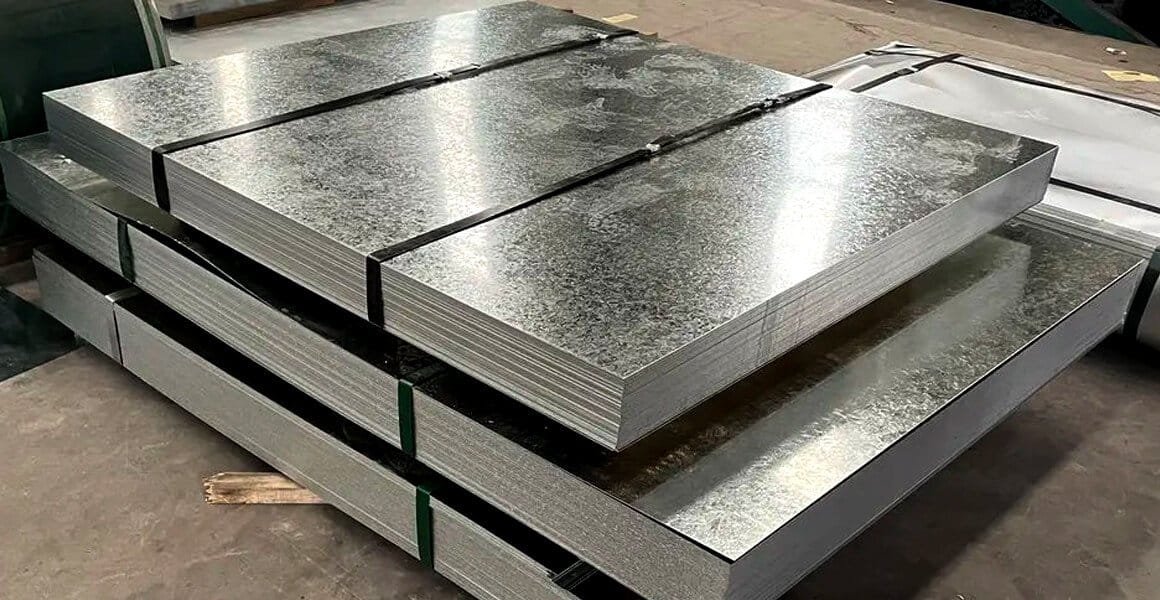
The entire weight of a galvanized iron sheet after taking into account its dimensions, steel density, and zinc coating is referred to as GI sheet weight. Buyers may compare supplier quotes, evaluate shipping costs, and make sure the material satisfies technical requirements with the use of accurate weight estimates.
Many purchasers ignore the actual sheet weight in favor of concentrating exclusively on the price per ton. This frequently results in erroneous quotes and unforeseen freight costs. Zum Beispiel, two suppliers may provide sheets with the same dimensions, but the overall weight may change noticeably due to variable coating weights or thickness limitations. Buyers may negotiate fairly and compare quotes on the same basis when they are aware of these discrepancies. Zusätzlich, it aids project managers in more precisely estimating installation schedules, storage capacity, and handling equipment.
How Is GI Sheet Weight Calculated?
Many first-time purchasers question whether it’s hard to calculate GI sheet weight. Zum Glück, the procedure adheres to a straightforward technical formula that is generally recognized in the steel sector. Estimating sheet weight is simple once you understand the factors involved.
The basic formula is
Gewicht (kg) = Thickness (mm) × Breite (M) × Länge (M) × Steel Density (7.85) + Zinc Coating Weight
Many professionals also use an online gi sheet weight calculator to simplify calculations and reduce human error.
Assume, zum Beispiel, that you buy a galvanized sheet that is 1.2 mm dick, 1 meter wide, Und 2 meters long. Before taking into account the zinc coating, the steel part weighs about 18.84 kg. The ultimate weight will somewhat rise based on coating standards like Z120 or Z275. In order to facilitate quick calculation verification, the majority of manufacturers supply a gi sheet weight chart that contains standard weights for common dimensions. Before ordering large orders, it is more confident to use both digital instruments and manual calculations.
Which Factors Affect GI Sheet Weight?
Understanding the various factors that affect the final GI sheet weight enables consumers to make accurate product comparisons. The final product is influenced by several manufacturing aspects; therefore, focusing solely on thickness is insufficient.
Sheet thickness, Breite, Länge, zinc coating weight, steel density, and manufacturing tolerances are the most crucial variables. The final GI sheet weight per square meter and the total shipment weight are determined by combining them.
Because weight grows proportionately with steel thickness, thickness has the biggest effect. Total mass is also influenced by width and length, and depending on the coating grade, zinc coating adds extra kilograms. Another important factor is manufacturing tolerances. Two sheets labeled with the same nominal thickness may have somewhat different real weights since international standards allow for minor variances in thickness. Understanding these factors might help buyers avoid misunderstandings during quality checks and communicate with suppliers more efficiently.
Does Zinc Coating Change GI Sheet Weight?
A common question from customers is if the ultimate weight of a steel sheet is considerably altered by the galvanized coating. Even while the zinc layer seems thin, it nevertheless adds detectable weight, particularly in large-scale projects with thousands of sheets.
In der Tat. The GI sheet weight is increased by zinc coating, and sheets with higher coating grades are marginally heavier. Coating requirements like Z100, Z120, Z180, or Z275 determine the rise.
Galvanized sheets are appropriate for roofing, Konstruktion, agricultural equipment, HVAC systems, and industrial uses because the zinc covering shields steel against corrosion. Although a single sheet’s weight is not significantly altered by the coating, its cumulative effect becomes significant for inventory control and shipping calculations. daher, instead of assuming that all galvanized products weigh the same, buyers should carefully examine coating parameters. In order to provide more precise estimations for purchase and logistical planning, a comprehensive gi sheet weight chart in kg frequently includes coating information.

What Is the Standard GI Sheet Weight for Different Thicknesses?
Buyers may readily estimate material requirements without having to make calculations by hand thanks to standard sheet weights. Standardized tables covering common dimensions and thickness ranges are typically published by manufacturers.
Standard weights for thickness, Breite, and length are listed in a conventional gi sheet weight table. These charts offer handy reference values that facilitate project planning and increase purchasing efficiency.
Zum Beispiel, according to their dimensions, sheets with thicknesses of 0.3 mm, 0.5 mm, 0.8 mm, 1.0 mm, Und 2.0 mm each have standard weights. When estimating a project, engineers often utilize a gi sheet weight chart in kg since it reduces the need for repeating computations and increases accuracy. Customers should keep in mind, obwohl, that published charts merely offer reference figures. Due to variations in zinc coating and production tolerances, actual delivered weights may change somewhat. To verify the precise specifications before shipment, always ask for the supplier’s technical data sheet and mill test certificate.
How Can You Estimate GI Sheet Weight Before Ordering?
One of the best ways to keep purchasing prices under control is to estimate GI sheet weight before placing an order. It assists purchasers in creating transportation budgets, evaluating quotes from suppliers, and preventing unforeseen costs once manufacturing starts. Zusätzlich, accurate estimations facilitate better communication between manufacturers and consumers.
Using a professional GI sheet weight calculator or the standard weight formula is the simplest method for estimating GI sheet weight. Before production begins, dependable results are obtained by combining these techniques with a supplier’s technical specifications.
A spreadsheet including sheet thickness, Breite, Länge, Menge, coating quality, and anticipated weight is created by many seasoned importers. This enables them to determine the approximate weight of the consignment prior to getting freight quotes. If your supplier gives you a GI sheet weight chart, look for any odd discrepancies between the published values and your own calculations. Online calculators are particularly helpful for customized dimensions because they save time and minimize human mistakes. Always request the projected container loading quantity and the computed total cargo weight from your supplier before confirming your purchase order. These easy procedures help avoid delivery-related problems and make purchases more predictable.
Why Is Accurate GI Sheet Weight Important for Shipping Costs?
In international steel trading, shipping is frequently one of the biggest costs. Freight costs, container usage, customs reports, and warehousing planning can all be greatly impacted by even a minor mistake in GI sheet weight. After production is finished, buyers who neglect weight estimates could find out about unforeseen logistics expenses.
Precise GI sheet weight enables purchasers to save needless transportation expenditures, optimize container loading efficiency, and accurately calculate shipping prices. Zusätzlich, it aids freight forwarders in creating precise documentation.
The realistic weight restriction for a 40-foot container, zum Beispiel, varies based on destination ports and shipping laws. Buyers might have to divide the shipment into many containers if the predicted weight is greater than the permitted limit, which would raise the cost of logistics. Umgekehrt, transportation capacity is wasted when a container is underloaded. It is simpler to determine the entire cargo weight and optimize container loading plans when you know the precise gi sheet weight per square meter. Even modest increases in shipping efficiency can result in significant cost reductions for businesses that import hundreds or thousands of tons annually.

How Do International Standards Influence GI Sheet Weight?
Dimensional tolerances, permissible weight fluctuations, and product quality are all determined in large part by international standards. To make sure they receive goods that satisfy project requirements, buyers who source galvanized steel from other nations should be aware of these criteria.
Dimensional tolerances, coating specifications, and testing protocols that affect the final GI sheet weight are specified by standards including ASTM, IN, JIS, und ISO. Purchasing trust and product consistency are enhanced by compliance.
Zum Beispiel, allowable tolerances for galvanized steel products are defined by ASTM A653, IN 10346, and JIS G3302. Products made in accordance with these specifications may look comparable, but slight deviations in zinc coating requirements or thickness tolerance can result in slight weight discrepancies. Instead of depending just on product descriptions, professional purchasers thoroughly compare these parameters. Reputable vendors should offer technical data sheets, Inspektionsberichte, and mill test certificates attesting to adherence to international standards. Examining these documents prior to shipment guarantees that the delivered goods meet the agreed-upon requirements and lowers quality risks. This is particularly crucial for large-scale commercial ventures, government projects, and infrastructure building where certification standards are stringent.
How Can Buyers Verify GI Sheet Weight During Quality Inspection?
Checking looks alone should never be the conclusion of a quality examination. A crucial step in ensuring that the delivered goods meet the agreed-upon standards and contractual criteria is verifying the GI sheet weight. A thorough inspection guarantees constant product performance and helps consumers avoid disagreements.
By taking measurements, weighing sample sheets, examining mill certifications, and comparing the results with a typical GI sheet weight chart, buyers may confirm the weight of GI sheets.
The first step in a normal examination is to use calibrated instruments to measure the thickness, Breite, and length of the sheet. Next, inspectors weigh sheets chosen at random and compare the measured values to theoretical calculations or the GI sheet weight chart in kg provided by the Anbieter. Any notable divergence needs to be looked into right away. In order to verify the steel grade, coating weight, and production standards, buyers should also examine the mill test certificate. Particularly for big export orders, independent third-party inspection organizations can offer more assurance. By carrying out these verification procedures prior to shipment, quality risks are reduced, claims are decreased, and long-term supplier-buyer collaboration is strengthened.
How Do You Select the Best GI Sheet Weight for Your Application?
No GI sheet weight is appropriate for every purpose. The ideal option is determined by the intended use, Budget, environmental factors, and structural needs. Technical performance and cost effectiveness are guaranteed when the right requirements are chosen.
Anwendungen, load-bearing capacity, Korrosionsbeständigkeit, manufacturing requirements, and transportation efficiency should all be taken into consideration while selecting GI sheet weight. Finding the ideal balance between price and quality is facilitated by working with an experienced supplier.
When structural loads are generally moderate, lighter sheets could be enough for roofing applications. Heavy machinery, Lagerhäuser, Brücken, and industrial buildings frequently need thicker, more durable galvanized sheets. Because coastal locations typically require stronger zinc coatings for better corrosion protection, buyers should also take the local climate into account. Avoid concentrating just on the lowest price while comparing quotes. Rather, evaluate technical details, Zertifizierungen, Produktionskapazität, Lieferzeiten, and post-purchase support. Skilled steel exporters may offer tailored solutions that maximize both performance and overall purchase cost, as well as suggest appropriate items based on your project’s specifications. Buyers can create dependable supply chains and improve long-term value by adopting a complete strategy.
Zusammenfassung
Comprehending GI sheet weight enhances purchasing precision, lowers expenses, streamlines logistics, and enables purchasers to confidently select galvanized steel items for each project.